Saturday, January 13, 2018

The Sympathizer

This first novel from USC professor Viet Thanh Nguyen won the Pulitzer for fiction in 2016 (among several other awards) and was the January reading selection for my book group. It is one I would probably never have finished on my own but feel it was well worth reading. It was slow to get started for me, but once I got past the first 100 pages, I was hooked.
The story deals with the fall of Saigon and the aftermath for several S. Vietnamese refugees, mostly members of the military or police who worked with U.S. military and CIA. The protagonist is a bastard, born to a teenage Vietnamese mother and a French priest father. As a result he is never accepted by the Vietnamese people and so is perhaps ripe for conversion to the Communist cause. He meets his two lifelong friends in high school, Man, who later becomes his handler, and Bon, a S. Vietnamese who works for the CIA. The Protagonist is known only as the Captain and many characters are also identified only by their role. In his public role, the Captain has served as the personal assistant to the General, who is head of the National Police, for years when Saigon falls. The Captain, the General, and Bon are among those on the last plane to get out of Saigon, arranged by Claude, their CIA contact. The description of the fall of the city to the N. Vietnamese communists is heartbreaking for it is a lethal betrayal of thousands of S. Vietnamese by the United States. Bon's wife and son are killed in the last few moments and the Captain has to literally drag him onto the plane. They are sent to refugee camps and finally settled in southern California in menial jobs.
But the large refugee community, outsiders in their new homes, never give up on returning to Vietnam, and the Captain is charged by Man to monitor any efforts to mount a resistance effort. The General continues to work with Claude and a sympathetic congressman to put together funds and re-train a group of soldiers who will go back and re-ignite the fight. Bon will be among the group that returns to Cambodia to organize other Vietnamese and take the fight to the communists. Although Man strongly warns the Captain about being among those who return, his advice is ignored for the Captain feels he must somehow protect Bon on this suicidal mission, and the final few chapters deal with the consequences. Yet another betrayal is underway, for the communists are not liberating their countrymen but killing them.
The author was born in Vietnam and raised in the United States. He was immersed in a refugee community that told and re-told their stories, so this is a unique perspective on that war. It was an eye-opener and a heart-breaker of a book. It is important to have this perspective because what we were told about the war was so much propaganda. As the Captain points out, "They [the Americans] owned the means of production, and therefore the means of representation, and the best that we could ever hope for was to get a word in edgewise before our anonymous deaths."
More detailed reviews are available here: The New York Times, The Guardian, Kirkus.
And an interview with the author by Terry Gross (NPR's "Fresh Air" program) is here: NPR

Monday, December 25, 2017

Magpie Murders

This book was actually a birthday present from sister-in-law, Patty, and I was excited about reading a mystery written by Anthony Horowitz, the creator of both the Foyle's War and Midsomer Murders series. That being said, I had to start this book 3 times before I finally got into it, even though it started out in lovely English cozy style and then on page 3 the narrator tells us that the story to come changed her life; she goes on to say "Unlike me, you have been warned."  Susan Ryeland is a book editor for a small London press, and specifically for one of their cash cow authors, mystery writer Alan Conway. She is all set to have a good read on a rainy weekend of the newest Conway script for his 9th book, but finds that the final chapters are missing. And then Alan Conway dies. It could have been an accident, or even suicide, but Susan begins to suspect murder. It is a story within a story, the first being the story in Conway's book, featuring his Hercule Poirot-like protagonist Atticus PΓΌnd. Conway is planning to kill off his money-making character in this book, and that will turn out to be at the crux of solving the mystery surrounding Conway's own death. The stories are told with the expected expertly detailed English town and country settings as well as detailed character development. I did occasionally find the transitions between the two stories a little hard to follow, however. And the ending was a total surprise to me, so well-done on that score. 
Great review by The New York Times, USA Today, Kirkus, and NPR.
.

La Belle Sauvage

I have been hearing about this new trilogy, "The Book of Dust," from Philip Pullman--of Golden Compass fame (published in England as Northern Lights)--and so jumped on Volume 1 when I got a gift card to Barnes and Noble. This is a prequel to the "His Dark Materials" trilogy; here, Lyra is a baby, being hidden from forces that want to destroy the child of Lord Asriel and Mrs. Coulter. She is being cared for in an obscure priory, just across the Thames from The Trout, a pub owned by the parents of Malcolm Polstead, the hero of this tale. Malcolm helps out in the pub, of course, and overhears lots of conversations since no one pays much attention to an 11-year-old boy. He also frequently runs errands for the nuns and, between these two sources, soon learns about their secret guest. He is besotted with Lyra and protective of her. When a menacing character with a 3-legged hyena as a daemon comes into the Trout asking about the baby, Malcolm is alarmed. There are strange goings-on everywhere and  Malcolm witnesses an apparent abduction, which eventually draws him into a spy network opposing The Magisterium, an organization of religious zealots with enormous political power. At one point he helps Lord Asriel surreptitiously visit his daughter at the priory, and in return, gets his little boat, La Belle Sauvage renovated. The masters of the River have made Malcolm's little boat seaworthy but also issued a warning of devastating rains and flooding to come. No one believes Malcolm when he tries to pass on the warning, however, so he becomes Lyra's rescuer when the rains come and the Thames River floods the nunnery,  sending Malcom and Lyra and the surly barmaid, Alice, on a surreal adventure in search of Lyra's father in London.
This is a totally engrossing tale from the first page and I can't wait for the next two volumes. No doubt I will have to re-read "His Dark Materials" when I finish.
Erudite review from The Guardian, which highlights the story's literary and political antecedents and underpinnings. Also a thoughtful review from the New York Times, Slate, and The Independent.

The Clock Work Dynasty

This is the newest book (2017) by our local (Portland, OR) science fiction/ alternative history writer Daniel H. Wilson, who has written several previous books, mostly robot related.  There is a good overview of what he has written on Wikipedia. He is certainly qualified with a PhD in robotics and masters degree in artificial intelligence. This novel alternates between an historical journey, beginning in 1700's Czarist Russia, and a present day Pacific Northwest thriller. The action begins with the revival of two human-like mechanical beings--a young girl and an adult man (Elena and Peter)--by the Czar's "mechanician." When Peter the Great dies, his wife, Catherine, vows to destroy these abominations and so begins their life on the run, so to speak.
In current day Oregon, June Stefanov is an academic anthropologist who studies these ancient machines and is about to make an astounding and life-threatening discovery. As these characters' lives collide, nothing less than the fate of the human race is at stake.
I felt the pace of the book was slow to get started, but eventually I was drawn into finding out the origin story of these mechanical beings, who continue to evolve themselves, and are hiding in plain sight. This review from Publishers Weekly pretty accurately sums up my reading experience. My curiosity is piqued now to check out some of his more futuristic novels such as Robopocalypse.
Positive review available from Kirkus, and excerpts from an interview on OPB.

Thursday, December 7, 2017

The Little French Bistro

What a disappointment. I so enjoyed The Little Paris Bookstore, by Nina George, that I pleasantly anticipated reading this selection for our upcoming book group. The parallels to the first book are significant, a protagonist who has existed for decades without love suddenly realizes there is more to life during a journey of self-discovery. I almost never disagree with Kirkus reviews, who found this book to be "a satisfying virtual visit to the French Riviera," but I found the plot to be utterly predictable and the prose to be overblown. I would put that down to translation except that the first translated book was done by the same guy, Simon Pare.
Marianne is sick of her life and especially her unfathful and condescending husband. While with him on a tour in France, she sneaks away from dinner and attempts to drown herself in the Seine, only to be rescued by a homeless man and taken to a hospital, where her husband catches up with her and tells the doctor she is mentally ill.
Once again, Marianne makes her escape with suicide in mind and this time, inspired by a colorful ceramic tile she saw in the nurses' station, she heads for the coast to a tiny fishing village called Kerdruc, where she plans to walk into the sea. She is immediately adopted by an entangled group of locals (for more detail, see the NYTimes review) and made the chef's assistant at a local bistro. And of course she meets someone and falls in love. She has already fallen in love with the sea, the food, the countryside....and has begun playing the accordion again. Someone just happened to have a spare one lying around. She does not know what to do about her marital situation and chooses not to discuss it with anyone, until her husband makes a public appeal on TV and everyone recognizes her. She tries to run away again, this time from the people in Kerdruc, and go back to her husband. Realizing she has changed too much to make this possible, she returns to Kerdruc, her lover, and everyone else's romantic problems in the village are solved in the last chapter. Oh please spare me.
The reviewers all liked the book, however: Publishers Weekly, Washington Post, New York Times.

A Christmas Return

Apparently Anne Perry regularly writes a special mystery novella for the holidays and this is the 15th in her Victorian Christmas series. Certainly competent writing and a good plot. She is a prolific and accomplished author, but unless you are looking for something really light to read, not worth the investment of time. Apparently this is a character that has appeared in earlier novels, as has the character's granddaughter, Charlotte Pitt. Mariah Ellison is in her 80's and living with Charlotte and her husband when she receives a strange package--a Christmas pudding surrounding an antique cannon ball. She immediately recognizes it as the former property of a dear friend who died when a bookcase fell on him and the cannon ball hit his head. She hasn't had contact with his surviving wife in 20 years, but she resolves to make the trip and find out what prompted this unusual invitation. A cold case is being revived that threatens to dishonor the name of her deceased friend, and she is determined to save both his reputation and that of his wife. It is a proper detective story and enjoyable reading, but as I said, only if you have nothing better to do. 

Wednesday, November 29, 2017

Artemis

I am SO far behind on posting my books that I don't know if I will ever catch up, so I am starting with the most recent and working my way backwards. Just raced through this book by Andy Weir, author of the book, The Martian, which I did not read, although I saw and enjoyed the movie. Artemis has already been optioned for a movie. This was really a great plot, supported by interesting characters and lots of well thought out details about living on the moon. Yasmine (Jazz for short) is a 20 something wise-ass who has rebelled against her father's upbringing and his Muslim faith. She has lived on the moon in the small town of Artemis (pop. 2,000) since she was 6 years old and calls this home, although she was born in Saudi Arabia. She has had the same pen pal (e-mail pal, actually) since she was 9 years old and, since he now works as a loader at the main port for freight deliveries to the moon and Jazz is a delivery porter on the moon, they have set up a nice little smuggling operation for contraband like cigars, lighters, alcohol, etc. Then one of her customers, a very rich resident of Artemis, offers Jazz an enormous amount of money to help him take over the local aluminum smelter, which also produces all the oxygen for Artemis. She agrees, but only partially completes the job before he is murdered. There have been less than a handful of murders in Artemis in the entirety of its existence, so the population is shocked. And Jazz is even more disturbed to find that the killer is now after her. It turns out that the aluminum smelting company is actually owned by a criminal cartel back on earth who will stop at nothing to maintain their exclusive contract. Jazz needs to finish taking down the smelting operation if she is to have any chance of survival. Then she uncovers a complicated plot to take over the city of Artemis, and she is not going to stand by while that happens. She formulates a plan and rounds up some friends, some not so friendly acquaintances, and her father to help her execute the idea. Nothing ever goes quite to plan, but Jazz is resourceful and committed and wins through in the end. Jazz is an engaging character and her supporting cast is terrific. You don't need to be a science fiction fan to enjoy this one.
See reviews from The Guardian, Salon, and Publishers Weekly for more details.

Saturday, September 30, 2017

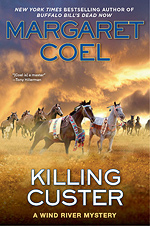
Killing Custer

Another in Margaret Coel's "Wind River Mysteries" series (this is #17), set in Wyoming on the Wind River Reservation, shared by Arapahoe and Shoshone tribes. The setting, St. Francis Mission, is based on the actual St. Stephens Mission that has been there since 1884. The mystery here centers around the murder of a George Custer re-enactor during a pre-rodeo season parade. The man has come to Indian Country to flaunt the massacre of Indians by Custer and so the logical assumption is that some of the Indians riding in the parade shot him. In fact, Detective Madden has managed to threaten enough people on the reservation to get a supposed eye witness account to support that version of events. Neither Father John O'Malley nor attorney Vickie Holden believe either of the accused young Arapahoe men are capable of murder, but they are going to have to find convincing proof otherwise if they want to save them from jail. When there is a break-in at the office of a well-known lawyer in Lander and he appears to be missing, Vickie begins to wonder if there is a connection between the two events. The Indian woman who was secretary, and lover, to the missing attorney is brought in for questioning, Vickie initially serves as her attorney, but she is aware the young woman is holding back key information from her and tells her to find an attorney she can trust and confide in. When the young woman is subsequently murdered, Vickie holds herself responsible. Further, Vickie has already been contacted by the widow of the murdered Custer impersonator to find his missing money, so Vickie is unable to represent either of the two Arapahoes accused. She finds herself on the wrong side of a line she struggles to straddle. Her goal is to defend Native Americans and here she is stuck defending a white woman and, due to conflict of interest, unable to defend her fellow Indians. Each pursuing their own leads, Vickie and Father John eventually join forces to track down the missing attorney and maybe tie him to the murders, if they don't get killed first. As always, solid writing with lots of interesting history thrown in for good measure. Well constructed plot and loving portrayal of the setting. See my two earlier blogs on The Girl With Braided Hair, and Eagle Catcher by this same author.

Saturday, September 2, 2017

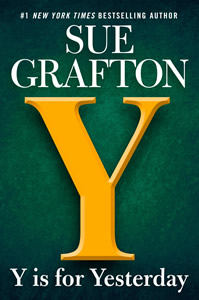
Y is for Yesterday

Sue Grafton has taken the somewhat unusual road of setting all of her Kinsey Milhone novels in a short time period in the 1980's, and aging her protagonist only a few years, from 32 in A is for Alibi to 39 in this latest installment (what will happen when she reaches "Z" all her fans are wondering?!--maybe I will go back and start reading from the beginning ;-). The present stories start in the fall of 1989 but one of the threads is tied to events from the spring and summer of 1979, when a teenager, Sloan Stevens, was murdered by a classmate from a fancy private academy. Fritz McCabe, the one who actually pulled the trigger, has now been released from prison since he was convicted as a minor and has to be released on his 25th birthday. His parents have received a $25,000 blackmail demand in relation to a video tape Fritz and his buddies made in high school showing the sexual assault of a very drunk 14 year old classmate by Fritz and another boy, Troy. If the tape were sent to the DA, Fritz would go back to prison for statutory rape, for which there is no statute of limitations. The parents don't want to pay, and are advised not to pay by their attorney, who refers them to Kinsey. Kinsey delves into the past events surrounding the making of the tape, and the cheating scandal at Climping Academy that started the ball rolling and eventually resulted in Sloan's death. Fritz was just a pawn, and the emotional bully who ran the show back then, Austin Brown, disappeared before Fritz confessed and hasn't been seen in 10 years.
Meanwhile, the man who tried to kill Kinsey in the previous book, X, has returned; he is looking for the "souvenirs" he took from the series of young girls he murdered. He thinks either Kinsey or one of his ex-wives might have them, and he will do anything to get them back, including taking a second run at killing Kinsey--for good this time. Meanwhile, the usual cast of characters, Henry, Rosie, Cheney, and Anna are all around and dealing with their own personal dramas. As always, Kinsey's character is feisty and engaging, and the thinly veiled town of Santa Theresa (Montecito) is always fun to visit. The ending was a surprise to me, but then I am obligingly misled.

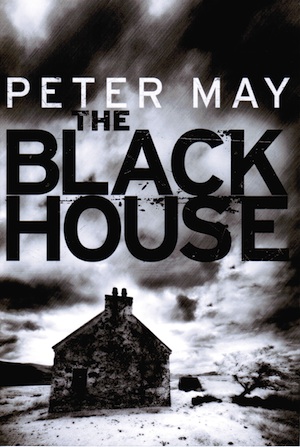
The Blackhouse

This novel by prolific and award-winning author Peter May is the first of the "Lewis Trilogy," a series of murder mysteries set on the Isle of Lewis in the Outer Hebrides of Scotland. The landscape is harsh and the living is hard on these islands and kids growing up there often cannot wait to get away. This was certainly true for Fin McLeod, who had extra incentive because his parents had died when he was young and he was raised by an aunt who had little time for him and expressed no sympathy or affection for the bereaved child. Still he had his friends, and a girl who liked him from the first grade, so it seemed not all bad. Until the eve of his departure for university, when his friend's father and Fin's tutor for college prep told Fin and Artair (his son and Fin's best friend) that the boys had been chosen to join the guga hunt--a right of passage that involves sailing across 50 miles of empty ocean to an island where seabirds nest and then killing and bringing back hundreds of the young birds as a delicacy for the islanders. It is an event decades old in tradition, held onto all the more firmly in the face of animal rights protesters. For Fin and Artair, it will be a turning point in their relationship and their lives.
Fin does indeed go off to university in Glasgow but can't engage and eventually becomes a detective with the Edinburgh CID. When a grisly murder is committed on the Isle of Lewis, identical in many details to one recently investigated in Edinburgh, Fin is the obvious choice--even though he has recently lost his only child. His return launches a story told alternately in the past and the present, with Fin's history being revealed a piece at a time while he continually confronts painful reunions in the present. This is a dark book and I wonder if living so far north, like the Scandinavians and the Scots do, focuses people on the darker corners of human nature. The ending of this book came as a total surprise to me. Don't read this book if you are looking for a happy ending. Do read it if you like noir detective stories.
Interestingly, this book was bought up by a French publisher after being turned down by numerous British publishers. Subsequently, it was bought by numerous publishers and has been translated into several languages. Glowing reviews from The New York Times, The Scotsman, the NY Journal of Books, and Publishers Weekly. It was also named one of Kirkus' "10 Best Crime Novels" for 2012. More info on Peter May at Wikipedia.