Showing posts with label women spies. Show all posts

Monday, December 29, 2025

The Traitor


This is the 2nd book from Ava Glass featuring MI6 operative Emma Makepeace ( see my post for the previous book, Alias Emma). When an MI6 agent is found dead and stuffed in a suitcase, Emma is sent in undercover to see who was behind it. She will be working on a yacht out of the country--out of any country--without backup but she is willing to take the risk. When her cover is blown, Emma is sure that the leak was from within and that leaves her not knowing who to trust. She almost has one of the major players in hand when she is kidnapped and it's clear she will be killed. But she is rescued by a colleague and once again sent undercover, at her insistence, to try and trap the person pulling the strings. Glass creates a tight timeline in a tightly bound plot and her characters are well developed. You'll guess who the betrayer is before it's revealed but the book will still keep you engaged until the end. 

Publishers Weekly calls it a "gripping sequel" and gushes in their conclusion:  "Enriching the narrative with meticulous spycraft, sound character development, and exquisitely realized settings, Glass has delivered an un-put-downable winner." The Washington Post says the book "delivers everything fans of spy fiction could want: an absorbing plot, shadowy characters, page-gripping tension..." and goes on to say "Glass’s prose is crisp but never lazy, the descriptions telling without being overwhelming." They also praise the protagonist and overall character development:  Glass "has crafted such a wonderful character in Emma. She’s mission-oriented but vulnerable. Loyal yet informed by past experiences of the dangers of nationalism. Pragmatic and compassionate...Side characters, such as the oligarch’s girlfriends and bodyguards, as well as the agency staff supporting Emma’s mission, are fully formed."

Friday, August 15, 2025

The Spy Coast


This thriller from Tess Gerritsen kept me engaged the entire time. There is a small community of ex-CIA spies living in the small town of Purity on the coast of Maine. They wanted the quiet life in their retirement or at least they thought they did. But when a stranger accosts ex-spy Maggie Bird at her chicken farm, it appears that her past has finally caught up with her. The body of that same woman is dumped in Maggie's driveway the following day after having clearly being tortured. Maggie's friends, Declan and Ben are determined to hep Maggie figure out who is after her even though she would prefer they stay safely away from her search. Alternating chapters reveal the back story about why someone might be hunting her down. The ending is a surprise.

Publishers Weekly concludes their positive review by saying "The plot bustles along nicely, careening from Thailand to Italy and many points in between, but the real surprise is the richness of Gerritsen's supporting cast, a cantankerous bunch whose love for one another runs deep. Some details toward the end hint that a sequel may be in the works, and it'd be more than welcome. Maggie and her gray-haired tribe are more than capable of helming a long-running series." Similarly, Booklist recommends the book as "Compelling reading throughout, with astute characterizations, a fast-moving but understandable spy plot, and lashings of dark humor. Gerritsen fans and readers of Richard Osman's Thursday Murder Club mysteries will love this."

Sunday, January 12, 2025

Agent Zo: The Untold Story of a Fearless World War II Resistance Fighter


This incredibly well-researched non-fiction account, by Clare Mulley, of a female Polish Resistance courier, Elzbieta Zawacka, covers her life from the time of the German invasion of Poland to her death, just shy of 100 years old. It is a remarkable story for several reasons. She was passionate about Poland regaining its briefly held independence before the Germans and Russians again divided and claimed her country. The Poles were astounding sources of information providing almost half of Britain's intelligence about the state of play on the European continent (p.243). It is told from a perspective that, I think, is seldom written about regarding the players and actions in WWII. The book describes both heroic efforts, unbelievable betrayals, and inexcusable moral depravity. This was a book that I had to frequently bookmark because I learned so many things I had not known before. Here's a sample:

The Polish Home Army was "the first national resistance movement in occupied Europe. With eventually over 400,000 men and 40,000 women in its ranks, it was also the largest resistance organisation of the Second World War." (p. 33)

"80 percent of Polish liaison officers, messengers, and couriers were women" (p.35).

"By 1944, 10,000 members of the Warsaw intelligentsia alone had been murdered" (p.35). 

"there would have been no Home Army without women" (p.40)

"Within a year of the invasion, 'the average life of a liaison woman did not exceed a few months'" (p.44).

"The official German reprisal rate was now one hundred Polish lives for every German killed, but occasionally four times that rule was applied" (p.165).

"In early 1943, the Polish Armed Forces had been a crucial Allied resource. The 30,000 troops of the Polish First Corps...were trained for the cross-channel invasion of mainland Europe...60,000 soldiers of the Polish Second Corps" invaded Italy. "...11,000 men" from the Polish Air Force "distinguished themselves in the Battle of Britain, and around 5,000 men were serving with the Allies in the Polish Navy. The 400,000 strong Home Army...was lauded in a British military staff report as 'the strongest, best organised and most determined' resistance force in occupied Europe...Yet in late November 1943, Poland's leaders found themselves excluded from the Tehran Conference, the first face-to-face talks between ...Churchill, Roosevelt and Stalin" (p.166). 

During the Warsaw Uprising, Himmler order that "All Home Army soldiers were to be shot, irrespective of whether they had surrendered...'the part of the population not fighting, women and children, should likewise be killed'....An estimated 40,000 people were murdered on one day alone" (p.204).

Stalin refused to let the other allied countries use their air bases just east of Warsaw to bring supplies to the Poles fighting in the Warsaw uprising. As a result, they had to fly 1,800 miles over enemy territory to bring aid. The losses were so great that the Allies eventually abandoned the Home Army. The Russians stopped their invasion from the east just 12 miles short of the fighting and "let them all be slaughtered." They calculated that there would fewer fighters to contest their own invasion of Poland (p.205).

Of the estimated 300,000 Poles arrested between 1944 and 1956 [by the Russians]...6,000 had been sentenced to death and many more simply 'disappeared'" (p.267). "Approximately 20,000 Poles died in communist prisons up to 1963" (footnote, p. 267).

Elzbieta herself was in prison for seven years. From that experience, she became a champion of education, particularly for those who had had no schooling during the war, and was a pioneer in early distance education. She never quit fighting for her country and her people--a truly heroic woman.

Kirkus calls this "A well-told story from a little-known corner of World War II history."  

The New York Journal of Books notes that Mulley "does an exceptional job bringing this complicated and compelling history to light." And they go on to say "The amount of research Mulley did is truly staggering, especially given that almost all of it had to be done with the aid of translators. She manages to tell Zo's personal story as the gripping adventure it was while also providing the bigger canvas of her lifetime. Mulley lays out the broader histories such as the little-known aspects of Poland's post-war history, the Soviet domination and repression that resulted in the arrest and torture of people, including Zo." By all means, read their entire review.

The Wall Street Journal praises "Zo was anything but ordinary, perhaps the most extraordinary individual among a multitude of larger-than-life figures who routinely took enormous risks to free their country from Hitler’s overlords. Her life encapsulated Poland’s mostly tragic history in the last century, not only during World War II but also under Soviet domination in the postwar era..."


Tuesday, May 21, 2024

Alias Emma

Ava Glass is a pseudonym but she does, nevertheless, have a website.  Christi Daugherty (her real name) also has one. There are already two sequels published in the series: The Traitor and The Trap.
The review and plot summary from Library Journal are more than adequate. 

"Glass (the pseudonym for an already internationally best-selling novelist) introduces Emma Makepeace, a new-era British spy whose quintessentially English alias facilitates blending into London, the most surveilled city in Europe. In the last two weeks, four government-protected Russian scientists were publicly assassinated with the efficiency and audacity of the Russian military spy agency GRU. The message: GRU knows the locations of dissidents in London and can strike with impunity. Unless the Agency intervenes, GRU will attack another set of scientists, planning to kidnap their son, Michael, to draw them out of hiding. Emma must make contact with Michael, convince him to accept protection, and deliver him to Agency headquarters--no easy task. Once on the run, this duo must cross London unseen by the Ring of Steel of CCTV cameras, now in the hands of GRU hackers. For 12 hours, Emma leads Michael through alleys, sewer tunnels, and back channels that don't appear in any guide book. The 12-hour time line propels the narrative. VERDICT Perfect for a single-sitting read, Glass's thriller (the first in a planned series) is an adrenaline-fueled tour of clandestine London. What's next for Emma Makepeace? More, please."

Publishers Weekly calls the book a "superb debut" and concludes their review by saying, "Intense, cinematic action propels this terrific old-fashioned thriller neatly brought up to date. Glass is off to an impressive start." The Washington Post praises it as "a fast-paced thriller in the spirit of Ian Fleming, with a very modern twist." The Guardian concurs. "Emma is an appealing character, smart and resourceful, and Glass deftly works her backstory into this high-octane, warp-speed thriller without missing a beat. Suspend disbelief and enjoy."

Wednesday, January 31, 2024

The Helsinki Affair


Set in relatively contemporary times, with regular flashbacks to the Cold War era, Anna Pitoniak has achieved a really engrossing and complex tale of espionage and betrayal.  Protagonist Amanda Cole is 2nd in command of the CIA station in Rome when she receives intel that a prominent American senator is going to be assassinated in Egypt the following day. In his typically dismissive way, her boss ignores the warning and the consequent death of the senator results in his early retirement and Amanda's promotion to station chief. She nurtures the relationship with the disaffected Russian bureaucrat who brought her the intel and sets up the usual channels for him to pass along anything of note. Anna returns briefly to Washington, D.C. for Senator Vogel's funeral. In the interim, the senator's aide brings a folder of notes to Amanda's father, Charlie Cole, who is still in the CIA though now in public relations, demoted after his post in Helsinki during the Cold War. He passes this information to Amanda, who is disturbed to find her father's name written on the last page of the notes. He asks to be left out of her investigation but expects she won't. 

Amanda teams up with a senior female agent, Kath Frost, to find out why the senator was killed and what role her father's past plays. The chapters on Charlie Cole's years at the Helsinki station slowly reveal the fateful events that catalyzed his downfall, but the ending will be a surprise.

Kirkus says of these two women characters: "The developing mentorship and friendship between Amanda and Kath as well as the unfolding of the Cole family’s unhappy past give the novel emotional weight and interest that add to its espionage plot. These excellent female spy characters deserve a series." Library Journal praises, " Pitoniak does everything well in this twisty spy thriller that should please the most discriminating connoisseur of the genre." The Washington Post also lauds Pitoniak for providing espionage lovers with capable female protagonists: "The novel, Pitoniak’s fourth, is atmospheric, well-researched, and packed with tradecraft, conspiracies, murder and, best of all, two fascinating women — Amanda Cole and Kath Frost, hard-nosed CIA agents who thrive on chaos and who are often smarter than their male counterparts."

Sunday, January 7, 2024

A Woman I Know: Female Spies, Double Identities, and a New Story of the Kennedy Assassination.


Written by Mary Haverstick, "a film director, writer, and cinematographer" (book jacket), this non-fiction book is--if nothing else--a remarkable piece of research strething over several years and requiring dozens if not hundreds of FOIA requests. The book has over 80 pages of notes documenting her sources. What started out to be a documentary on the first woman to pass all the astronauts tests at NASA, it evolved into an in-depth examination of a woman who lived multiple lives within the CIA. I cede the floor to Kirkus for a summary of the book:

"A cat-and-mouse search for a woman’s identity opens onto a shadowy corner of the assassination of John F. Kennedy.

Filmmaker Haverstick’s title is ironic, for the woman in question—Jerrie Cobb—is essentially unknowable. An unsung participant in NASA’s Mercury program, she was trained as an astronaut along with a dozen other women volunteers: “She’d been the first to ace the physical exams and had then gone on to tackle flight simulators, endurance tests, and spatial orientation studies, something the others hadn’t done.” When NASA scrubbed the women’s program, deeming men alone to be potential astronaut material, Cobb faded into the woodwork. Not quite: She logged time in Cuba as a supposed confidant of Fidel Castro, turned up in Mexico at the same time as Lee Harvey Oswald, explored the headwaters of the Amazon and advocated for its Indigenous peoples, spoke Spanish fluently—and was a CIA agent. Or was she? Cobb, a skilled pilot, was also on the tarmac at the Dallas airport as Oswald was making his way there, apparently to be transported elsewhere. Complicating the picture is a chain of false identities, pseudonyms, and the possible existence of another woman of the same skill set and physical appearance named June Cobb. “If Jerrie’s life was intertwined with June Cobb’s as a CIA cover,” writes the author, “then Lee Harvey Oswald was a covert player in intelligence, too.” Haverstick takes a few speculative steps into the engineers of the assassination—maybe Castro, maybe the Mafia, maybe renegade intelligence insiders. No definitive answer emerges, of course, but meanwhile, Jerrie Cobb’s fascinating life reveals her to be “a spy, an explorer, a gambler, an astronaut, an illusionist, a narcissist, and a con”—and, to say the least, a puzzle.

Assassination buffs and students of spycraft will find this intriguing and endlessly enigmatic." 

The New York Times opens their review this way: "In 'A Woman I Know,' Mary Haverstick discovers that the subject of her documentary may have once been a key player in Cold War espionage. Near the beginning of her new book, Mary Haverstick quotes James Angleton, the head of the C.I.A.’s counterintelligence division during the Cold War. Angleton described the world of spycraft as a 'wilderness of mirrors,' where no one could be trusted and nothing was quite what it seemed." And they conclude, "As a fresh history of U.S. espionage, “A Woman I Know” is an absorbing read. As a smoking-gun investigation into the Kennedy murder, it’s less convincing. Even Haverstick admits that, after years spent in the wilderness of mirrors, she still wasn’t sure what to believe. Of Jerrie Cobb’s life story — or stories — Haverstick writes: 'She has still eluded me.'"

Friday, June 2, 2023

Modesty Blaise


This book was recommended by an author who said it had been one of the major influences on her writing. Peter O'Donnell began writing this series in the mid-60's based on a comic strip he scripted from 1963 until 2001. It was at about the same time that Ian Fleming introduced the world to James Bond. Modesty is like a female version of James Bond but comes from a very different background. Orphaned at a young age and scratching out a living in the Middle East doing whatever would put food in her mouth made her tough. As she got older, she began using her intelligence and beauty to manipulate those with power until she became powerful in her own right--as a criminal boss with "employees" all over the world. I bought the 50th anniversary reprint of the first in the series of 13 books featuring Modesty and her loyal lieutenant, Willie Garvin. Modesty has technically retired from the "business" after attaining enough money to live on the rest of her life in the style to which she had become accustomed. But she is pressured into undertaking an assignment for British Intelligence when they tell her that Willie has been caught and is imprisoned by rebels in some unnamed country, where is due to be executed. Complete with gadgets, car chases and glamour, this series has been called "seminal" in British crime novels (Crime Time). Several movies were made based on his books and although O'Donnell never had a website, there is an authorized site, https://www.modestyblaiseltd.com/, which expands on his work. There is a more detailed "biography" of Modesty in Wikipedia. A list of the Modesty Blaise books, in order, is here.

Sunday, March 13, 2022

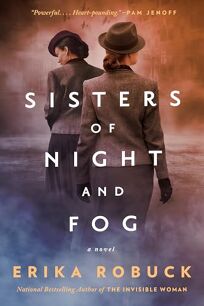
Sisters of Night and Fog


A fictionalized account of two women in the French resistance during WWII, one American and one British, written by Erika Robuck.  The author offers a note at the end telling how she came to write about Violette Bushel Szabo and Virginia d'Albert-Lake, and also details where her storytelling deviated from the actual people and events. There is also a biography which includes books written by Violette's daughter, Tania, and an edited version of Virginia's diary and memoir. It felt like a slow read at times, but was still compelling. So much of what the Nazis did during WWII are being seen again in the Russian attack on Ukraine. It's sickening at times, but one also has to admire the incredible courage of these women, both of whom ended up in Ravensbruck right after the Allies landed at Normandy. Only one of them made it out alive--barely. The Nazis were anxious to erase as much evidence as possible of what they had been doing at the concentration camps and many prisoners were summarily executed and cremated in the last days before the camp was liberated. Both men had married French men, Virginia several years prior and Violette during the war. At 19, Violette escaped France as the Nazis bombed and then invaded France, while Virginia never left. Virginia and her husband Philippe at first escaped to a small farm they owned in the country but knew they could not continue to hide; they began sheltering and escorting downed Allied pilots to various points along an escape route that would eventually get the pilots to Spain. Violette was anxious to do something useful for the war effort in spite of her father's, and later her husband's, objections and eventually was recruited to the SOE. I am reminded of other fictionalized accounts of these heroic women such as The Alice Network (Kate Quinn), The Paris Library (Janet Skeslien Charles),  and Kristin Hannah's The Nightingale. A hard but worthwhile read.

Publishers Weekly says "Fans of WWII dramas are in for a treat." BookPage praises "Violette and Virginia are two women whose stories needed to be told, particularly now that most of the people who fought in WWII are gone. Robuck has done their memory great honor."

Sunday, June 6, 2021

The Queen's Accomplice


 This book by Susan Elia MacNeal is the 6th in a series featuring cryptographer and MI 5 spy Maggie Hope. There are 4 subsequent books in the series so I jumped in right at the middle. I will definitely go back and read from the first one, Mr. Churchill's Secretary. In this book, set in 1942 London, the Blitz has finally stopped and Maggie finds herself cooling her heels as a receptionist in the office of the Special Operations Executive (SOE) until she is summoned by a former co-worker at MI 5 to help solve a series of murders. The killer is re-creating the murders of Jack the Ripper and targeting young women who have come to London to be interviewed by the SOE for possible insertion into occupied France. Maggie is already furious that women spies are paid a fraction of what men doing the same work receive, and, because the use of women spies is very hush hush and not covered by the Geneva Convention, they are not acknowledged officially when they die and their families are not compensated as the men's families are. But she can make no headway with the pompous men who send these young women out to their dangerous assignments. Having, apparently, a cozy relationship with the Queen, however, may make it possible to redress the issue. How much worse, then, for some misogynistic man to start murdering these women on their home turf. She gets paired up with with DCI James Durgin of Scotland Yard and they each begin to gradually appreciate the other's unique strengths. Durgin has years of experience that inform his "gut feelings" and Maggie is a maths prodigy who can see patterns in seemingly random data. They make an interesting team that will be sure to continue into future installments.

Sunday, June 16, 2019

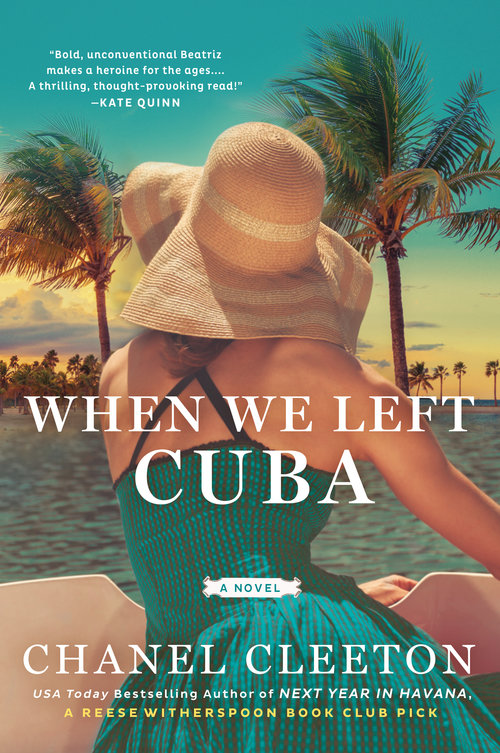
When We Left Cuba

Like her previous book about Cuba, Next Year in Havana, Chanel Cleeton's sequel deals with the overthrow of Batista, the rise to power of Fidel Castro and the situation for those who subsequently fled. At the center of the story, once again, is the Perez family; although, this time we follow Beatriz, the one who was considered the wildest of the 4 sisters, the one who chafed most at the life intended for her as a wife and mother. She was also the twin of Alejandro, who was murdered by the revolutionary forces when they drove out Batista, even though he was a student revolutionary himself. It was intended as an unambiguous message that the revolutionaries were coming for her family, whose wealth had been built on a generations-long sugar empire. All that Beatriz wants now is to get revenge on Fidel Castro, the man she believes murdered her brother.  So when her brother's best friend, Eduardo, comes to her with a proposition to meet with someone from the CIA, who also wants Castro gone, 22-year old Beatriz becomes a spy. First, she is sent to New York City when Castro comes to address the United Nations. He is a known womanizer, and Beatriz is, by general agreement, a beautiful woman. She attends a dinner, is introduced, and he appears interested, asking her to sit beside him on the podium. But eventually, she cannot follow through with any sort of liaison and returns home to Palm Beach.  She is then tasked with infiltrateing a local group of Communists/ Castro supporters.  Meanwhile, Beatriz has fallen in love with a Senator and would-be president from a politically powerful family who are closely aligned with the Kennedys. He is already engaged, but they are irresistibly attracted to one another and eventually begin an affair. Any plans to get Beatriz close enough to Castro to assassinate him are derailed when there is a fatally flawed attempt to oust Castro by exiled Cubans at the Bay of Pigs. Then Russia ship nuclear missiles to Cuba, precipitating a barricade by the U.S., which is eventually successful in deterring delivery. Finally Beatriz gets her chance. But she has also been betrayed by members of the small Communist cell she was monitoring, two brothers who are Castro's spies in the exiled Cuban community. Her cover blown, Beatriz is still considered useful and spends the rest of her life as an asset of the CIA. She and her lover have been apart all the intervening years; he married, had a family, and stayed in politics. When his wife dies, he comes back to find the woman he loved most in the world. Once again, this is a revealing look at a turbulent time in Cuba's history as well as in the relationship between Cuba and the U.S. The U.S. does not come off looking like the good guys in either book, but neither does Castro. One's sympathies are exclusively for the people exiled from the country they love, ever hopeful to return home.
Glowing reviews from The Washington Post and Publishers Weekly.

Wednesday, November 14, 2018

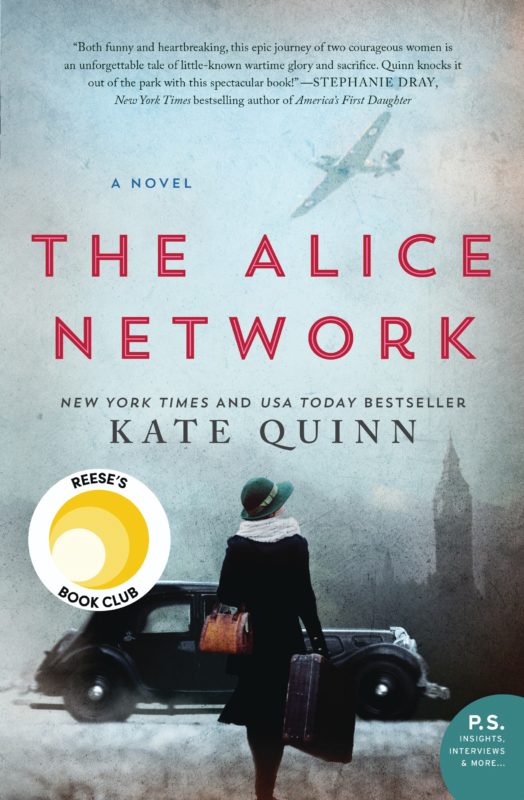
The Alice Network

This historical novel from Kate Quinn, based on actual people and events, is told from two alternating perspectives. WWII has taken a terrible toll on Charlie St. Clair's family. Her brother James came home from the war "shell shocked" and eventually killed himself. Her cousin and dearest friend, Rose, was still in France when the Germans invaded and has not been heard from. Nineteen year old Charlie feels she failed them both and thus fell into her own depression, resulting in desperate and careless sexual encounters and an unwanted pregnancy. Her father is not speaking to her and her mother has brought her to Europe for the Swiss "cure" to her "Little Problem." But Charlie has decided to take this opportunity to slip away from her domineering French mother and find her missing cousin Rose. She has only one lead, the name on a missing persons report. When she shows up on the doorstep of one Eve Gardiner, instead of useful information she gets a gun pointed in her face and a belligerent and drunken threat to go away or get shot. But timid Charlie stays, in part because the hired help, another war shocked ex-soldier and Eve's driver, shows up to feed Eve breakfast. Not surprisingly, Finn becomes the love interest for Charlie. Eve is reluctantly convinced by a tidbit of information Charlie offers about the name of a restaurant where Rose had worked, and especially by the name of the owner, René.
The alternating story is told by Eve, a stuttering file clerk who is recruited to become a spy in WWI France because she speaks both French and German perfectly. She is minimally trained in England and then sent to the village of Lille, which is occupied by the Germans. She is greeted and managed by Lili--her pseudonym in the network--who was renowned in real life for timely and critical intelligence gathering. Eve is placed undercover as a somewhat dim-witted (the assumption people make as a result of her stutter) but competent waitress in a restaurant run by a collaborator, René Bordelon. If he is alive, Eve will hunt him to the ends of the earth for what he did to her. It is a taut tale from both perspectives and the unlikely alliance between the two brings closure--albeit tragic--to both. Great writing and compelling characters and settings.
Descriptive review from NPR. 

Thursday, November 10, 2016

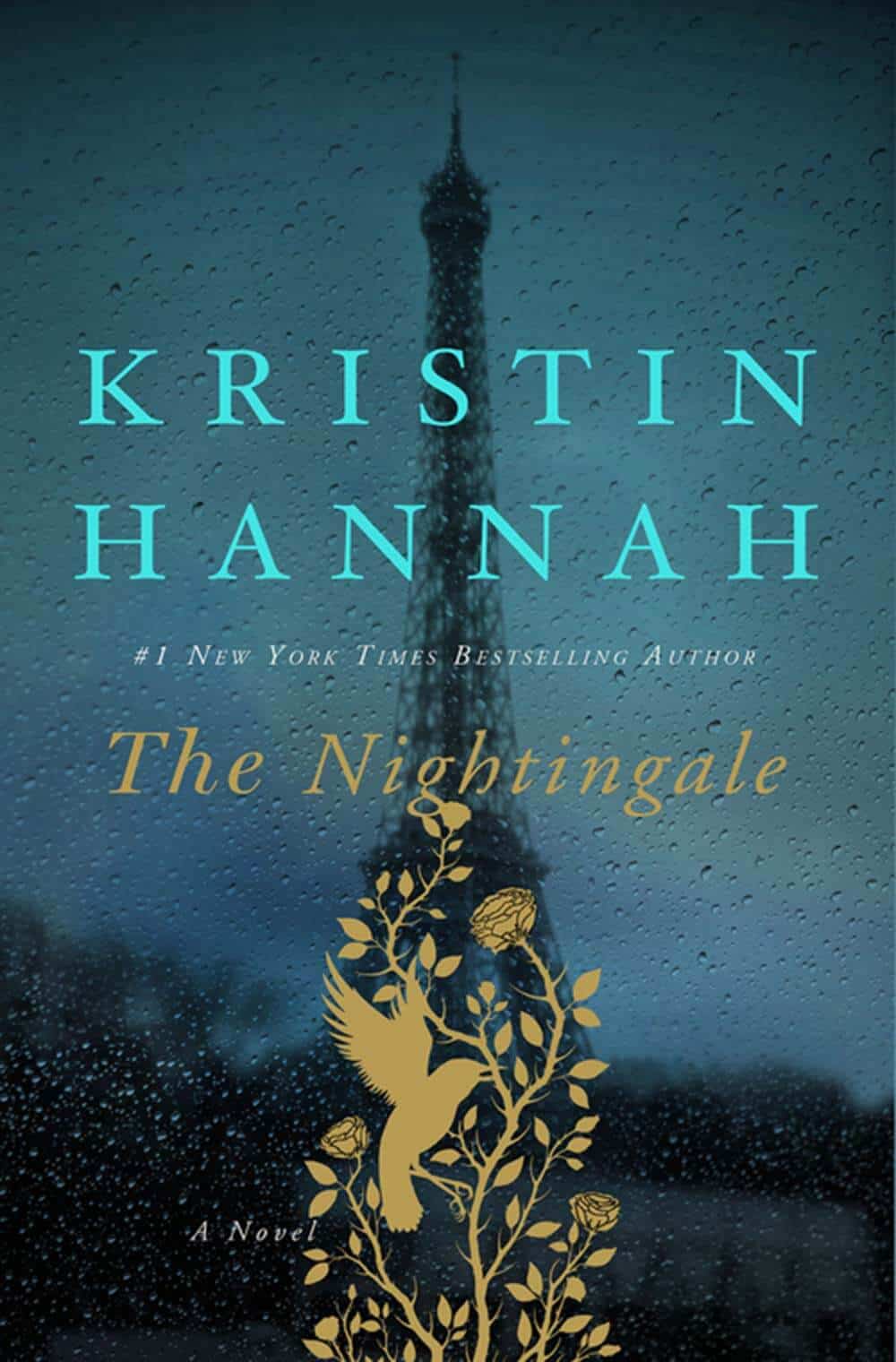
The Nightingale

This highly acclaimed book by Kristin Hannah was personally recommended to me by friend Betsy Friedman. It is beautifully written and compelling story with well developed characters, and yet it was sometimes uncomfortable to read due to the subject matter. Set during WWII when the Nazis have occupied France, two sisters who are as unlike as can be imagined end up taking very similar paths, each to resist the obscenities of the war in her own way.
Viann and Isabelle's mother dies when they are quite young and their father retreats into alcohol and absence. Viann gets pregnant by a childhood sweetheart at 16 and moves to the country to live happily with husband and child. Younger sister, Isabelle, is an emotionally wounded isolate, getting kicked out of one boarding school after another. But she is also adventurous and when she returns to Paris, having decided to live with her father, she gets involved in the French Resistance, eventually coming to be a primary resource for getting downed American and British pilots out of the country. She leads them over the harrowing Pyrenees mountains on dozens of occasions, gaining notoriety as The Nightingale. Viann's husband is sent off to fight the invading Germans but is captured. The village where Viann lives with her daughter is occupied and a series of German officers is billeted at her house, one kind, one cruel. When her neighbor and best friend is sent to a concentration camp, Viann bravely declares the child is her own and hides his Jewish identity. Eventually she is responsible for hiding away 19 Jewish children in a convent in the nearby countryside. The arbitrary terror and cruelty of the Nazis is painfully described, but so is the incredible bravery and love of the two women. A very informative tale about the little known women who resisted war in France. About writing this book, Hannah said,
"For me, The Nightingale started like any other novel. With research. I came across the historical stories of the women of the French Resistance and there was no going back. Their stories were mesmerizing, heartbreaking, intimate and universal. I was appalled that their stories were not better known.
All of my research led me to a central question: When would I, as a wife and mother, risk my life and my son’s life to save a stranger? Once that was in my head, I knew I had a story worth telling." Agreed!

Tuesday, March 11, 2014

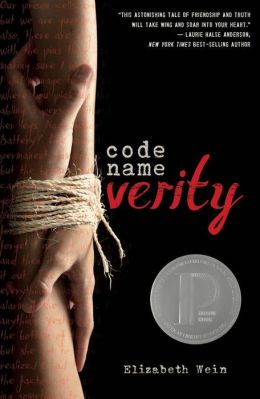
Code Name Verity

       Elizabeth Wein is the author of this "companion novel" to Rose Under Fire, but I urge reading this one first to enhance understanding. These two books were both driven by the author's fascination with the Air Transport Authority--British women pilots in WWII.  The story is divided into two parts, the first told by captured British spy, Julia Beaufort-Stuart, who is being held and tortured in the Gestapo headquarters of a French town. Per her account, which is conveyed via the notes she is supplying to the Germans in exchange for her life--temporarily--she is a traitor of the worst sort, supplying radio codes, names of airfields and types of aircraft. It is a somewhat rambling account that documents the development of her friendship with ATA pilot, Maddie Brodatt. Maddie, we learn from Julia, has been mechanically inclined all her life, able to take apart and repair all kinds of engines, and she is also passionate about flying. Julia is shown photos of the plane in which Maddie flew her to France that crash landed after Julia parachuted. The photos supposedly document the complete incineration of the plane, with Maddie onboard. The accounts of torture, for both Julia and the resistance fighters also being held in the same prison, are horrific, if somewhat obliquely described.
This award winning book by
     The second part of the book is Maddie's tale, told through notes she kept while hiding with the Resistance fighters in France. We learn that, due to an emergency, she decides to fly Julia to France, even though technically she is not authorized to fly into a war zone. ATA pilots were only supposed to ferry planes within Britain. They come under fire, damaging the tail of the plane and forcing Maddie to crash land after dropping off Julia. The plane was supposed to return British pilots, being helped and hidden by the Resistance, back to England. Now she becomes one of those in hiding and puts her skills to use learning to make explosives. Indirectly, through her section leader, she learns that Julia has been captured and is very likely being held and tortured in the nearby town. One night, her group of saboteurs get information about a prisoner transport and determines to blow up a bridge and free the prisoners. Things go terribly wrong and Maddie kills Julia--at Julia's request--to avoid her being taken to the concentration camps for medical experiments. A woman who had been present at Julia's interrogations secretly brings Julia's notes to Maddie and she learns that, in spite of Julia's reputation within the prison as a collaborator, she has revealed not a single piece of useful information to the Germans.
There is a several page "Author's Debriefing," after the story itself, that describes some of the source material for the novel and it is well worth reading. Although ostensibly written for young adults, these are really remarkable stories, with compelling characters, clever plotting, and a sometimes painfully clear description of what happened to people in WWII. Highly recommended for adults and recommended with caution for YA's. This review in the NYT also gives a wonderful flavor for the book.