Showing posts with label Moscow. Show all posts
Showing posts with label Moscow. Show all posts
Saturday, August 27, 2016
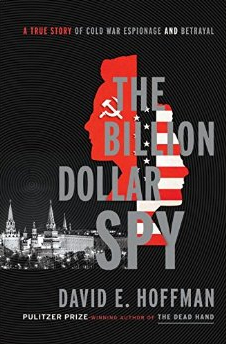
The Billion Dollar Spy


Sunday, April 26, 2009
The Master and the Margarita
Written by Russian dissident Mikhail Bulgakov in the final 12 years of his life, The Master and the Margarita was not published until 26 years after his death (in 1940). From 1930 on he was unable to publish at all in Russia although, strangely enough, he was allowed to produce others' plays as literary consultant to the Moscow Art Theatre. For a quick overview of his work and life, see the Wikipedia entry. The translation I read was by Mirra Ginsburg. I have to say this is not my favorite genre. Bulgakov is taking the atheist state on with a tale about the devil coming to Moscow and wreaking havoc with the lives of those who profess not to believe in either God or the devil. There are lots of plays on words, which are surely influenced strongly by the translation. There is a second story within the main one about the crucifixtion of Jesus. The devil was present and a contemporary author in Moscow, the Master, has written the story. The tale culminates with Satan's ball over which the Master's lover, Margarita, presides in the form of a beautiful witch. All the people the devil considers to have integrity (i.e., the Master and Margarita) get to go off to their own private paradise in the end. And the citizens of Moscow are left trying to make sense of the whole series of puzzling events that the devil whipped up while he and his entourage were in town. The hypocrites--again according to the devil's evaluation--all get their come-uppance.
Subscribe to:
Posts (Atom)