Showing posts with label London. Show all posts

Monday, August 31, 2026

Time to Burn


This suspense novel by Ellery Lloyd (the pen name for a British husband-and-wife writing team) posits a current day world in which time travel is possible, but only at great expense. We join a small group of travelers and their guide in 1941 London during the Blitz. En route to the return portal, one of the travelers is severely injured by flying glass from an explosion and one traveler, Sasha, does not come back with the rest of the group. This of course could be a public relations nightmare and so all resources are brought to bear to try and locate the missing person and bring her home.  Here is a summary from the book jacket:

"Mercurial tech entrepreneur Inigo Frank has perfected commercial time travel, though it is tightly regulated and so expensive that it's open only to the very wealthiest. His company, Tempus Tours, has so far been approved for just one route: a journey back to London in 1941, to the days of the Blitz, allowing the super-rich to experience the awesome sights and sounds of the aerial bombardment of the capital during World War II. It's a slick operation--routes across the wartime city are meticulously plotted, guides are extensively trained, and rules for the time tourists are strictly enforced. To immortalize his achievement, Frank enlists award-winning filmmaker Phoebe Hunt to create a fly-on-the-wall documentary. On her first day shadowing Inigo, she is set to witness the return of a billionaire property developer and his family from their trip to the past. But instead of their awe-filled return, she captures the group arriving bloodied and traumatized, with one of their number missing. Not only that, but Phoebe recognizes the missing woman, and knows not only that she's not who she claims to be but that she has every reason to harbor a grudge against her. And as events begin to unravel in the present day, it seems increasingly clear that she had sinister motives for returning to the past--and that people close to Phoebe are in danger. Phoebe must race to untangle the truth--before past and the future are rewritten."

Library Journal says in their review that "The setting is wonderfully constructed, the pacing is fast and orderly, and the characters are well-drawn. ...This is a thriller blended with old-school science fiction at its best: a story rooted in current reality and fertilized with a healthy dose of dystopia." Publishers Weekly concludes in similar fashion: "Well-wrought characters lend texture and emotional resonance to the intricate and diabolically clever plot. It’s a triumph."  


Thursday, August 20, 2026

The Monogram Murders


This is the 1st installment of Sophie Hannah's authorized continuation of Agatha Christie's "Hercule Poirot" series of mysteries (see also my post on The Mystery of Three Quarters). In Booklist's starred review, they praise that "Hannah... proves more than capable at re-creating the legendary Belgian detective, who once again puts his little grey cells to good use, this time in unraveling an exquisitely tangled triple murder."Also giving this a starred review, Library Journal agrees that Hannah "has re-created the sleuth's voice and character as true to the original as anyone could."

Publishers Weekly offers this summary: "One evening in February 1929, Hercule Poirot is dining alone at a London coffee shop when a woman arrives who looks as if she had "come face to face with the devil." Poirot joins the distraught woman, known at first as Jennie, who tells the sleuth that no one can help her because she's "already dead," and that no one should search for her killer. "The crime must never be solved," she proclaims. Another cryptic remark Jennie makes before fleeing into the night-"please let no one open their mouths"-resonates with Poirot and Insp. Edward Catchpool, the Scotland Yard detective ... after two women and a man are found poisoned in a hotel near Piccadilly Circus, each with a monogrammed gold cuff link inserted in his or her mouth. The rest of the novel lives up to the promise of the opening, complete with dazzling deductions, subtle cluing, false endings, and superb prose."

I am more inclined toward the review from Kirkus: "So Poirot attaches himself to the case, ... alternately lecturing and hectoring Catchpool, and sounding very little like Agatha Christie’s legendary sleuth except for the obligatory French tags. Hannah... would seem an odd choice for the job of resurrecting Poirot. The main strengths she brings to her task are a formidable ingenuity and a boundless appetite for reviewing the same evidence over and over again. The herrings-within-herrings denouement, which goes on for 100 pages, hovers between tour de force and unintentional farce." 

Saturday, July 25, 2026

Curtain Call


This is an oldie but goody--revived by Vintage Books in 2015--that takes place between World Wars I and II in 1936 London. A rising star of the stage, actress Nina Land, has embarked on an affair with a married man, Stephen Wyley, who is the portrait painter  in demand with high society. Quite by accident, Nina interrupts ann attempted murder by a serial killer and unwittingly put a target on her back. Through various social contacts, Nina re-encounters the intended victim, Madeleine Farewell and they collaborate on providing the police a drawing of the potential killer. The brassy larger-than-life theatre critic, Jimmy Erskine, plays an outsized role in epitomizing the moral ambiguity of the age, keeping his life as a homosexual a secret even while constantly flirting with imprisonment through his "recklessly promiscuous" behavior. (The Independent). His talented secretary Tom Tunner is keeping his own secret about his epilepsy as he doesn't want to be  defined by his disease. Madeleine and Tom cross paths and begin a friendship, based on the shared secret of Tom's health and the not shared secret of Madeleine's life as an escort. The Author's Note says that he didn't want the who done it to dominate the story, but rather let the characters he created weave their way toward a conclusion. The New York Times concurs with this approach by saying that "This is a novel that would work as a character study alone — Quinn is that good — but it also happens to be a terrifically satisfying whodunit." The reviewer goes on to effuse "I cannot recommend “Curtain Call” highly enough. As a story, as a mystery, as a visit to between-the-wars London. Basically, drop everything you’re doing and read it." The Guardian calls this a "faultless murder mystery" and goes on to provide a lengthier summary of the characters and storyline. The Independent describes "Quinn's refined narrative voice ... as crisp, melodious and sure-footed..." and closes by saying the book is "a beautifully written, absorbing work of historical fiction."


Sunday, February 22, 2026

Murder at the Christmas Emporium


First of all, this novel by Andreina Cordani has a terrible book jacket image which does not represent the setting in any way, shape, or form--picky I know but really. I found the plotting entirely too complicated and the multiple flashbacks distracting, but Publishers Weekly loved the book. Here is their review in its entirety:

"Holiday magic goes horribly wrong in Cordani's delightfully eccentric follow-up to The Twelve Days of Murder. Merry Clarke steals her boss's invitation to the reopening of Verity's Emporium, a bespoke London toy store that's home to elaborate displays and strange mechanical attractions. After Montagu Verity, the store's Willy Wonka--esque proprietor, offers a warm welcome to Merry and a handful of other VIPs, the shoppers discover they've been drugged by their complimentary hot cocoa. They awake trapped in the multilevel, secret passage-filled building, their phones having been confiscated upon entry, and soon discover the dead body of the store's head toymaker. From there, flashbacks tease out each character's backstory and relationships to the Veritys, while tense conversations in the present slowly reveal their links to one another. Meanwhile, the store brims with clues and terrors, including a display depicting each guest's brutal murder. Cordani's plotting is devious and perfectly calibrated, revealing just enough to heighten dramatic irony while leaving plenty of room for shocking twists. This canny combination of whodunit and horror makes for a gleefully demented stocking stuffer." 

Likewise, Booklist praises characters and setting: "Told from multiple points of view, both past and present, this compelling, stand-alone mystery with its myriad plot twists, well-drawn characters, and a lovingly described Christmastime setting will appeal to locked-room-mystery fans." 

Kirkus, on the other hand felt much like I did. "...The problem is that at no time do any of her retrospective thumbnail sketches give readers much reason to wish for the grown-up characters’ survival. Even Merry, stuck in a dead-end job and hopelessly in love with co-worker Ross, is foolishly controlling, and TV celebrity Fran, tortured by a secret Cordani teases for more 100 pages before revealing as the most obvious thing possible, is shallow and self-serving. When bad things happen to good people, justice cries out for an explanation. But when bad things happen to bad people, well…why the hell not? A joyless Yuletide tale offers little to celebrate."


Tuesday, November 25, 2025

A Grave Robbery


This is the 9th book in Deanna Raybourn's "Veronica Speedwell" series, which reads very much like Elizabeth Peters' "Amelia Peabody" series, i.e., lots of sexual innuendo, a dauntless female protagonist, sexy male partner who is clearly a feminist, etc. etc. Set in the late 1800's, the book well captures the atmospheric London. This installment certainly has an interesting premise. Their landlord Lord Rosemorran is an avid collector of almost everything and he brings Stoker (who is an expert taxidermist and mechanical wizard) an apparent waxwork of a reclining lady. He asks Stoker to insert a mechanism to mimic breathing, like the figures at Madam Tussaud's. When Stoker cuts into the figure, however, what he finds is shocking--a perfectly preserved real human body. They are determined to find her origins and, if she is the victim of foul play, to get some measure of justice for her.

Booklist praises in their review: "As with the previous Speedwell mysteries, this is a humorous, lively romp through the mansions and alleys of Victorian London, led by the dynamic couple and narrated with Veronica's signature wit. As Veronica and Stoker interrogate suspects and set traps, readers will be fascinated to learn more about Anatomical Venuses (wax figures once used to teach anatomy) and Frankenstein-esque embalming and electrophysiology theories. Another gem in what's always been an excellent and particularly un-put-downable mystery series."  Similarly, Library Journal recommends with this: "It's possibly the best in the series, with Raybourn's trademark banter, innuendo, and outstanding lead characters, along with a fascinating plot and supporting cast."

Sunday, May 4, 2025

The Angel of the Crows


This is the 3rd book I've read by Katherine Addison and I found it equally as satisfying as the other two (The Goblin Emperor and The Witness for the Dead).  This is set in 1880's London and is a take-off on the Sherlock Holmes body of work. However, in this alternate version of London, supernatural creatures are an accepted part of the culture and vampires and werewolves have long-standing treaties with the human population that allows them to function fairly normally in society--within their own limitations. Angels are commonplace guardians of buildings but the Holmesian figure is the Angel for the entire region of London since his building was destroyed. He is often called in to consult for the police. He has the wings of a crow and is called the same. His new flatmate is Dr. Doyle who has some significant secrets to hide but needs a living space he he can afford on a retired military doctor's stipend. Dr. Doyle quickly gets involved with Crow's cases, especially the murders of prostitutes in Whitechapel.

Library Journal says of this book, " A twisting, surprising Sherlock bend in a world of angels, hell-hounds, and other supernatural beings. Readers may know the names and the stories, but here is an original tale. ...Addison ... enthralls readers with her character-driven action, intriguing expressions of identity and sexuality, and a world set in an alternate 1880s London that captures the imagination. " Similarly, Booklist concludes, "Supernatural versions of classic Holmes stories take place alongside the Ripper murders, with Doyle and Crow in the thick of them. While very different in tone from her last work, Addison's adept characterization and world building elevate The Angel of Crows above the run-of-the-mill Holmes pastiche. Highly recommended for ... anyone looking to be immersed in a well-wrought alternate historical fantasy world."

Kirkus offers a favorabld review as well: "Supernatural versions of classic Holmes stories take place alongside the Ripper murders, with Doyle and Crow in the thick of them. While very different in tone from her last work, Addison's adept characterization and world building elevate The Angel of Crows above the run-of-the-mill Holmes pastiche. Highly recommended for fans of Kim Newman's Anno-Dracula (1993) and Ian R. MacLeod's The Light Ages (2003) or anyone looking to be immersed in a well-wrought alternate historical fantasy world." 

I reallly like Addison's characters and world building and will seek out anything else she has written.

Sunday, January 19, 2025

A Rogue's Company


This is the third installment in Allison Montclair's "Sparks and Bainbridge" series and it was equally as entertaining as the previous two (The Right Sort of Man and A Royal Affair). Things have been going well at the Right Sort Marriage Bureau after the monetary reward from the last book and, as a result, a new character has been added, secretary/ receptionist Mrs. Billington. This time around Gwen is the victim of a kidnapping, along with her hostile father-in-law, recently returned from Africa. Lady Bainbridge receives a note demanding ransom and warning not to contact the police. She turns to the only person she knows that she thinks might be able to help--Iris--who leaps into action, calling on her friend Sally and her paramour Archie. A parallel plotline involves Simon Daile, the bureau's first client of color and why he is apparently stalking Gwen. There is also a new romantic twist revealed.

Booklist gushes "It's hard to imagine a wittier, more delightfully daring duo than Sparks and Bainbridge. Yet these women are not fluffy characters. Each struggles, Gwen with the ramifications of a mental breakdown, and Iris with events during her war service that continue to haunt her. Sharply plotted and filled with a robust cast of supporting characters, this is a mystery that both stands on its own and neatly links previous series entries." Publishers Weekly opens their review with this praise "An artfully constructed puzzle and dry humor lift Montclair’s excellent third mystery featuring professional matchmakers and amateur sleuths Iris Sparks and Gwen Bainbridge in post-WWII London..." and concludes "Montclair’s feisty leads continue to develop as psychologically plausible characters. Phryne Fisher devotees will clamor for more."

Sunday, January 12, 2025

A Royal Affair


I really like the characters in Allison Monclair's inaugural outing, The Right Sort of Man, so I went after this second book in the "Sparks and Bainbridge" series. I just discovered that Allison Montclair is pseudonym for author Alan Gordon. Hmmm.

Not surprisingly, our two intrepid protagonists are asked to vet a potential suitor for a client--who just happens to be Princess Elizabeth. Well, not exactly the Princess herself is asking; rather, her minions--who intercept the Princess's mail--are asking, because they have received a letter threatening to embarrass the Royals if money is not forthcoming. So once again Iris and Gwen are up to their ears in a highly secret and off the books investigation. And yet every lead they develop is either foiled by the SOE getting there first or, in one case, the murder of the blackmailer--and they're being framed to take the blame. Montclair continues to build on the characters as s/he carries forward a very labyrinthine plot. This book was equally as enjoyable as the first.

Booklist notes that "all is explained in a smart, Agatha Christie--style finale in which friends and foes are gathered to hear who did what and why. One of the series strengths is the focus on the personal lives of Iris and Gwen, both of whom are struggling, Iris with the consequences of her activities during the war, Gwen with battling for custody of her son. Written with flair and lots of snarky humor, this is great fun for British mystery fans."

Library Journal agrees. "Outside the office, Sparks navigates a possible romance with a charming gangster, while Bainbridge focuses on her mental health in order to regain custody of her young son, Ronnie. Pseudonymous author Montclair carefully reveals more about her two main characters, as their friendship strengthens and they learn to balance each other's skills. It's refreshing to see believable female friends in a historical mystery. Montclair doesn't neglect secondary characters either, particularly Sparks's loyal friend Sally and the aforementioned Ronnie...Fans of period mysteries ...will appreciate this gutsy duo." 

And Publishers Weekly calls this a "stellar sequel," going on to conclude "Montclair successfully combines the insightful characterizations of Jacqueline Winspear with the witty banter of Hammett's Nick and Nora Charles. Fans of the British royal family will have fun."


Sunday, December 29, 2024

The Right Sort of Man


In spite of the title, which suggests a romance novel, this is a first-class historical mystery by Allison Montclair. Set in 1946 London, this is her debut novel featuring an intrepid pair of women, Iris Sparks and Gwendolyn Bainbridge, and I will seek out subsequent books in the series. Booklist offers this summary review:

"First Comes Love, Then Comes Murder. Now there's an unintended slogan that seems made to order for The Right Sort Marriage Bureau, a new enterprise in the heart of London's Mayfair in the years after WWII. Proprietors: the worldly Miss Iris Sparks, Cambridge-educated, with a hush-hush background in the secret service, and the sheltered Mrs. Gwendolyn Bainbridge, at the mercy of her late husband's wealthy family. The business is off to a successful start but becomes seriously compromised when a client is murdered, and the prime suspect is the very man with whom they matched her. The police see it as an open-and-shut case, but Iris and Gwen take it upon themselves to clear his name and salvage their reputation using the combined, somewhat odd assortment of contacts, talents, and survival skills acquired on their individual life journeys. Fans of M. C. Beaton will relish the wit, and followers of Susan Elia MacNeal and Jacqueline Winspear will enjoy the depth and the period detail. Readers will want to get on the reserve list for the next Iris and Gwen adventure."

Publishers Weekly also offers this recommendation: "Set in 1946 London, Montclair’s stellar debut and series launch introduces an unlikely pair of detectives. Gwen Bainbridge, whose husband died during WWII, lives with her late husband’s parents, who managed to get legal custody of her six-year-old son, Ronnie. Gwen and Iris Sparks, a former operative for British intelligence, run the Right Sort Marriage Bureau. Their innocuous business becomes less so after client Tillie La Salle is stabbed to death shortly after her particulars were provided to Dickie Trower, a shy accountant. Dickie is charged with Tillie’s murder, his purported motive anger over the cancellation of their first date. Convinced that the wrong person is behind bars and facing intensely negative press, Gwen and Iris investigate Tillie’s death. They soon find plausible alternative motives, including fallout from the dead woman’s involvement in the black market and a former beau’s jealousy. Both leads are complex, well-developed characters, whose penchant for humorous byplay never comes at the expense of the plot, which resolves itself in a clever fair play reveal. Fans of Maisie Dobbs and Bess Crawford will be delighted."

Tuesday, June 25, 2024

The Murder of Mr. Ma


This is the debut novel for John Shen Yen Nee, but co-author S. J. Rozan has numerous titles to her credit.  The two protagonists of this tale were actual people...who lived 1200 years apart. Judge Dee is based on Di Re Jie (630-700 CE), who was made into the protagonist of a mystery series (Judge Dee) by author Robert van Gulik in the 1940's and 1950's. Apparently, there is also a "Detective Dee" film series. Lao She was the pen name of Shu Qing Chun, an intellectual who navigated the Boxer Rebellion and died during the Cultural Revolution. In 1924, Lao She wrote Mr. Ma and Son, a father-son duo who, while living in London, confronted the duality of a British fascination with cultural artifacts and fear of a "yellow peril." Interesting pairing. What is even more interesting to me is that, although John came up with the idea and general plot line for the book, S.J. Rozan did all the research and writing. Living Kung Fu master teachers.choreographed the fight scenes in this book. 

Publishers Weekly says of the book, "a bewitching series kickoff that cleverly riffs on the Holmes/Watson dynamic" and concludes their brief plot summary with this recommendation: "The intricate plot, which is bolstered by vivid period detail and playfully riffs on real-life figures in Chinese history (including Lao), is enhanced by healthy doses of humor and well-orchestrated action. Readers will be clamoring for a sequel."

Here is Library Journal's review: Rozan and Nee "create a distinct sense of time and place in this brisk adventure. Lao She teaches Chinese at a London university in 1924 and leads a peaceful life--until Bertrand Russell sends for him. Lao anticipates a quiet discussion about China. Instead, he's sent to jail to impersonate Judge Dee Ren Jie, who was accidentally swept up when police arrested a group of Chinese agitators. After the pair stir up trouble and cause a riot, Dee involves Lao in his plans to solve a murder. Dee served in the Chinese Labour Corps in France in the Great War. One of his former compatriots, a merchant, has been murdered. Then two more Chinese men are killed, all with a butterfly sword. Along with Lao, Dee enlists a shopkeeper, a British thief, and a group of urchins in his investigation. Lao narrates their adventures as Dee impersonates a street legend, "Springheel Jack, the Terror of London," swinging from lampposts and launching himself across rooftops in search of a killer. VERDICT Fans of the Sherlock Holmes canon will appreciate this fast-paced, exciting novel."

Watch the official book launch and meet the authors, the Kung Fu master and see a "lion dance." There is an interview with both authors from the LA Public library

Tuesday, May 21, 2024

Alias Emma

Ava Glass is a pseudonym but she does, nevertheless, have a website.  Christi Daugherty (her real name) also has one. There are already two sequels published in the series: The Traitor and The Trap.
The review and plot summary from Library Journal are more than adequate. 

"Glass (the pseudonym for an already internationally best-selling novelist) introduces Emma Makepeace, a new-era British spy whose quintessentially English alias facilitates blending into London, the most surveilled city in Europe. In the last two weeks, four government-protected Russian scientists were publicly assassinated with the efficiency and audacity of the Russian military spy agency GRU. The message: GRU knows the locations of dissidents in London and can strike with impunity. Unless the Agency intervenes, GRU will attack another set of scientists, planning to kidnap their son, Michael, to draw them out of hiding. Emma must make contact with Michael, convince him to accept protection, and deliver him to Agency headquarters--no easy task. Once on the run, this duo must cross London unseen by the Ring of Steel of CCTV cameras, now in the hands of GRU hackers. For 12 hours, Emma leads Michael through alleys, sewer tunnels, and back channels that don't appear in any guide book. The 12-hour time line propels the narrative. VERDICT Perfect for a single-sitting read, Glass's thriller (the first in a planned series) is an adrenaline-fueled tour of clandestine London. What's next for Emma Makepeace? More, please."

Publishers Weekly calls the book a "superb debut" and concludes their review by saying, "Intense, cinematic action propels this terrific old-fashioned thriller neatly brought up to date. Glass is off to an impressive start." The Washington Post praises it as "a fast-paced thriller in the spirit of Ian Fleming, with a very modern twist." The Guardian concurs. "Emma is an appealing character, smart and resourceful, and Glass deftly works her backstory into this high-octane, warp-speed thriller without missing a beat. Suspend disbelief and enjoy."

Sunday, March 10, 2024

The Queens of London


This is the latest of Heather Webb's 10 historical novels, this one centered on England's first all-female gang of thieves. The queen of the gang, Alice Diamond or, as she's known on the streets, Diamond Annie, has her own perspectives on justice and loyalty and isn't afraid to mete out punishment to anyone who crosses the line, male or female. The gang is called the Forty Elephants and they focus on shoplifting from high-end clothing stores, selling on to their fences, and dividing the money equally. With a different point of view is DC Lilian Wyles, one of the first women officers at the Met. She is trying to break free of the restrictive "women's work" --catching orphans--and is also trying to protect her women colleagues' standing in the police by being the best detective she can be. Catching the head of the Forty Elephants would certainly go some way towards convincing the higher ups that women are a valuable addition to the force.

Into the mix comes Hira, a young girl whose East Indian mother and English father have just died of cholera in India. Hira has been living with a wealthy but negligent uncle in Mayfair and she finds out that he plans to send her to a miserable boarding school for poor and delinquent girls in the north of England. She runs away into the seedier districts of London with absolutely no idea of how to survive. Befriended by a small scruffy dog, she is living in an empty flour barrel in an alley, trying to avoid the gangs of boys and the police, who would return her to her uncle. Alice finds her and uncharacteristically takes pity on the girl; she brings Hira home but warns her to stay out of sight of the abusive father of the family. She also introduces Hira to the Forty Elephants as a messenger and lookout, but Hira hates the thieving and violence she witnesses. On one of their jobs, Hira meets Dorothy, a kind sales woman at one of the department stores who offers the obviously hungry child her lunch. When Ruth, Alice's closest friend in the gang, is killed by her abusive boyfriend, Alice decides she must do more to protect her crew and starts scheming to buy a building that can be a safe house for all of them. But that's going to take more money than their usual shoplifting hauls provide. 

Booklist says of this book, "With engaging characters and strong women protagonists, Webb's page-turning historical work speaks to the challenges that women faced in the 1920s and the fortitude they needed in order to succeed in society led by men." Historical Novel Society also praises the book. "Queens of London is a whirlwind adventure through the streets of the Elephant and Castle neighborhood in early 20th-century London...And after only the first few pages you’ll be reading as much because you care about the characters as you will for the plot."

The author kindly provides notes and research sources so you can find out who and what events are based on actual persons/events and who/what is  fictional. I have to admit that for a significant part of the book, my sympathies were with the criminal gang.  

Tuesday, January 2, 2024

A Curious Beginning


This book by Deanna Raybourn is the first in her "Veronica Speedwell" series; she has written nine of these so far. She is also the author of the "Lady Julia Gray" series as well as some stand-alone novels, one of which is Killers of a Certain Age, which I read and really liked.  Set in 1887, we meet our protagonist, 20-something-years-old Veronica, an orphan raised by two "aunts." She is a lepidopterist and has already had several adventures in remote spots of the globe seeking rare specimens; she earns her own money by selling these on to wealthy collectors. When the last of the two aunts dies, she decides to leave the most recent small village they lived in and head for London. Her departure is interrupted by coming home to find someone has broken into the house, and who then also tries to kidnap Veronica. Saved by the arrival of another stranger in an elegant coach, Baron von Stauffenbach, Veronica accepts his offer of a ride to London--saving the train fare she reasons to herself. On the long journey, the Baron tells her that he was acquainted with her mother and that she is in grave danger. Veronica has never known who her mother was, but the Baron fears this revelation could put her in even more danger and refuses to reveal the name. He wants to take her to stay with a friend he would "trust with his life" in London. This turns out to be our other protagonist, Mr. Stoker, who is definitely not  what he first appears to be--a down-on-his-luck taxidermist living in a filthy warehouse trying to preserve an elephant shot by a wealthy patron, Lord Rosemorran.  

Kirkus continues the plot, "Before the Baron can return to tell Veronica what he knows of her mother, he's found dead, and the police like Stoker for a suspect. Stoker and Veronica partner up to find the real culprit, hurtling pell-mell into a captivatingly intricate plot, including a traveling circus, the fetid Thames, and the Tower of London, as they dodge villains with murky motives and hulking henchmen. Soon, they realize that Stauffer’s [von Stauffenbach's] death may be connected to the mystery of Veronica’s birth parents, and Stoker himself has a few secrets to discover, including what really happened on his disastrous expedition to the Amazon, which left him scarred and disgraced. As Veronica and Stoker careen through dastardly plot twists, they match wits, bantering with skill worthy of Tracey and Hepburn. A thrilling—and hilarious—beginning to a promising new series."

Library Journal also approves: "Creating strong character pairings, placing the action in ... unusual but actual historical settings, and folding it all into a clever mystery are hallmarks of this author's magical, signature style. Victoria engages in boldly inappropriate activities for women of the Victorian era but remains genuinely likable, adding a pleasant zest. Stoker's backstory allows his upbringing and past experiences to aid Victoria's investigations without becoming the primary focus. Readers will discover just enough about these two and hints of curiously reticent secondary characters to make the next in this ... series eagerly anticipated. ...For ... [those] ...who like out-of-the-ordinary historical mysteries that are completely satisfying, this new series starts off with a bang."

Monday, June 28, 2021

All Shall Be Well


This is the second book in Deborah Crombie's "Kincaid and James" series and, since I thoroughly enjoyed the series debut, A Share in Death, I decided to continue following protagonists Scotland Yard Superintendent Duncan Kincaid and Sergeant Gemma James. Not only are there good mysteries to solve, but both characters are divorced and each privately entertains an attraction to the other, so that, too, will develop over time. Duncan has a lovely top floor flat in Hampstead and has become friends with the woman who lives on the floor below, Jasmine Dent, who is dying of cancer. They often spend evenings talking or watching a movie on TV, although Jasmine is a very private person and Duncan feels he knows little enough about her. He is surprised to return home one morning, after a 48-stint on a case, and find that Jasmine is dead. No one expected her to die so soon, certainly her friend from work, Meg, who visits Jasmine every day and who, it turns out, is the major beneficiary of Jasmine's will. When Meg reveals that Jasmine had recently decided to kill herself and asked Meg to be present when she did, but had then changed her mind, Kincaid began to suspect that this was not a death due to the cancer. Did Jasmine kill herself? She left no note and there were no empty vials of morphine found. Or did someone help her along? Kincaid files a suspicious death report and the post mortem does indeed show a lethal amount of morphine in her blood. Kirkus offers a rundown of the potential suspects: "...Jasmine's ineffectual brother Theo, who's failed at one small business after another; her basement neighbor Major Keith, a devoted gardener who served in India at the same time Jasmine was born; home-help nurse Felicity Howarth, who wants to refuse her thousand-pound legacy; and Meg's grasping boyfriend Roger Leveson-Gower, who's counting on her coming into money..."

Gemma is unsure whether Duncan had feelings for Jasmine that are driving his insistence on investigating further, but helps in interviewing persons of interest while Duncan gathers background information from people and from the journals Jasmine left behind. Publishers Weekly praises, "Written with compassion, clarity, wit and precision, this graceful mystery amply fulfills the promise of Crombie's debut novel..." Whodunit was a surprise to me.

Mr. Churchill's Secretary


This is the first book in the "Maggie Hope" series by Susan Elia MacNeal. I real a later book (The Queen's Accomplice) and was taken with the protagonist, so decided to start at the beginning. This book won a Barry Award and was nominated for Edgar, Macavity, and Dilys Awards. Not only does the author dig into details about day to day life in London when the Blitz was soon to start, but she deals with the misogyny of the British hierarchy that allowed them to hire women as spies to go behind enemy lines while denying them official  recognition and their survivors any death benefits.  This, of course, wasn't the case for men hired into the same jobs. There was this bizarre and inexcusable belief that, if Hitler knew they hired women as spies, he would consider the British to be weak.

Born to American parents in London, Maggie is orphaned at an early age and taken to Boston by a maiden (in this case Lesbian) aunt. When a grandmother she's never met dies and leaves her a "Victorian pile" in London, Maggie heads "across the pond" to sell the house, even as war looms on the horizon. But it turns out it's impossible to sell the house with German invasion imminent, so Maggie takes in roommates to make ends meet and decides to stay and try to help with the war effort. Maggie is hired as a typist when a secretary in the Prime Minister's office is murdered. She takes umbrage at having been passed over for the more demanding role of secretary (which only Oxbridge men were allowed to take), because she knows her math and pattern recognition skills are superior to those who do get hired, but still accepts the position at the urging of her friend David, who works in the PM's office. Not only is Germany intent on destroying England with nightly bombing, but the IRA is collaborating with them to destroy the government from within, and Maggie gets caught up in a plot to assassinate the Prime Minister. Along the way, she uncovers evidence that the father she thought was dead may still be alive.

Although Publishers Weekly offers a less than glowing review, I really enjoyed this book and will read more in the series. Kirkus concludes, "Brave, clever Maggie’s debut is an enjoyable mix of mystery, thriller and romance that captures the harrowing experiences of life in war-torn London." The Seattle Post-Intelligencer cautions, "The emphasis on Mr. Churchill's Secretary is certainly more on the fiction part and less on the history, which makes it a fun ride" but goes on to praise by saying, "Ms. MacNeal managed to write a compelling and captivating debut, while creating a saucy character."

Sunday, June 6, 2021

The Queen's Accomplice


 This book by Susan Elia MacNeal is the 6th in a series featuring cryptographer and MI 5 spy Maggie Hope. There are 4 subsequent books in the series so I jumped in right at the middle. I will definitely go back and read from the first one, Mr. Churchill's Secretary. In this book, set in 1942 London, the Blitz has finally stopped and Maggie finds herself cooling her heels as a receptionist in the office of the Special Operations Executive (SOE) until she is summoned by a former co-worker at MI 5 to help solve a series of murders. The killer is re-creating the murders of Jack the Ripper and targeting young women who have come to London to be interviewed by the SOE for possible insertion into occupied France. Maggie is already furious that women spies are paid a fraction of what men doing the same work receive, and, because the use of women spies is very hush hush and not covered by the Geneva Convention, they are not acknowledged officially when they die and their families are not compensated as the men's families are. But she can make no headway with the pompous men who send these young women out to their dangerous assignments. Having, apparently, a cozy relationship with the Queen, however, may make it possible to redress the issue. How much worse, then, for some misogynistic man to start murdering these women on their home turf. She gets paired up with with DCI James Durgin of Scotland Yard and they each begin to gradually appreciate the other's unique strengths. Durgin has years of experience that inform his "gut feelings" and Maggie is a maths prodigy who can see patterns in seemingly random data. They make an interesting team that will be sure to continue into future installments.

The House on Vesper Sands


This is the first novel of Pairaic O'Donnell's to be published in the U.S., although he one previous novel published in the U.K.; he is also a critic and poet. This is a Victorian gothic ghost tale of sorts, set in 1890's London when high society women sponsored seances and spiritualism was wildly popular fare. The protagonist is one DI Cutter of Scotland Yard and he comes to be assisted in a very circuitous fashion by a drop out from Cambridge's divinity school, Gideon Bliss. Gideon has come to London at his uncle's request, made in a letter suggesting that he and some of the poor working women he ministered to were being threatened. Coincidentally, Gideon's uncle, the Rev. Herbert Neuilly, lives in the same boarding house as DI Cutter but has not been seen for days. Moreover, the particular woman Rev. Neuilly was worried about, Angela Tatton, was someone for whom Gideon had secret loving feelings, and she has also disappeared. Gideon desperately contrives to present himself to Cutter as a police sergeant in order to try and find Angela and his uncle, although Cutter is fairly quick to see through the charade. Nevertheless, they together begin the hunt to solve not only the mystery of several women who have disappeared, captured and killed by Spiriters according to the press, but also the suicide of a seamstress who jumped to her death from the top floor of well-to-do Lord Strythe's manse. A parallel storyline and investigation are being carried out by unconventional Octavia Hillingdon, an aspiring journalist who wants to do something more than write society gossip and who is persuaded by her publisher to pursue the story of the missing women. The book is atmospheric and dark, although relieved occasionally by the interchanges between Gideon and snarky DI Cutter. Publishers Weekly asserts, "O’Donnell excels at concocting eerie scenes.Yet he’s also very funny, particularly in exchanges between the profane Cutter and the verbose but perceptive Bliss." Even though the book starts with a dramatic event, it felt slow in the beginning; however, persistence paid off as the book reaches a satisfying conclusion.

The Guardian says of this book, "O’Donnell has pulled off with brio something that might, in a lesser writer’s hands, have fallen horribly flat: he has written a coherent and satisfying novel that is both disquietingly eerie and properly funny." At the conclusion of Kirkus' amusing review they note, "Author O’Donnell carefully unspools the gothic creepiness of his story, teasing the reader with tidbits of information that raise more questions than they answer...An intriguing, unexpected gothic mashup with elements of Dorothy Sayers, Wilkie Collins, and Josephine Tey."

Sunday, February 16, 2020

A Gentleman's Murder

This debut mystery by Christopher Huang is consciously styled on the works by Agatha Christie and others notables from the "Golden Age."  Set in 1920's London, narrator Eric Peterkin is a veteran of The Great War, and as such, is deserving of membership in the Britannia Club, a gentleman's club open only to those who served in the military. His ancestors on his father's side were founding members of the club and there have always been Peterkins amongst the members. More importantly to many people, however, including some club members, is that Eric is half Chinese, and therefore not to be entirely trusted. Eric's avocation is editing manuscripts for murder mysteries submitted for publication. His mind naturally leans towards puzzle solving. So when a brand new member of the Britannia club is found murdered, Eric is determined to find the killer and, based on his own strong sense of honor, carry out the last wishes of the  dead man, Albert Benson, who confided to Eric that he was seeking to right an old wrong. The ending makes it obvious that we can expect more Eric Peterkin mysteries to follow.
Huang offers a twisty plot, a whole cast of possible suspects, detailed scene setting (you can almost smell the coal-fire tainted fog), an indictment of social classism and of the treatment of war veterans. Publishers Weekly says "Huang’s plotting, characters, and atmosphere are all top-notch," and there is a glowing review from the New York Journal of Books.

Friday, January 10, 2020

Black Out

This debut novel (published in 1995; there have been many sequels in this series as well as other novels) by TV documentary producer John Lawton is richly atmospheric, evoking a structurally and morally torn and tattered London during the final days of the Nazi Blitz. In the midst of the destruction and chaos, who would expect to find a human arm in the remains of a bomb site, but a group of street urchins do and this launches an investigation by Detective Sargeant Frederick Troy of Scotland Yard. He offers a reward to anyone in the mob of youngsters who can finds more of the victim and is eventually led to a basement and more human remains in an old furnace. The victim was shot and then dismembered and burned--all except for that stray arm. It belonged to a German scientist who may or may not have been working for British Intelligence. When this case seems to share ties with a missing persons report about another east European immigrant, Troy begins to feel there has been a systematic effort to protect someone fairly high up in the food chain.
Troy, the son of a titled Russian émigré who eschews riding on the coat tails of his now wealthy father, gets involved with two different women. One is an  American WAC sargeant, Larissa Tosca, who serves as secretary to an American liaison with MI5. The other, Diana Brack, is a disaffected member of the upper classes who is involved with Troy's primary suspect, Jimmy Wayne. She and Troy develop a very complicated relationship. He is alternately cruel and lustful towards her, and she eventually tries to kill him. Given an unassailable alibi by American high command, it appears that Wayne will get away, but Troy is nothing if not persistent.  Four years later, in post-war Berlin, he tracks down the man he believed killed at least three people and pulls every string to get him back on British soil so he can be arrested. 
There is a lukewarm review from Publishers Weekly, while a review from Kirkus calls this thriller "beautifully paced."

Sunday, December 29, 2019

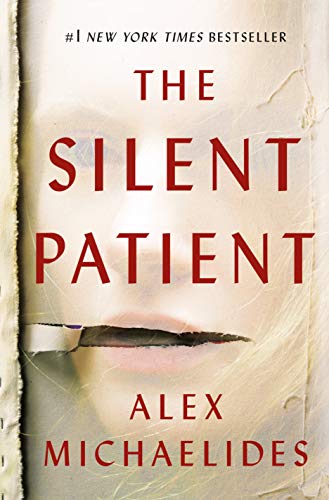
The Silent Patient

I suppose, as some reviewers have said, that the plot is contrived. However, this twisty psychological thriller and inaugural outing by author Alex Michaelides, definitely surprised me with the ending. We supposedly know whodunnit from the beginning of the book. “The facts, such as they were, were simple: Alicia was found alone with Gabriel’s body; only her fingerprints were on the gun. There was never any doubt she killed Gabriel. Why she killed him, on the other hand, remained a mystery.”Alicia Berenson, an artist, is housed in a secure psychiatric unit, The Grove, outside London, after shooting her fashion photographer husband six times in the face. She has not spoken a word in the six years since the event. Therapist Theo Faber applies for a job there, convinced he can get her to speak. And so the story is revealed alternately from Theo's perspective (past and present) and Alicia's diary. The author draws upon a rather obscure play by Euripedes, Alcestis, in which Alcestis sacrifices her life to save her husband, King Admetus of Thessaly, from death. When the hero Heracles learns of her death, he vows to fight death and bring her back, but she cannot speak for three days before she is returned to life.  "But why does she not speak?" (Euripedes, Alcestis)
The play is a clue of course but the role of Theo is much more complicated, which we should perhaps also surmise, given his near obsession with Alicia. He goes well beyond the usual role of therapist to uncover the dynamics of Alicia's marriage and the circumstances leading up to the murder. I was engrossed and not put off by the overly elaborate entries in Alicia's diary. Worth a read.
The Independent described it as "a high-octane, thought-provoking read reminiscent of Patricia Highsmith, but with its own completely fresh take on the psychological thriller."

Laudatory reviews from The Independent, Publishers Weekly, and The New York Journal of Books. A not particularly flattering review from Kirkus.