Showing posts with label art history. Show all posts

Saturday, January 3, 2015

Inferno

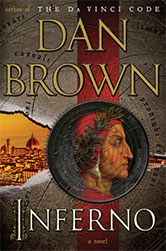
Good action packed book by Dan Brown that involves many of his trademark elements of art history, religious iconography, and following the clues to find the danger. Continues with the protagonist Robert Langdon of DaVinci Code fame. Langdon wakes up, apparently having brought himself to the emergency room of a hospital after being grazed by a bullet aimed at his head. While he is still trying to figure out why he is in Florence, Italy, a woman with a gun shoots his doctor, and the English speaking doctor who was assisting helps Langdon to escape. They embark on a day-long chase through the galleries and parks of Florence seeking to find out why Langdon is here, and why he is carrying a small projector in a secret pocket of his coat, which shows an altered version of a painting showing Dante's levels of Hell. In fact, the entire plot revolves around Dante's Inferno, and of course Langdon is in a uniquely qualified position to interpret the clues. A brilliant geneticist, who recently killed himself in a dramatic jump from a high tower in Florence, has created some kind of biological pathogen set to be released on the morrow. Langdon and his "doctor" companion, Sienna, are trying to find the weapon before it releases the pathogen, which they believe may be a version of the Black Death. The geneticist is a disciple of the "Malthusian equation" which shows that humans will populate the world to the point of species extermination within just a few years, and that a drastic solution is required to stop that from happening. A provocative idea and a fast-paced read with lots of wonderful details about Italian art and architecture thrown in.

Monday, January 20, 2014

The Goldfinch
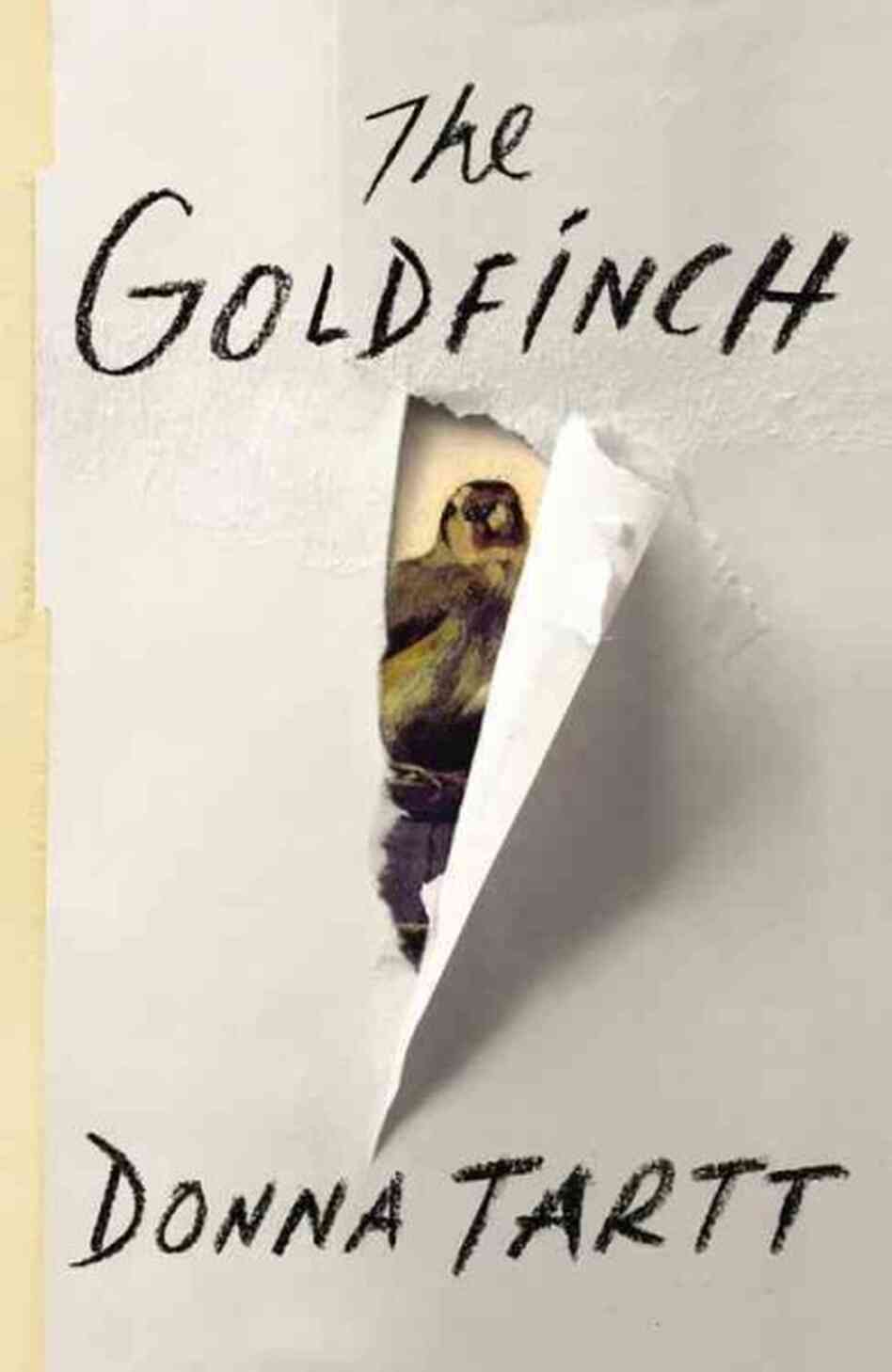
This novel by Donna Tartt has been on a lot of bestseller lists. The painting at the center of this story is a real one that was on display at the Frick last fall. In the story, 13 year old Theo Decker and his mother had taken a side trip to MOMA on their way to a meeting with Theo's teachers at school. Just after they had viewed the painting in question, Theo's mom moves away to another part of the gallery while Theo lingers to ponder an intriguing red-headed girl, who has been making eye contact throughout their somewhat parallel wanderings through the museum. Suddenly a bomb explodes and life is changed forever for Theo. Immediately after the blast, Theo crawls toward the older man who had been accompanying the red-hair girl. The dying man hands Theo a ring and gives him a somewhat garbled message. As Theo crawls through the rubble, he finds the painting lying on the floor and "rescues" it. After all his losses, though, Theo cannot bring himself to return the famous painting and he becomes a captive to it, just as the subject bird is shown chained. Theo temporarily lands at the home of a school chum, but life takes another bad turn when Theo's gambler, alcoholic father shows up to take him to Las Vegas. Theo makes his way back to Manhattan when his father dies in a drunken car wreck and hooks up with the partner of the deceased man at the museum. He continues to make bad decisions, a legacy of his father, not his mother. I admit I skipped about 150 pages and jumped to the last chapter of this 700+ page book, because it was due back at the library. Her writing is beautiful with captivating imagery and detail. The story is heartbreaking; so much damage and opportunity lost. I wouldn't seek out other books by this author, but obviously a lot of people liked this work...see the comments here.

Sunday, August 11, 2013

The Art Forger
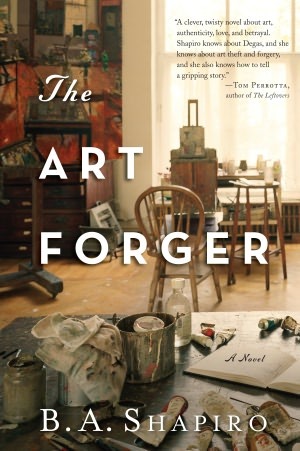
Based on the actual--still unsolved-- theft of several famous paintings from the Isabella Stewart Gardner Museum in 1990, which in fact included several by Degas, this is a fictionalized and romanticized account of what happens when one of the Degas paintings (a fictitious one) resurfaces. Claire Roth is a talented painter who has made the all too common mistake of falling for her famous and married art teacher, Isaac Cullion. Three years ago, when he was having a "painter's block" she painted a picture for him to help him meet a deadline for a viewing by an agent from MoMA. The picture she painted, fortunately or unfortunately, became the keystone for their accepting his work for a special showing and was ultimately purchased by them; yet he refused to admit that he hadn't painted it. When Isaac dumped Claire, she tried to set the record straight and became persona non grata in the art world; now no one will touch her work. She has become labelled as "The Great Pretender." She works making custom reproductions for a company called Reproductions.com and is a certified Degas specialist. When the owner of a famous Boston gallery comes to her with an offer for her own show at his gallery if she will make a copy of the missing Degas from the Gardner heist, she is eventually persuaded by his claim that he will return the original to the museum itself. As she works with the painting, though, she comes to realize that it is not a real Degas but a clever forgery that had been hanging in the Gardner all these years. No one is going to want to hear that, any more than the experts at MoMA wanted to hear that they had been fooled into buying a painting by a graduate student instead of the well-know professor. We see what we want to see. Author B.A. Shapiro has done detailed research that will tell you the nitty gritty details of how to forge a painting if you have the talent, as well as the struggles facing unknown artists.

Wednesday, April 3, 2013

The Map of Lost Memories
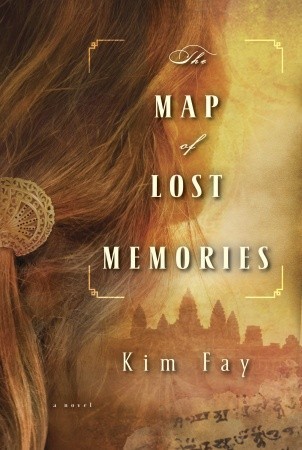
This book by Kim Fay has gotten quite a bit of very positive chatter and I was certainly curious to read it, since the protagonist was (a) a strong, independent woman,  (b) started out in Seattle, and (c) was about a part of the world I know nothing about (southeast Asia). Starting out in 1925, at the art and cultural museum on the campus of the University of Washington--renamed in this book as the Brooke (instead of the Burke)--Irene Blum has operated in the background for years helping to build the collections to levels of national and international recognition with special emphasis on southeast Asian work. Her special passion is Cambodia and the history of the Khmer empire, which rose to prominence and then essentially faded away to nothing. Irene's parents had spent time in southeast Asia, although she doesn't realize how much until late into the story, but she does find out upon her father's death that he possessed the diary of a missionary with information that may lead to critical records documenting the last great king of the Khmer empire. When Irene is passed over for the curator's position of the Brooke museum because she does not have a PhD, she decides to see out these mysterious copper scrolls and sets off on a dangerous adventure, financed by a lifelong friend of the family, who is also a serious collector of artifacts. Everyone who comes into this story has ulterior motives as Irene soon discovers, even those whom she thought she could trust most, and the relationships between the players turn out to be much more complex than she could ever have imagined. In spite of the author's ability to capture a sense of place with colorful description, her characters left me unengaged and I never really felt very deeply for any of them. I was fascinated with the idea of learning more about the Khmer empire, knowing virtually nothing about this culture, and yet over I was disappointed by this book. She does raise all the pertinent questions about the damage done to history and culture and memory by colonization of one people by another (or many others) but still this story felt flat to me. Clearly this is a minority opinion so I encourage you to form your own.

Monday, August 15, 2011

The Savage Garden

The Savage GardenI am woefully behind on posting about this summer's reading and so I am just jumping in with the 3rd Mark Mills book I read, The Savage Garden. Set in Tuscany, about 8 years after WWII (do you detect a certain partiality for the era by Mr. Mills??), a graduate student in art history at Cambridge is offered (ordered?) by his major professor to undertake a special summer project. He is to go to Italy for 2 weeks and research and write up the memorial garden at the Villa Docci as the basis for his thesis. Built nearly 400 years ago--30 years after the untimely death of his much younger wife--the garden is a memorial from Lord Docci, the bereaved husband. But as Adam begins to investigate the anomalies in the garden statuary and layout, he is troubled by what he finds and begins to think the death may have been murder, and the garden not so much a tribute as a series of clues. At the same time, Adam is intrigued by the current Docci family and the villa itself, which preserves the details of another tragic death. The current Signora Docci's son was shot on the third floor by occupying Nazis, just as Italy was being liberated by the allies. The entire floor of the villa was sealed off by her dead husband with strict instructions that it remain that way in perpetuity. Adam begins to feel he is being manipulated in his investigations, by the spirit of the dead nobleman's wife, and by the present day Docci family.
The characters and relationships in this book are more fully developed than in The Information Officer, the bits of history around collaborators and partisans provide political context, and the setting is evoked with careful detail. I was engaged throughout, and as surprised as Adam by the twist at the end.