Showing posts with label Greece. Show all posts

Sunday, December 30, 2018

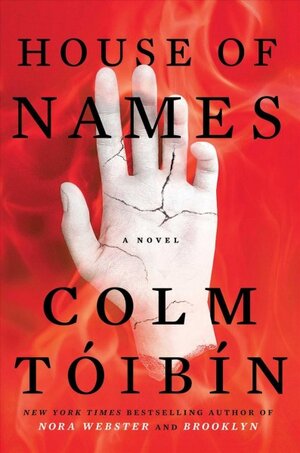
House of Names


I've never read any books by Colm Tóibín although he has had several well-known ones, including Brooklyn, which was made into a movie. Still I was intrigued by the premise of the book and by the opening line: "I have been acquainted with the smell of death." This spoken by Clytemnestra, the wife of Agammemnon, who is one of the principle narrators of this novel about the ultimate dysfunctional family. Furious that her warring husband has tricked her and their beautiful daughter, Iphigenia, into coming to his camp with a lure of marriage to the hero Achilles, Clytemnestra finds instead that Agammemnon will humiliate and sacrifice his daughter to the gods in exchange for favorable winds for his fleet. Returning home, Clytemnestra takes up with her husband's cousin, Aegisthus, both as a lover and as a co-conspirator in her plan to murder Agammemnon upon his return. Daughter Electra is put into a dungeon while the deed is done and left there to cool her heels for a time to bring her into line. Clytemnestra never tells her about her sister's murder. Orestes is sent away with the sons of many of the local powerful families--kidnapped essentially to keep everyone in line as Clytemnestra and Aegisthus take over the throne. A big chunk of the book focuses on Orestes' escape with two of the other kidnapped boys who hide out in the country far from home for several years. When he returns, vengeful Electra tells Orestes of Agammemnon's murder and convinces him to help kill Clytemnestra and avenge their father...so the cycle continues. The story is rampant with whispers and ghosts.
While Tóibín is a compelling writer, I did not find this a satisfying story; however, it is the quintessential tragedy. Lengthy and laudatory reviews from NPR, The New York Times, The New Yorker, the Washington Post, and Kirkus.

Wednesday, August 4, 2010

The King Must Die

An oldie but goodie by Mary Renault and another gift from my sis-in-law in honor of our Greece trip. It does give you a whole other perspective on viewing ruins that are thousands of years old to think of people actually living, loving, working in those places. For those of you not familiar, this is Renault's version of the Theseus legend. Was he the son of the god Poseidon? or of mortal king Aigeus and priestess Aithra. The story goes that Theseus was sent to Crete as part of Athens tribute--usually 7 girls and 7 boys--which was paid to avoid having Crete attack them. The youths were sent to the "Bull Court" where they "danced" with the bulls and usually didn't live very long, although they often lived well. The frescoes recovered from Knossos show the bull dancers. In the legend, Theseus manages to navigate the labyrinth and defeat the minotaur--half man, half bull--and sail home. But he forgets to change the colors of his sails to white. When his father the king spies the returning ships with dark sails, he despairs at his lost son and throws himself down the cliff to his death. In Renault's version, Theseus has already become a king in his own right by the time he volunteers to become part of Athen's tribute. He finds the Cretans have fallen away from the gods and become bored and irreverent, hence their eventual demise is inevitable. Knossos, once a city of 100,000 people according to historians, was in fact wiped out, perhaps by a tidal wave resulting from a cataclysmic volcanic explosion on Thera, followed by invasion by the Myceneans. There is no agreed upon explanation for the decline of a robust civilization that lasted for over 1600 years.