Friday, February 10, 2017

The Last Gift of Time: Life Beyond Sixty


This memoir by Carolyn G. Heilbrun was written 20 years ago and that was when I read it for the first time. I loved it then and so, when my book group agreed to have a thematic meeting on aging gracefully, I immediately thought of re-reading this book. Strangely enough, it did not resonate with me this time around to the same extent, even though I am now the age she was when she wrote it. Still, it is a lovely book with some great insights, and she is such a good writer that it is a pleasure to read.
The passages that spoke to me were often not about aging per se, but about the world in general, and it is staggering how pertinent to our present times her observations were:
"My sixties covered a period of pronounced meanness in the United States and in the world, meanness arising from a sense of righteousness and the need to punish, preferably with violence, those who do not share one's beliefs. For the first time in my life, I became fearful of institutionalized religion...I became awakened, sadly, to policies determined to transpose the symptoms of our societal failures into its causes: the poor, that is, were to be blamed for the failures of a mean-spirited nation that condemned them to poverty...What might be called political sadness arises...as an indirect response to organized and publicly condoned selfishness and revenge..."
And this on reading:
"True sadness which is not nostalgia can...be dispelled by reading...Lifelong readers continue to read, finding in books...the means to enjoy life or to endure it."
She does indeed talk about aging and quotes (indirectly) from Montaigne on the subject:
"Above all, now that I feel my life to be brief in time, do I seek to extend it in weight. I try to delay the velocity of its flight by the velocity with which I grasp it; and to compensate for the speed of its collapse by the zest which I throw into it. The shorter my hold on life, the deeper and fuller do I seek to rend it. Others feel the sweetness of contentment and well-being; I feel it just as much as they do, but not by letting it just slip away."
She also talks about outliving our time, when there is no further point in continuing. She had given herself permission to commit suicide at the age of 70 but now says, "I find it powerfully reassuring now to think of life as borrowed time. Each day one can say to oneself: I can always die; do I choose death or life? I daily choose life the more earnesly becasue it is a choice."  She goes on to caution against "...indifference's seduction; however often apathy assaults me in these last decades, I know it to be dangerous."
She, like others I have read on the subject, encourages focus on the present, eschewing time spent on memories. "Every time those of us in our last decades allow a memory to occur, we forget to look at what is in front of us." Among other things, she writes chapters on downsizing, her love of all things English, on not wearing dresses, on sadness, on listening to the young(er), on family and husbands, on sex and romance, and on technology. Here is a review from The New York Times, and a collection of quotes from the book in GoodReads. Well worth the read.
Carolyn Gold Heilbrun, born in 1926, was an academic at Columbia University and the first woman to receive tenure there in the English department. She was a prolific author of academic and non-fiction works on topics often related to feminism. Under her pen name, Amanda Cross, she also wrote a series of mysteries with a woman professor as the protagonist. She committed suicide in 2003.  There is a fabulous obituary in the New York Times, and an interview with her in the New York Times Magazine a decade before she died. There is a list of her books and more information about her also in this article from Wikipedia.

Tuesday, February 7, 2017

The Kenken Killings: A Puzzle Lady Mystery

Parnell Hall is the author of several mystery series and this is the 12th in the "Puzzle Lady" series. Cora Felton, the "puzzle lady" in the small town of Bakerhaven, Connecticutt, is actually not the creator of the crossword puzzles that have been published under her name. The author would be her niece, Sherry Carter, with whom Cora shares a house (and with Sherry's journalist husband as well). When police chief Harper calls on Cora to help solve a puzzle found at the site of a non-burglary, it turns out to be a number puzzle--a Kenken--which is apparently the new thing in number puzzles, and which Cora can solve. When the same bank manager who was not robbed turns up dead a few days later, there is another puzzle to solve.
Meanwhile, Cora's least favorite ex-husband, Melvin, has come to town accompanied by a very young and not-too-bright redhead as well as his shyster lawyer. Melvin is suing Cora for an annulment so he can stop paying alimony. As events progress, it appears that someone is trying to frame Melvin as the killer. Even though Cora doesn't like him, she knows Melvin would never kill anyone, and so she sets out to prove him innocent while sending the police on a wild goose chase. Cora is a truly cantankerous woman and a bit hard to like upon initial introduction. Perhaps she grows on the reader with greater familiarity since Kirkus says Cora is "at the top of her game" in this installment. There are puzzles included in the book for the reader to solve; however, answers are provided as they are the clues to finding the killer. Apparently most of the puzzle lady books involve crossword puzzles, so if you are a fan, these books might just be for you. Here is a review from Publishers' Weekly.

Monday, February 6, 2017

Death at Bishop's Keep

I always learn something new when I write these posts as I try to track down author web pages, reviews, etc. This book is the 1st of the "Victorian-Edwardian Mystery" series written by married couple Susan Wittig Albert and Bill Albert, writing under the pseudonym Robin Paige. Their website,  Mystery Partners,  gives brief summaries of the books in this series. They have also written another Victorian mystery series under a different pseudonym (Emily Brightwell).
Here we first meet the two characters who become the continuing protagonists: Kate Ardleigh and Sir Charles Sheridan. At the outset, Kate lives in America, her parents are dead, and she ekes out a living writing penny dreadfuls. She is outspoken and by the manners of the times, very un-ladylike. She is shocked when she receives notification that she has an aunt Sabrina in England (her father's sister) and that she would like Kate to join her at the family home, Bishop's Keep, and become her personal assistant. Kate jumps at the chance, but does not realize she is jumping into a fire. It turns out that another widowed aunt, who goes by her married name of Jaggers, is also living at Bishop's Keep, runs the household, and was opposed to Kate being asked to come. The tension in the household could be cut with a knife and Kate soon learns that Aunt Jaggers is a cruel, arrogant, and stingy mistress. Aunt Jaggers has terrified and angered the servants, especially since she sent one of the housemaids away last year after learning that the young woman was pregnant;  the girl subsequently died.
On the train from London, Kate has met and befriended Eleanor Marsden, who lives in the neighboring manor, and, although Kate is an uncomfortable friend to maintain, Eleanor does. Through the Marsdens, Kate meets Sir Charles Sheridan, also of the landed class, but an amateur scientist and sleuth at heart. While photographing the progress of a nearby archaeological dig, Charles finds a dead body, and when Aunt Sabrina asks Kate to quietly find out what she can about the victim, Kate and Charles' paths cross--again and again. Charles is alternately admiring and dismissive of Kate for her outspoken behavior and American ways. But Kate's investigations and discoveries, and finally her trap, bring the killer and a scandal to light--unfortunately not before her two aunts are poisoned and Kate inherits Bishop's Keep. Enjoyable protagonist and would certainly read another in the series by this pair.

The Opening Night Murder

Anne Rutherford is one of several pseudonyms used by Julianne Lee. In this first installment in a her "Restoration Mystery" series, we meet Suzanne Thornton. Born to a well-to-do merchant family, she loses everything when she is abandoned by her lover, Daniel Throckmorton, while pregnant with his unborn child. He heads for Europe with Charles II and stays there for 20 years without a word to Suzanne. With no alternative, she becomes a prostitute, but realizes, as  her son Piers gets older, that she must take him away from this life or risk him becoming a thief. First she joins an itinerant acting troupe and finds that she enjoys not only acting, but the troupe of fellow actors. When the troupe is disbanded by a raid of Cromwell's enforcers, she is once again on the street. Although Suzanne cannot imagine living without Piers, she sends him to a former suitor in Newcastle to be apprenticed as a coal merchant. She then becomes the mistress of penurious William Wainright, a Puritan. When Charles II returns from France to retake the throne in 1660, Wainright believes he will be persecuted by the new king and abandons Suzanne, saying he will flee to France. With the return of the King and his Cavaliers, former lover Daniel has also returned to London and now stands to resume his rights as Duke of Throckmorton. He is still married and under the thumb of his brother-in-law, however, so refuses to acknowledge Suzanne or their son. Desperate once more, Anne begs Daniel to loan her money to refurbish  the crumbling Globe theatre, where she plans to produce plays for the commoners. With the King's permission, he loans her the money, and Suzanne and Piers re-gather those of the acting troupe they can find and begin the task of rebuilding the theatre and their lives. But on opening night, in front of a packed house, a body drops onto the stage and dies from a crossbow wound. The deceased is none other than Suzanne's former patron, William Wainright. The area constable does not even bother to show up until the next morning, and refuses to investigate. However, pressure is brought to bear on Constable Pepper to find the killer and he decides Suzanne is guilty, even though witnesses place her elsewhere. As she is being taken to jail, Piers comes forward and confesses. Now Suzanne must find the killer or Piers will hang.
Rich with detail and a well-drawn protagonist, this historical mystery was a fun read. The author provides a note to indicate what was fact and what was fiction in her tale.

The Emperor of all Maladies: A Biography of Cancer

This book by Siddhartha Mukherjee won the 2011 Pulitzer for non-fiction and was a recent choice of my book group. He is also coming to Bend to speak as part of the library's "Author! Author!" series. Mukherjee wrote his book while on an oncology fellowship at Massachusetts General Hospital. He became fascinated with the disease itself and with the history of cancer research and treatment. He takes us all the back to 2500 BC when a Persian princess ordered one of her slaves to cut off a breast that had developed lumps. Even then, people recognized the often fatal outcome of finding lumps on the body. And for centuries, cancer, in all its forms, was virtually a death sentence.
But in the 18th, 19th and 20th centuries, doctors and researchers continued to look for an effective treatment or cure. Surgery--excising the affected body parts, and often more--was the first strategy pursued. The "Halstad mastectomy" is named for the surgeon who performed radical removal of breast, muscle and even bones in his zeal to remove the root of cancer. Later, researchers began experimenting with chemicals, some of the early substances used included derivatives of textile dyes and chemical weapons (mustard gas). Eventually, as technology permitted, researchers sought a genetic explanation and discovered that the cells that begin to multiply so rapidly in cancer are actually part of our standard genetic makeup, or as Mukherjee puts it, "Cancer was intrinsically 'loaded' into our genome." What fascinated me particularly was the realization from reading this book that there is no single "cause" of cancer. Many things can either stimulate the growth genes or damage the tumor suppression genes--environmental toxins, chemicals, viruses, radiation--that is, some of the same things used to treat cancers can also initiate them. This is truly a fascinating if sometimes weighty read and I highly recommend it. Great reviews abound: The Guardian, Kirkus, The Wall Street Journal, etc. It was named one of Time Magazine's "All-Time 100 Best Non-Fiction Books," and one of the New York Times "10 Best Books" for 2010.

Thursday, January 12, 2017

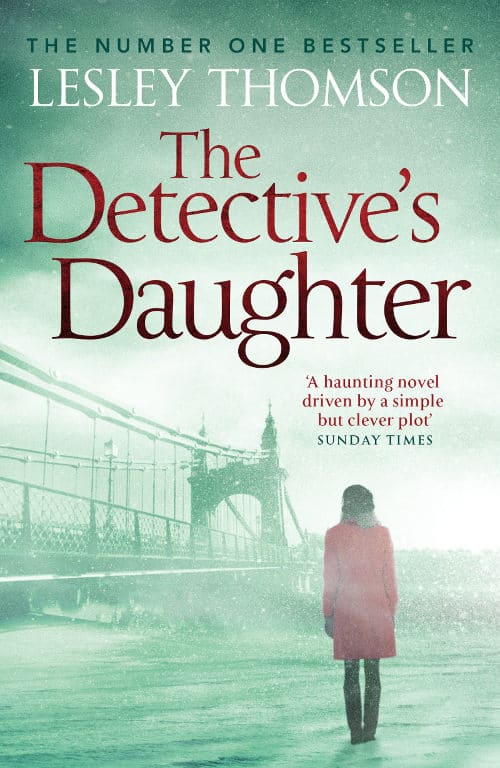
The Detective's Daughter

This is the first of the series by Lesley Thomson featuring Stella Darnell, who runs a successful cleaning company in London called Clean Slate. Stella's father, Terry Darnell was head of the Hammersmith branch of the police department and a good detective, to the detriment of his family life. His wife, Stella's mom, left when Stella was 7 years old and Stella did not see much of Terry after that. She has been estranged from him for decades and blames him for their lack of relationship. As we learn through flashbacks, Terry was in fact a devoted dad to Stella and cherished their time together. Terry suddenly dies at the age of 68 from a heart attack and in the process of clearing his house, Stella realizes that he was trying to solve a 30-year-old cold case, the murder of Kate Rokesmith in 1981. Terry was the lead investigator and he has finally figured out who the killer is--not the husband as the police assumed for years. Kate's 4-year old son, Jonathan, may have witnessed the murder but has been mute on the incident ever since.
Stella is a flawed but still engaging character, bothered by mess and clutter and living in a sparsely populated condominium building by herself with plastic covers still on the sofa. She decides she does not love the man she has been seeing for some time, Paul, and tries to break off the relationship but he begins stalking her. One of Stella's most demanding and somewhat demented clients, and a neighbor of Terry's, Mrs. Ramsay is the next to die; the police believe it to be an accident. Then Paul drowns while drunk, in the same place that Kate Rokesmith was murdered on the banks of the Thames River. Stella is joined in her informal investigation by Jack Harmon, who applies for a job with her cleaning company. He is a very good cleaner, but he also breaks into people's houses and lives in them secretly until he decides they are no longer of interest. Jack already has a job; he drives a subway train on the "dead late shift."  He sees patterns in numbers and messages in events around him, and, it turns out, he is Kate Rokesmith's grown son. Stella begins dating a dentist, Ivan Challoner, who she discovers is the half-brother of another neighbor of Terry's, sculptor Sarah Glyde. Sounds twisty and a bit contrived and it is. There are long sections of narrative in the early parts of the book that are not attributed to a named person, but it is clearly someone with ill intent. Stella is being stalked by someone besides Paul, although she doesn't realize it. Thomson is good at creating a pervasive sense of menace with this ploy as well as with small observations like the timer on the security lights at her condo being set incorrectly so they were on in the day and off at night.
A novel aspect of Lesley Thompson's website is the collection of photos she uses to imagine settings and characters. There is a "gallery" for each book.

Monday, January 9, 2017

The Star of Istanbul

This 2nd installment in the "Kit Cobb" series by Robert Owen Butler continues the adventures of former war correspondent, now American spy, Christopher Marlowe Cobb. To get some background on his new career, see my blog on The Hot Country. Cobb has now been trained to be a spy but continues to work under his journalism credentials. Thus it is that he is sent to trail a German spy, Walter Brauer, from New York to Europe on The Lusitania. We already know how that ends. But Cobb, Brauer, and a movie star with whom Cobb has had a shipboard fling are all rescued and so the game continues. Cobb eventually allies himself with actress Selene Bourgani, who, he discovers, had been working with Brauer but has now killed him.  Kit learns that her ultimate destination is Istanbul where she is to seduce the ruling pasha, a big fan of her movies, and find out what his plans are regarding an alliance with Germany. But Selene has a secret agenda; for, she is Armenian, not Greek as the Hollywood press have made out, and she plans to kill the pasha in retaliation for the multiple massacres of her people.
Butler provides wonderful historical detail and atmosphere as well as engaging plots. I have tired pretty quickly of Cobb's penchant for serially falling in love with dangerous women, although he never fails to complete his larger mission or report the stories.
Reviews here from Kirkus,  Publishers Weekly, and The Huntington News (includes a nice plot summary).

The Hot Country

It's 1914 and war correspondent Christopher ("Kit") Marlowe Cobb has found his way to Vera Cruz, Mexico just as Woodrow Wilson has launched an invasion of sorts as retaliation for Mexican President Huerta taking some American soldiers prisoner. Although Wilson goes no further than trying to clean up Vera Cruz, the Mexicans, already embroiled in a civil war, are definitely pissed at the Americans and Germany sees an opportunity to start a conflict between Mexico and the U.S. and thus keep America from interfering in their European plans.
Cobb enlists the help of a young local pickpocket, Diego, to keep an eye on a German munitions ship in the harbor and thus is able to identify Germany's emissary, Mensinger, and even intercept enough information to let him surmise their plans. He decides to follow Mensinger who is on his way to meet with Pancho Villa. Along the way, Villa's men rob the train Kit is on and he falls in with the bandits after he discovers that an old pal, a mercenary named Tallahassee Slim, is leading the raiding party and they are on their way back to Villa. Kit gets involved in a battle between Villa's men and another rebel group and kills a man to save Slim's life. When he arrives at Villa's camp, he meets and fights with Mensinger. He also reunites with a woman he met in Vera Cruz, ostensibly a laundress, who Kit thinks is also a sniper, and with whom he has nevertheless fallen in love. When all is said and done, Kit writes his story and heads home for Chicago, but the feds put a blanket over the information and it is never published. Instead, Kit is recruited to act as an agent of the U.S. government and take a counter-offer to Villa.
This is apparently the first adventure/ spy novel that Pulitzer Prize winner Robert Olen Butler has written, although he is a prolific author of short stories, novels and non-fiction. It is also the first in a series featuring Kit Cobb, journalist turned spy. Butler does a wonderful job of capturing the atmosphere of Vera Cruz and supplying historic details that will engage fans of historical novels. Cobb is sort of a "man's man" with the accompanying attitudes towards women. It was definitely an engaging read and I went on to read the next one in the series, The Star of Istanbul. There is a great review of Hot Country by The Guardian.

Wednesday, January 4, 2017

The Color of Water

I read this some time ago and did not realize I had not written a blog post about it. This was also a book group selection; it is a memoir and commemoration of James McBride's Polish, Jewish mother, Ruth. McBride's father was black and he had 11 brothers and sisters. After leaving the south, where she was raised by an abusive Rabbi father and a sickly and non-English speaking mother, Ruth made her way to Harlem. She married and was widowed from two black men. Nevertheless, she managed to send all of her children to college. It is a truly remarkable story of a woman who was disowned by her Jewish family when she married and never looked back. She adopted the black community and seemed fearless in being a part of it, even when her children feared for her. When one of her children asked her what color God was, she replied "the color of water."
McBride has worked as a professional journalist (Boston Globe, Washington Post) and musician (jazz and blues saxophone), and then he decided to write this book. He began interviewing his mother, who he admired and loved but felt he did not really know much about, and the entire process took 14 years. This book was on the New York Times best seller list for two years and there are numerous laudatory reviews: The New York Times, Kirkus, Publishers' Weekly
Highly recommended.

Fool Me Once

I like Harlan Coben's books and have blogged about several of them (The Woods, Long Lost, and Missing You) . He has written almost 2 dozen books, a series of sport-related ones featuring Myron Bolitar (good even if you aren't a sports fan), and his stand-alone thrillers.
Here we meet former Army Captain and special ops helicopter pilot Maya Stern Burkett, whose husband Joe has been recently murdered. She is left to care for their two-year old daughter, Lily, and is encouraged by a friend to get a nanny cam, even though the nanny she has hired is the daughter of Joe's former nanny. Joe Burkett comes from a wealthy family and this is the 2nd of their sons to die, although the younger son died several years ago. Maya is also reeling from the brutal torture and murder of her sister, Claire, just two years ago. Maya is beginning to feel like death follows her.
But she is determined to find her sister's killer--obsesssed, actually, about bringing him/ her to justice. Then the investigating detective tells Maya that the gun that killed her husband was the same one that killed her sister. One of her former Army buddies, Shane, helps her follow old leads but more deaths follow and someone is setting Maya up to look like the killer. When Maya comes home one day and reviews the nanny cam, she sees Joe walk into the room where Lily is playing. But of course that can't be, because Maya was there when Joe was shot in the park. This is a very twisty cat and mouse game and the ending is a real shocker.