Thursday, May 29, 2014

Insurgent

I can't believe I forgot to write a blog post about this 2nd installment of Veronica Roth's Divergent trilogy. The second book holds up well and is full of shattering revelations. Four/Tobias learns that his mother is alive and leading an army of the "Factionless," who plan to take over the city in the wake of the Erudite's slaughter of the Abnegation faction. Tris is held for trial, convicted as a traitor, and scheduled for execution by the Erudite (still led by Jeanine). Her brother plays a major role in that process, as does Tris' arch-enemy, Peter.  A plot summary from Wikipedia is here. Read it and go see the movie, "Divergent."

Allegiant

This is the third, and final, installment in the Divergent trilogy from Veronica Roth. I wouldn't be surprised if the 2nd (Insurgent) and 3rd books are also made into movies as they are doing with the Hunger Games trilogy. But I can almost bet they will change the ending a bit.  When we left our heroes, Tris had revealed the video from Edith Prior telling the people of the city (a futuristic Chicago) that their society was, in fact, an experiment being run by people "out there," i.e., outside the protective fence which has been guarded for generations by the Dauntless faction. So Tris will be tried as a traitor, but able to withstand the truth serum as she has withstood the fear serum and the serum that at one point turned almost all members of Dauntless into a mindless army that nearly wiped out the Abnegation faction. A small group--from various factions-- believe the tyrannical imposition of a factionless society in the wake of the Factionless' takeover is not an improvement and plan to rebel. First and foremost, a small band will escape the city and seek to discover who is controlling the city. Tris, Four, the traitorous Caleb, and murderous Peter are among them that group. The society they discover, it turns out, has as many things wrong with it as the Faction system they just left behind, except this set of prejudices and limits is based on whether or not a person is "genetically pure" (GP) vs. "genetically damaged" (GD). A rebellion is brewing here as well, and Four is lured into helping when he finds out that he is not Divergent as he originally thought, but is GD with a few anomalous behaviors. Although it does not change Tris' view of or love for him, Four is devastated and ripe for manipulation by the disaffected GD's. When the geneticists in this compound decide that the Chicago "experiment" is teetering on the brink of self-destruction, they decide to "reset" the situation by erasing everyone's memory. Tris and her friends, many of whom have left family and friends behind in the city, can't let that happen.

The Goblin Emperor

Another excellent YA novel I recently read, this one by Katherine Addison. Set in the fantasy world of Ethuverazhin, dominated by Elves but also peopled by other ethnicities, the Emperor and his three eldest sons die mysteriously in an airship crash. The youngest, disenfranchised son, who is half Goblin and the result of a political alliance marriage, is suddenly to become the new Emperor. Unfortunately for him, he was exiled with his mother immediately after his birth and has only been to court one time--for his mother's funeral--when he was 8 years old. Fortunately, in the few years they had together, his mother loved him and taught him to be kind and fair and Maia is able to gradually win allies. Of course the Goblin ambassador at Court is on his side, and will bring the power of the Goblin overlord, Maia's maternal grandfather, into the equation as well. Maia initially has no idea, at the tender age of 18, how to manage the political intrigues and murderous intentions of those who think he should not be the new Emperor. Even if they don't want to kidnap or kill him, everyone wants something from the new Emperor, and Maia must constantly be on his toes to avoid stepping into political quicksand.  This is a well crafted world, although a bit thick with unpronounceable personal and place names; there is a brief pronunciation guide and a cast of characters and place names following the text. You will absolutely cheer for Maia as his goodness wins out over the prejudices and players lined up against him.

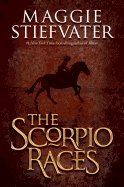
The Scorpio Races

I have been on a BINGE of YA reading lately--all very good. The first was this book by Maggie Stiefvater. Set on an island off the coast of England in contemporary times, where magical, man eating horses emerge from the wild surf every fall. If you play your cards just right, you can capture and semi-tame one to enter into the Scorpio races that take place along the beach on the first of November every year. Of course you might get killed in the process, but if you don't you stand to win a lot of money. The folk on this island fish or farm and it's a poor place with few other opportunities for young people looking to make their way. So Puck (given name Kate) and Finn Connelly are not surprised, but nevertheless devastated when their older brother Gabe says he is leaving the island to find work right after the races. Since their parents were killed by the water horses--the capaill uisce--while out in their small fishing boat, the Connelly children have lived on their own, barely making ends meet. When the major land owner on the island, Malvern comes to the house and says they are months in arrears on the rent, Puck is determined to enter the races and win the money to pay back the debt and stay in their house. Only thing is, she is going to enter the race with her island pony, who normally would not stand a chance against the blindingly fast water horses. But the capaill uisce are also driven somewhat mad by the breaking waves on the beach during the race, so there is just a small chance... There is a love story here involving Puck and the 3-time winner of the races, Sean Kenrick, an orphan who works for Malvern in his renowned stables.  Sean has a magic touch with capaill uisce, which makes him invaluable, but is still just a hired hand. He is despised by Malvern's son,  Mutt, who will do anything to sabotage Sean, including trying to kill him or the water horse, Corr, that Sean will ride in the race. If Sean wins, Malvern will let him buy Corr, but if he loses, he will continue to be an indentured servant for a long time to come. So why is Sean helping Puck learn to race when so much is at stake?

Thursday, May 15, 2014

The Dog Stars

This book by Peter Heller was chosen for "A Novel Idea"--the community read for Deschutes public library this year. I overhead such impassioned and dichotomous opinions about the book on the last hiking trip I took with Parks and Rec, that I felt I had to read it for myself. I really loved the book. I have read a fair number of post-apocalyptic books and this I thought was a really good one. Not short on the bad things that happen, especially the breakdown in law and order and consequent emergence of people's violence either as a means to survive or just because they can get away with it. And yes, the dog dies, but he is doing what he loves and is with the person he loves and has lived a good long life when he does die, so I was OK with that. The dog's (Jasper) death turns out to be the catalytic event that launches the protagonist, Hig, to go beyond his "point of no return" in the little Cessna that he has managed to maintain in the nearly 10 years since a virulent flu wiped out the majority of the earth's population. Hig's co-habitor at their little enclave, Bangley, is ex-military and brutal in his "shoot first" and don't bother with any questions attitude, but as Hig comes to realize, he has been a significant factor in keeping them both alive. It's just that Hig comes to wonder if there is any point in staying alive in such a world. Hig has maintained more of his humanity and willingness to give people a chance, which is not always a good thing. But in the end, he brings back a prize from his adventure, that renews his ability to hope for something more. Stick with this one to get past the ungrammatical early entries of Hig's journal. Review here from NPR

Monday, May 12, 2014

The Seeker: A Mystery at Walden Pond

I was intrigued by everything I had read about this book by R.B.Chesterton, but ultimately I was disappointed and did not finish the whole book. It is essentially a ghost story set in Concord/ Walden Pond, MA during the fall and winter. Aine Cahill is a doctoral student from Brandeis who is set to break things open with the revelation that Thoreau did not spend his time at Walden Pond alone, but was cohabiting with a woman--Aine's great great great aunt Bonnie. Aine's proof is Bonnie's journal which was mailed to her anonymously. Aine keeps searching local historical records but can find no proof of Bonnie's existence, much less any mention of her in Thoreau's heavily philosophical and emotionally spotless writings. She is staying at a cabin behind an inn to give her the isolation she needs to write. She meets a park ranger, Joe, who was formerly a school teacher, but left town after one of his students went missing in the woods. There was no evidence to say he had anything to do with the disappearance, but the gossip mill made life unbearable. He only returned to care for a dying mother. Then a drug addicted former girlfriend of Joe's shows up and makes life crazy scarey for Aine by physically attacking her twice. Aine comes from a long line of brutal and crazy people and was sent away by a grandmother to boarding school to give her a chance at a normal life. But as time progresses and Aine realizes that she is the only one to see a young girl haunting the Walden woods (all puns intended), she realizes her "second sight" is gaining in strength and she doesn't know how to control it. The child, who matches the description of the missing child from 10 years ago, torments Aine with sinister threats and deeds. When this all started to feel incredibly repetitive (about 200 pages in), I skipped to the last few pages and found things only got worse. Kirkus Reviews puts it this way, "Chesterton—a pen name of the well-known Carolyn Haines—deftly blends the supernatural and the historical, but she offers little resolution to an intriguing conceit." Done.

Friday, May 9, 2014

Boy, Snow, Bird

Hard to know where to start in describing my reaction to this novel by Helen Oyeyemi. I was drawn to it and puzzled by it and occasionally repelled by it. Boy Novak is the "name" given to the narrator for parts 1 and 3 of the book. Snow is her step-daughter, and Bird is her daughter (also the narrator for part 2 of the book. Boy is raised by an unimaginably cruel father, Frank; the mother's identity and whereabouts are unknown--until the very end of the book. As soon as she possibly can, Boy runs away from Manhattan and travels as far as the bus will take her with the $20 odd she stole from her father, which, as it turns out, is Flax Hills, Massachussetts. She is blond and attractive and eventually marries dark haired, good looking professor turned jewelry artist, Arturo Whitman. Arturo is widowed and has a young daughter, Snow, who is as pale as her name. Arturo's mother and sister live next door. Boy is initially infatuated with Snow, but when Bird is born, Boy takes a dislike to Snow and sends her to live with an aunt and uncle--a sister of Arturo's she did not know about until she married Arturo and received flowers from her. Bird's birth raises rather a host of problems as it is obvious that she has Negro blood, which eventually reveals the fact that Arturo, his sister Vivian, and his parents have been "passing"--it is the middle of the 20th century and racism is still blatant and burdensome. The other sister was sent away by her mother because she was too dark to "pass." Boy loves Bird, but is somewhat cool and distant and will never explain why she sent Snow away. But in part 2, Bird discovers a letter from her step-sister, addressed to Bird but hidden by Boy. Bird is now 13 and dealing with racism in her small town, as is her best friend, Louis Chen. When Snow finally comes to visit the following Thanksgiving, the sisters reconnect and Boy and Snow reconcile to a degree. Boy's best friend Mia, an investigative journalist, uncovers a devastating secret about Boy's own life that totally knocked me over. I'm honestly not sure why Oyeyemi chose to include this plot twist. There is always a sense of both the magical and the sinister woven throughout what is a very compelling narrative in this novel. The whole notion of mirrors, symbolizing outward appearance, also plays a key role for Boy, Snow and Bird who often see something--or nothing--in mirrors that differs from what others see. You'll have to decide for yourself if you like this book. Reviews were favorable: here is the one from the NYT; and from The Guardian.

Thursday, May 8, 2014

Wild Indigo

Jamaica Wild works for the BLM in New Mexico as a resources management agent. When she gets a call saying that the bison have escaped their pen and are heading on to federal land, she heads out, even though she is off duty. She is surprised to find that a member of the Tanoah Pueblo that she knows is standing in the midst of the herd and the gate is open. She calls to him to walk toward her, hoping not to spook the bulls of the herd, but he seems oblivious to her pleas and in short order is gored to death. Almost immediately members of the tribal police show up and chastise her for being on the pueblo during "quiet time" when tribal members are readying themselves for a religious pilgrimage into the mountains. Things get even stranger when the tribe complains to her boss that it was her reckless driving that spooked the herd and got the man killed. Jamaica thinks something fishy is going on but is hampered in her investigation by being suspended and told to stay away from the pueblo. She has become a student of one of the tribal elders and sneaks back in to bring food and pay her respects for the loss of a family member. Strange things begin to happen to Jamaica and she finally enlists the help of a curandera, but she is "marked by the bear" while in a trance, and then her pet wolf is poisoned and on the verge of dying. With the help of a female FBI agent as well as her ranger boyfriend, she heads into the mountains seeking a missing child and an old medicine man who she thinks might hold the key to the mystery of the dead man's strangely altered state before he died. This has a well developed female character, lovingly rendered settings, and the detailed lore of the southwest native tribes to recommend it. If you are a fan of Nevada Barr's "Anna Pigeon" series or Tony Hillerman's books, you will certainly enjoy this, although there is a bit more "magic" to be had--at least in this first installment. I will definitely seek out the 2nd of this series by Sandi Ault, Wild Inferno.

Sunday, April 27, 2014

Where's You Go, Bernadette?

Maria Semple takes aim at many of the pretensions of Microsoft and Seattle in general in this tale of a family that has gone rather significantly off course. Bernadette, once a rising star in the architectural world, has been transformed by a series of miscarriages and the serious health issues of her daughter's early years. She has become reclusive and intolerant of people and of going out in public. In fact she has hired a virtual assistant in India to do everything for her; only the virtual assistant is actually a front for a Russian mafia scam to get credit card and financial information. Not only does Bernadette fail to exercise the most rudimentary cautions online, she has also stopped attending to even the most basic maintenance of her house and marriage, leaving both to fall apart. Husband Elgin, on the other hand, has become a major rock star at Microsoft and is spending all his time where he is idolized. When her adored daughter Bee gets straight A's for her final year in middle school and claims her promised reward in the form of asking for a family trip to Antarctica, things really begin to unravel. Told in a somewhat epistolary form through e-mails, reports from various players like a psychiatrist and the FBI, letters, and even magazine articles, this is certainly a quirky novel. The sadness of Bernadette's disintegration is offset somewhat by her wicked wit, and the whole situation is retrieved in the beautifully written last 30 pages. This book has received rave reviews. I was somewhat lukewarm, however.

Tuesday, April 22, 2014

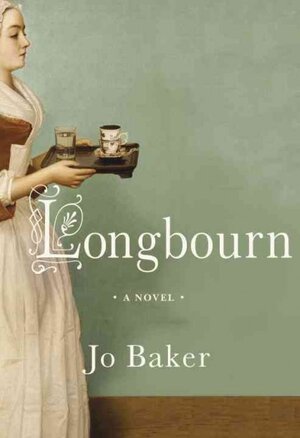
Longbourne

Mapped onto Jane Austen's Pride and Prejudice, Jo Baker tells the tale of the Bennet household from the servants' perspective. (See an interesting interview with JoBaker published on NPR.) And a very well told tale it is, with rich characters, gritty description of the hard life of those living at the whim of the "upper classes," and great relationship building. If you were not already aware of how onerous a class system can be in "civilized" society, this novel will certainly bring it home.
Mrs. Hill is the housekeeper, which means she is responsible for everything that happens in the house, from making sure the chamber pots are cleaned, to cooking meals and doing the laundry. Of course, she has help in this work from the industrious Sarah and the mooning and lackadaisical youngster, Polly. Up before the rest of the household, Sara, pumps buckets of water to fill the tubs for laundry day as the story opens. On her way inside, she steps in pig shit, slips and has to start all over--to say nothing of cleaning herself up and coping with the bumps and bruises from her fall. But she is an orphan and will have few prospects for a decent life outside this semi-slavery of being a servant in a good family. Everyday incidents and interactions highlight for the reader how little regard for the consequences of their actions the Bennet family has or how vaguely they seem to see their servants as actual human beings with thoughts and cares and feelings of their own. When the Bennets decide to hire a new footman, the balance of things begins to shift dramatically. Sarah can't decide whether to hate him because he does not give her the time of day, or love him. He certainly makes their lives easier as he takes up much of their work, and eventually Sarah does in fact fall in love with James. Only eventually do we learn that James is Mrs. Hill's illicit son with Mr. Bennet; James was sent off as a day old infant to a farm, and was never seen again by his mother until now. One section of the book tells us of what James has endured before coming to the Bennet's household and how he longs for home, only to have it destroyed by a self-righteous soldier, Mr. Wickham, who inserts himself into the Bennet's lives through the daughters' socializing. There is a short author's note that briefly describes how this book matches up with it's inspiration, but you might never have read Pride and Prejudice and still very much enjoy this period piece.