Tuesday, June 18, 2019

My Sister, the Serial Killer

This somewhat tongue-in-cheek novel by Nigerian author Oyinkan Braithwaite is really more about sisterly dynamics than it is about serial murder."One sister is a nurse. The other is a murderer." (NYT)
Ayoola is the favored daughter, the golden child of perfect looks and perfect temperament, according to their mother. Korede is the older sister, practical, smart and always charged with looking after her younger sister. Now that their father is dead (murdered?) the sisters live with their mother in the family estate that they cannot afford. Korede is a nurse at St. Peter's Hospital in Lagos and it is only there, in her job, that she gets any credit. Recognized for her competence and compassion, she'll soon be appointed as head nurse. Most of her colleagues are slackers, but Korede takes her job very seriously, especially because she has been secretly in love with Dr. Tade Otumu for several years and she keeps hoping he will finally figure out that they should be together.
When Ayoola calls on Korede for the 3rd time to help clean up one of her messes, i.e., a dead boyfriend, who she admits killing but totally in self-defense, Korede begins to realize that something is seriously askew in her sister. Still she cleans the scene, disposes of the body, and keeps quiet about what she knows--except to confide in a hospital patient who has been in a coma for several months. He is like her therapist--someone to talk to who does not judge. On impulse, Ayoola comes to visit Korede at work to invite her out to lunch. There she meets the kind and handsome Dr. Tade and he is smitten, later asking Korede for Ayoola's phone number. Talk about fraught love triangles! Now what will Korede do, protect her little sister or the love of her life? Darkly humorous, well written with vivid characters and setting. You get an accessible tour of urban life in Nigeria. A quick and engaging read. Rave reviews aplenty: New York Times, The Guardian, the Washington Post,  and Kirkus, plus a short interview with Scott Simon on NPR.

Crooked Letter, Crooked Letter

This atmospheric mystery by Tom Franklin was this month's pick (June, 2019) for my mystery book group. This is Franklin's 3rd novel, which received the CWA Gold Dagger Award in 2011 for best crime novel. While some reviewers have called his prose "luminous" (Booklist), I found it evocative, so effectively creating a mood of sweltering, suffocating, ennui and apathy, that you almost start to sweat. If you never wanted to live in the rural deep South, like me, this would remind you of why. The Washington Post notes that this book "makes a haunting demonstration of Faulkner's claim that 'the past is never dead. It's not even past.'"
As a boy, Larry Ott is too nerdy, too interested in books (especially horror stories) and snakes to be the son his father wants. These characteristics don't make him popular at school either in 1970's Chabot, Mississippi. The southern way they teach children to spell the name of the state and the river  is "M-I-crooked letter-crooked letter-I-crooked letter-crooked letter-I-humpback letter-humpback letter-I Really!?) When a black woman and her son move into a primitive cabin on the Ott's land, Larry connects with the boy, Silas, teaching him how to hunt and fish. At school, they barely acknowledge each other, both because black and white do not mix, but also because Silas has gained some stature as the school's star baseball player and Larry is still so uncool. When a popular girl in school asks Larry on a date for the drive-in movies, he is thrilled; only it turns out that she just wants a ride to meet her real boyfriend. Larry, ever accommodating, drops her off at a designated point along the highway and goes on to the movies, pretending Cindy is with him. When he goes back to pick her up, she never shows. In fact, she disappears, and the fact that she had a "date" with Larry that night makes him the prime suspect, even though there is no concrete evidence and no body. Larry and his family are ostracized by the community, driving his father to an early death, his mother into a care home and Larry into the military, where he becomes a mechanic. When he comes home, he takes over his father's old automotive repair shop, but the small town has a long memory and "scary Larry" never get a customer.  He is forced to sell off chunk's of his father's land to the big timber company to make ends meet. Silas went away to college and returns 20 years later to be the town's only policeman. When a 2nd girl goes missing, Larry again becomes the focus of attention, and someone shoots him. Not only does Silas find the dead girl buried in the old cabin where he lived with his mother, but only he knows that Larry was not responsible for Cindy's disappearance decades ago. What he reveals to prove Larry's innocence is going to bring his life down around his ears. It's a heartbreaking book in many ways, but so well written that it's hard to put down, and there is a glimmer of hope in the end.
Not everyone was enamored of this book as the reviews from Kirkus and Publishers Weekly demonstrate. Others, such as the Washington Post, the Guardian, and this interview from NPR are very positive.

Sunday, June 16, 2019

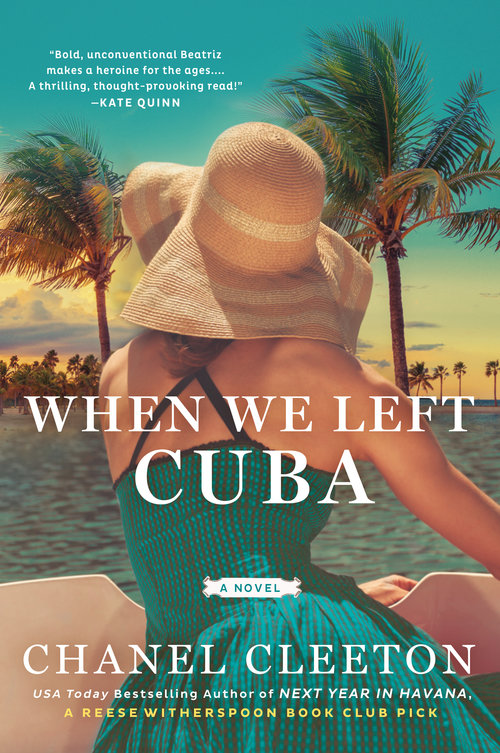
When We Left Cuba

Like her previous book about Cuba, Next Year in Havana, Chanel Cleeton's sequel deals with the overthrow of Batista, the rise to power of Fidel Castro and the situation for those who subsequently fled. At the center of the story, once again, is the Perez family; although, this time we follow Beatriz, the one who was considered the wildest of the 4 sisters, the one who chafed most at the life intended for her as a wife and mother. She was also the twin of Alejandro, who was murdered by the revolutionary forces when they drove out Batista, even though he was a student revolutionary himself. It was intended as an unambiguous message that the revolutionaries were coming for her family, whose wealth had been built on a generations-long sugar empire. All that Beatriz wants now is to get revenge on Fidel Castro, the man she believes murdered her brother.  So when her brother's best friend, Eduardo, comes to her with a proposition to meet with someone from the CIA, who also wants Castro gone, 22-year old Beatriz becomes a spy. First, she is sent to New York City when Castro comes to address the United Nations. He is a known womanizer, and Beatriz is, by general agreement, a beautiful woman. She attends a dinner, is introduced, and he appears interested, asking her to sit beside him on the podium. But eventually, she cannot follow through with any sort of liaison and returns home to Palm Beach.  She is then tasked with infiltrateing a local group of Communists/ Castro supporters.  Meanwhile, Beatriz has fallen in love with a Senator and would-be president from a politically powerful family who are closely aligned with the Kennedys. He is already engaged, but they are irresistibly attracted to one another and eventually begin an affair. Any plans to get Beatriz close enough to Castro to assassinate him are derailed when there is a fatally flawed attempt to oust Castro by exiled Cubans at the Bay of Pigs. Then Russia ship nuclear missiles to Cuba, precipitating a barricade by the U.S., which is eventually successful in deterring delivery. Finally Beatriz gets her chance. But she has also been betrayed by members of the small Communist cell she was monitoring, two brothers who are Castro's spies in the exiled Cuban community. Her cover blown, Beatriz is still considered useful and spends the rest of her life as an asset of the CIA. She and her lover have been apart all the intervening years; he married, had a family, and stayed in politics. When his wife dies, he comes back to find the woman he loved most in the world. Once again, this is a revealing look at a turbulent time in Cuba's history as well as in the relationship between Cuba and the U.S. The U.S. does not come off looking like the good guys in either book, but neither does Castro. One's sympathies are exclusively for the people exiled from the country they love, ever hopeful to return home.
Glowing reviews from The Washington Post and Publishers Weekly.

Friday, June 14, 2019

Astrophysics for People in a Hurry

This relatively short book (208 pages) by Neil DeGrass Tyson is nevertheless chock full of facts and stories about people who contributed to the historical development of astrophysics as well as about the history, present, and future of the universe itself. The first chapter is an uphill climb, covering the first few minutes (as scientists are able to conjecture) of the birth of the universe. The reading gets a little less dense and intimidating after that and we find out about how the elements came to be, the theories that helped explain the size, shape and behavior of the cosmos, and the things that remain mysteries such as dark matter and dark energy. One has to admire Tyson for his mission to make science accessible to the lay reader and thereby to help create a better informed voting public. This book is designed to pique one's interest and hopefully motivate readers to learn more about Tyson's passion for the cosmic perspective and what it has to offer the human race. My book group that the last chapter, "Reflections on the Cosmic Perspective," was the best part of the book. After being inspired as a 9-year old by the Hayden Planetarium at the American Museum of Natural History in New York City, he went on to become its current director! Kirkus provides a rave review; Time magazine offers an interview. The NY Journal of Books also praises his ability to make big topics easily digestible.

Sunday, May 19, 2019

Enter Pale Death

British award-winning author Barbara Cleverly is best known for her series of mystery novels based on protagonist Joe Sandilands, a WWWI hero and Scotland Yards detective, and set in the time between the wars. When Lady Lavinia Truelove is trampled by an out of control horse, the verdict is death by misadventure, but Joe--tipped off by an anonymous letter-- suspects foul play. He is somewhat biased in that the widower, Sir James Truelove, is slated to be the next Home Secretary, i.e., Joe's new uber-boss, and is also the patron of the woman Joe wants to marry, Dorcas Joliffe. Because of the high political stakes, Joe investigates off the books and encounters a web of upstairs-downstairs intrigues and a long-ago death that may have repercussions for the present. In the process, Joe gains a new understanding of his relationship with Dorcas. A brief review from Publishers Weekly is here.

The Secret, Book, and Scone Society

I have read and posted about two other books by Ellery Adams, both in her "Book Retreat" mystery series. She is the prolific author (over 30 novels) of several cozy mystery series. This book is also set in a retreat like location, the small town of Miracle Springs, North Caroline, renowned for its natural hot springs spa. But other cures are available, including my favorite, bibliotherapy, hence my excitement at finding a mystery with this plot device. Nora Pennington, owner of Miracle Books, has a special talent--prescribing the perfect novel to ease a person's deepest pain and lighten their heaviest burden. The action kicks off when a visiting businessman, for whom Nora prescribes a book, is found dead on the train tracks the next day. Nora is convinced, the man was not suicidal, although he was deeply distressed about something, and she decides to investigate. She is joined in her efforts by 3 other women in town: Hester, the owner of the Gingerbread House bakery; a hair dresser, and a waitress. In order to be a member of this group, each much reveal their darkest secret. Not only do they track down the bad guys/gals, but they form a lasting friendship that will help heal their own broken lives. I will have to read the sequel to this book, The Whispered Word.

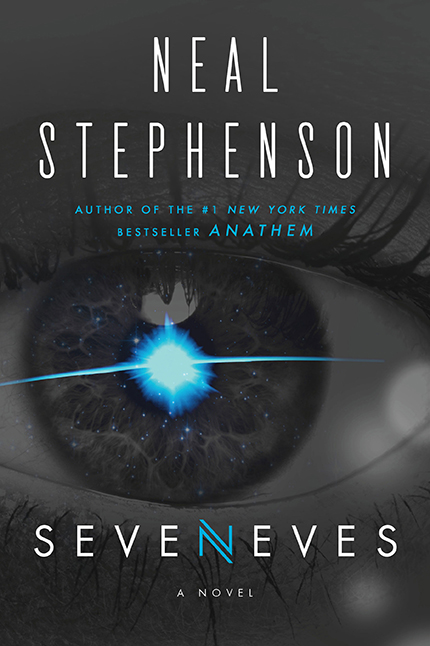
Seveneves

Neal Stephenson is one of my favorite science fiction authors, but his books are very long so you have to be committed. This book spans 5,000 years as the earth is first destroyed and then rebuilt. In this version, humans are not actually responsible for the destruction. Rather, something--perhaps a black hole--strikes the moon breaking it into several large chunks. They continue to orbit the earth as a cluster of giant rocks, causing minimal disturbance on earth. When two of the chunks strike each other, scientists realize that it is only a matter of time--approximately 2 years by best estimates--before the rate of collision and breakup will cause untold numbers of rocks to fall to earth, setting off fires that will annihilate all life. The earth will not be habitable for several thousand years thereafter. Frantic efforts are made to expand the space station and bring genetic materials for safekeeping and future regeneration. A few people on earth make other plans, such as creating huge caves under mountains in Alaska or taking people in submarines under the ocean. Politics, led in large part by a ruthlessly ambitious U.S. president, cause several of the space pods to break away from the main constellation of habitats, initiating a chain of events that leaves only 7 fertile women alive, hiding in a deep valley of the largest remaining moon fragment--these are the 7 Eves.
Fast forward to 5,000 years later as the descendants of these women have repopulated the space above the earth, using new technologies and yet somehow lacking many of the old ones. The society is tribal, based on the original Eve's genetics. Scouting parties periodically go down to the surface in an effort to reintroduce various animal species, and occasionally some of these scouts choose not to return to their homes in the sky. But what is really a game changer is when two other species surface on the planet, independent of those introduced by the space survivors. As always, a compelling job of examining human relationships, creating new worlds, and stretching our thinking about "what-if" scenarios. Highly recommended. Read his Seveneves website page to learn how the idea for this novel evolved. Great review from The NYTimes, with more from The Guardian, the LATimes, and The Boston Globe.

Saturday, May 18, 2019

The Department of Sensitive Crimes

So apparently Alexander McCall Smith has decided to start a new genre of literature that he refers to as ScandiBlanc--a tongue in cheek response to the growing popularity of ScandiNoir. In this book, no one dies a grisly death. Someone does get stabbed in the back of the knee, and an imaginary boyfriend goes missing, and then there is the man who suffers from lycanthropy. All of these somewhat unusual and sensitive crimes have been referred to the Department of Sensitive Affairs within the Malmö (Sweden) Criminal Investigation Authority (CIA). The office is staffed by 3 detectives: lead detective Ulf Varg, and his associates Anna Bengtsdotter and Carl Holgersson, supported by clerical assistant, Erik Nykvist, who lives and hopes to soon retire in order to fish. I would say the entire tenor of the book is slow, thoughtful, and gentle. Nobody rushes around. Nothing is terribly urgent...except when Ulf needs to intervene to keep a defendant assigned community service at the local military base from being put onto the bomb disposal squad. Ulf is somewhat in love with Anna but refuses to allow himself to even contemplate involvement because she is married with two daughters. Neverthless, they work very well together because they have the same sensibilities and notice the same details in the world. They can finish one another's sentences. The detectives are occasionally aided in their investigations by the local policeman, Blomquist, who has tried and failed numerous times to get assigned to Sensitive Crimes. He feels undervalued and he talks a lot about a lot of different things, which makes him a rather annoying companion. When the police commissioner calls Ulf in to undertake a very discreet investigation, he assigns Blomquist to accompany Ulf, much to Ulf's chagrin. But all's well that ends well. The knifing culprit is caught and is remorseful, the truth about the imaginary boyfriend comes out, and Ulf tries to find help for the man who thinks he's a wolf. Not sure what to say about this book. It's not sufficiently thought provoking nor sufficiently engaging to get rave reviews from me. I have been a big fan of McCall Smith's "No. 1 Ladies Detective Agency" series, which now extended to 20 installments, and is similar in many ways to the tone and pace of this book. But the characters are more interesting as is the locale. In fact, there is very little setting in this current book and I miss that. He has two additional series with multiple volunes: 44 Scotland Street and the Isabel Dalhousie series--also a detective focus. Reviews are available from the usual sources: Publishers Weekly, Kirkus, and The NYTimes.

Friday, May 17, 2019

The Ice Beneath Her

This is the first solo outing of Swedish author Camilla Grebe. Grebe has previously collaborated with her sister, Åsa Träff, on the crime series featuring psychologist Siri Bergman.
The book opens with the grisly murder of a young woman found in the house of the wealthy CEO of a popular clothing store chain, Jesper Orre. We hear the story from three perspectives, much of it in flashbacks. I am going to offer the plot summation from Publishers' Weekly since they do it more justice than I could. "Peter Lindgren, the detective investigating the crime, is afraid of commitment and still hasn't accepted the teenage son he never wanted; shop assistant Emma Bohman, whose now-missing wealthy lover appears to be the prime suspect in the murder, dwells on her painful dysfunctional childhood; and profiler Hanne Lagerlind-Schön, who's trapped in a suffocating marriage, faces early-onset Alzheimer's while helping the police with the case. The present-day crime resembles a 10-year-old cold case during which Peter and Hanne shared a short, tragic relationship. In alternating chapters, the three central figures regret what could have been, grieve for what's been lost, and lament what seemingly can never be..." One might begin to suspect what is really going on about halfway through, but would be unlikely to untangle the whole knot until the very end. The frequent use of flashbacks dropped into contemporary narrative is sometimes a little confusing, but not enough to lose you entirely. It's a very tricky plot and you would probably have to read it twice to truly understand at least a couple of the characters...I won't say why. If you like Scandinavian noir, this will certainly fill the bill. In fact, Kirkus claims, "A tour de force that lifts its author to the front rank among the increasingly crowded field of Nordic noir."

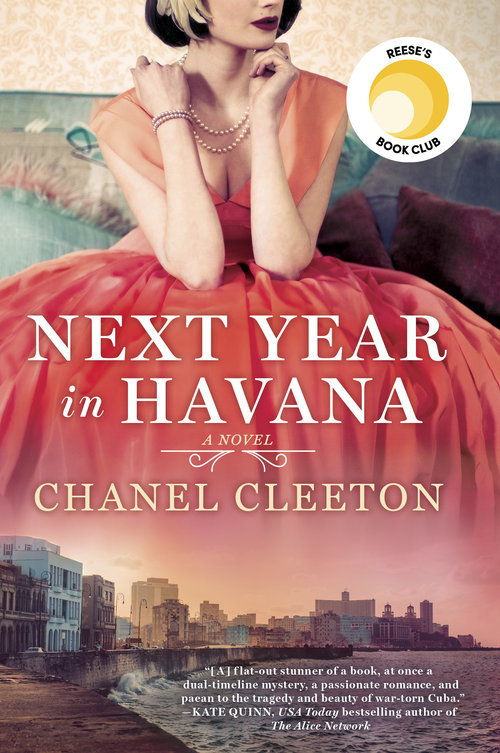
Next Year in Havana

As a descendant of Cuban exiles, with advanced degrees in international relations and global politics, author Chanel Cleeton is more than qualified to write this historical novel. The title is taken from the forever wish of Cuban exiles to return home. The story is told in alternating chapters during two time periods. In 1958 Havana, the rebels continue to fight and eventually defeat Batista, bringing Fidel Castro to power. Present day Cuba has been tentatively reconnected to the U.S. by President Obama's new policies. One narrator is  Elisa Perez, 3rd daughter of a wealthy sugar baron close to Batista's regime. She is 19 and has led a sheltered, high society life that has been little inconvenienced by--and is probably not even aware of--the rising power of a hungry and oppressed populace, even though her brother, the only Perez son, has been cast out by their father for his revolutionary views. One night, she and her 2 older sisters sneak out to a party where she meets a compelling older man, Pablo, who turns out to be an idealistic Castro supporter. Her family would be shamed by her relationship to him, but she is hopelessly in love and eventually becomes pregnant. Before she can inform him about the pregnancy, he disappears into the mountains to join the fight against Batista, and Elisa is later told that he has been killed. When the body of Elisa's brother, fraternal twin to Elisa's sister Beatriz, is dumped at the gates of the family mansion, they knows they must flee with only their lives and none of their possessions. They make a new home in Palm Beach and Elisa is quickly married to avoid the shame of an unwed pregnancy. Our second narrator is Marisol, the granddaughter of Elisa. Elisa had stepped in to raise Marisol and her siblings after their mother abandoned the family. Elisa filled Marisol's head and heart with romantic stories of the life she left behind in Cuba, and upon her death asks only that Marisol return her ashes to Havana. This provides the jumping off point for the present day story line as freelance lifestyle writer Marisol brings Elisa's ashes home to Cuba and also seeks to learn more about her family's history. When Ana, Elisa's best friend who remained in Cuba, gives Marisol a box of letter from Pablo that Elisa buried before she escaped, Marisol is even more determined to find out about the man her grandmother loved. But even though Castro is dead, the government will still not tolerate anyone stirring up trouble and Marisol creates problems as well by falling in love with Ana's grandson, who is hiding potentially deadly secrets of his own.  I really enjoyed reading this book because I had recently visited Havana for a couple of days and felt it filled in a lot of the backstory to what I saw. Although Kirkus took the author to task for trying to weave together politics with romance, I was fascinated to learn more about paladars and the significance of the dual Cuban currency. Nothing is black or white. Castro was viewed as a redeemer, but turned out to be a tyrant. The Communist government promised to take care of everyone, yet people starved under his regime. The U.S. presence in Cuba was malign as was their support of the corrupt and cruel Batista. Author Chanel Cleeton draws on her family's own exodus history to write this and follows up with a sequel, When We Left Cuba, focused on Elisa's sister, Beatriz, who was fraternal twin to the murdered Perez son. I will definitely read it! You can read an excerpt from Next Year at NPR.