Wednesday, December 26, 2018

City of Stairs

I recently read another book by Robert Jackson Bennett, Foundryside, and liked it so well that I decided to jump into his "Divine Cities" trilogy. I do love the main characters, Shara Thivani and Sigrud, Shara's so-called secretary, who Shara refers to as “a hammer in a world of nails.” But I felt a little overwhelmed by the rather complex geography and accompanying rash of place names. As in Foundryside, there is a mix of magic and technology that lends the book a somewhat steampunk aura, and once again the protagonist is a small, seemingly unpretentious woman--yay for that. Shara has been sent to the Continental city of Bulikov, presumably as an assistant cultural ambassador from the now ruling country of Saypur, to investigate the murder of Shara's friend and mentor and an eminent historian of the Continent, Dr. Efrem Pangyui. At one time the Continent was ruled by six Divinities and was the dominant power in the world, cruelly treating Saypur as a poor and backward colony. But the tables turned when one of Saypur's own, the Kaj, discovered a way to kill the Divinities; Saypur went to war with the Continent and when the Divinities died or fled, everything collapsed. After the "Blink," everything the gods had helped magically create disintegrated. Architecture, culture, the economy, and life as the population knew it are gone. Now Saypur calls the shots and no one is allowed to discuss any aspect of the Divinities or the Continent's history. But Shara is not  really a cultural ambassador; she is a spy--and one who is 2nd only to Dr. Pangyui in her knowledge of the Divinities and Continental history. And the gods may not all be dead, although perhaps not as all powerful as once imagined. And the population of Bulikov is not necessarily going to take the status quo lying down. Worst of all, Shara may have been betrayed by those she trusted the most. This is an incredibly complex storyline and sometimes it felt like it just went on too long. Nevertheless, it is a remarkable work of world building and once you get into it, you'll want to keep going.
By all means go read this nice summary by a reviewer for NPR. Here's a review from Kirkus, one from The New York Times, and from Publishers Weekly.

Tuesday, December 25, 2018

Wings of Fire

The second installation of Charles Todd's Inspector Ian Rutledge series finds our still struggling (see A Test of Wills post) still struggling with his shell shock and his ghost of guilt, Hamish MacLeod. Rutledge is sent to Cornwall to investigate the apparent double suicide of a reclusive invalid and her half-brother at their manor home. Although he soon learns that this woman was the famous poet O.A. Manning, whose poetry about the horrors of war--as well as about the desires of love-- helped keep Rutledge sane in the trenches, there doesn't seem anything suspicious about the deaths of the elderly siblings--that is until one of the heirs to the estate suddenly dies. As he investigates, Rutledge finds that there are a series of unsolved deaths and disappearances in the Trevelyan family. Tormented by Hamish's voice in his head, Rutledge decides to listen instead of trying to ignore it and uses these ideas instead to help him solve the crime. He must untangle a complex web of family dynamics and relationships in order to discover who is so desperate to inherit the manor, and in the process he may learn more about the woman who wrote such profoundly powerful poetry. Evocative setting, well-developed characters and a twisty plot will draw you in. Reviews from Publishers Weekly, and Kirkus.

Monday, December 24, 2018

A Test of Wills

This is the first in Charles Todd's (pseudonym of a mother & son writing team) Inspector Ian Rutledge series. Just a year after returning from The Great War, Rutledge has returned to his position at Scotland Yard, but not to his previous life. He is burdened with the guilt and ghost of a soldier he executed for cowardice on the front lines by the name of Hamish MacLeod. Additionally, Rutledge was buried alive in a suicidal last charge and suffers shell shock (now we call it PTSD), which he keeps secret. Persecuted by a cruel and manipulative superior at Scotland Yard, Rutledge is barely holding it together when he is sent off to investigate the death of retired Army colonel, Charles Harris. The villagers want to point the finger at a local trouble maker, Bert Mavers, but what little evidence there is points in another direction entirely--to Capt. Mark Wilton, the fiancé of Col. Harris' ward, Lettice. In a seemingly unrelated situation, the daughter of one of the villagers has suddenly become mute and Rutledge begins to think that whatever the child witnessed is somehow connected to the murder. Rich settings and characterization as well as clever plotting make this an engaging read. I actually decided to start  this series from the beginning after reading the newest installment, No Shred of Evidence.
Reviews available from Publishers Weekly, Kirkus, and The New York Times.

Sunday, December 23, 2018

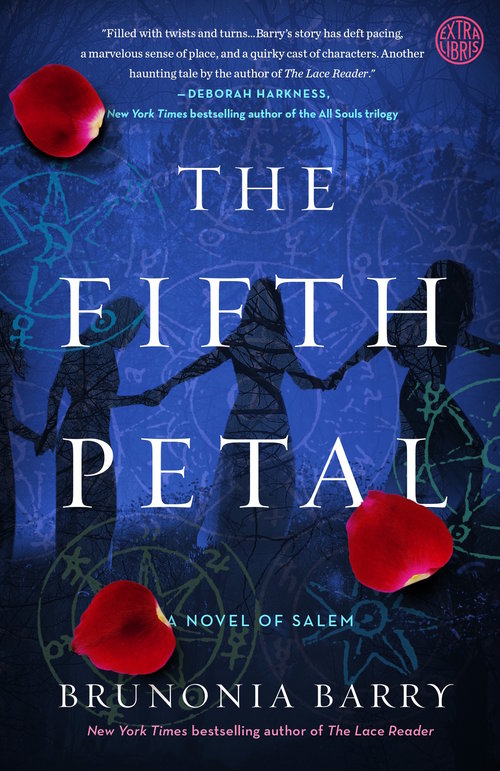
The Fifth Petal

This is a compelling read from Brunonia Barry set in current day Salem, MA. Here is the summary from the book jacket:
"When a teenage boy dies suspiciously on Halloween night, Salem's chief of police, John Rafferty wonders if there is a connection between his death and a notorious cold case, a triple homicide dubbed "The Goddess Murders," in which three young women, all descended from accused Salem witches, were slashed on Halloween night in 1989. He finds unexpected help in Callie Cahill, the daughter of one of the victims newly returned to town."
Callie was actually present when her mother and two other women were murdered, but she was hiding in some bushes and didn't see anything. She wasn't found until the next morning when nuns at a nearby convent heard her screams.  The title refers to an older style of crucifix with a 5-petaled rose which was clutched in the child's hand. Callie subsequently alternated between a series of foster homes and a home run by the nuns who told her that the woman who saved her had also died. Rose Whelan was a reknowned historian with expertise in the Salem witch trials; she was also a sort of stand-in grandmother who Callie and her mother had lived with. After the murders, however, she has became the local crazy bag lady, who believes she is harboring (bodily) the spirit of an evil banshee. When the present day murder occurs, Rose is blamed and the press about the event brings Callie back to Salem where she reconnects with Rose, who has been placed into a psychiatric unit at the hospital. Callie needs to solve the murder so that anti-witch hysteria does not take any more victims.
This is a well-researched book--5 years in the writing--skillfully blended with a multi-generational cast of characters and a complex plot. Lots of magic as well as ordinary human drama. I did not read the previous book involving these characters called The Lace Reader, but the story did not suffer as a result. Reviews from Kirkus, Publishers Weekly, and an interview with The National Book Review.

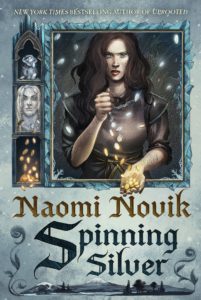
Spinning Silver

I am so far behind on posting books I have read that I am a bit daunted, but here goes. This is the newest fantasy book by Naomi Novik; I've posted about Her Majesty's Dragon and Uprooted previously. Billed by the New York Times as a "brilliant" retelling of the Rumpelstiltskin fairly tale,
but so much more. They go on to summarize:
"Here Naomi Novik has gathered countless old tales and turned them into something all kinds of new. The theft of summer, a burning demon who lives inside a prince, a witch’s hut in the woods, the secret power of names, the frozen winter road that winds its way through the depths of the forest — they’re all here." It's a glowing review that includes a note about the value of fairy tales in troubled times.
Our protagonists are all strong female characters, which is a big recommendation from my perspective. Miryem is the daughter of a highly unsuccessful moneylender in a small village where her family is reviled and others all live better than they do, even though it's often on money borrowed from Miryem's father. As the family teeters on destitution's doorstep, she takes matters into her own hands and begins collecting the money owed her father, unfortunately bringing her to the attention of the King of Winter. He challenges her 3 times to turn his silver into gold. Our other heroines are Wanda, neighbor to Miryem's family, who struggles to free herself and her two brothers from an abusive alcoholic father, and Irina, the unloved daughter of a duke who is scheming to get access to the throne. Their efforts will come together as they each endeavor to save themselves as well as the ones they love from not only immediate threats, but from a threat to humanity. Additional reviews from NPR, Kirkus, and Publishers Weekly... all of them glowing! Highly recommended read.

Wednesday, December 19, 2018

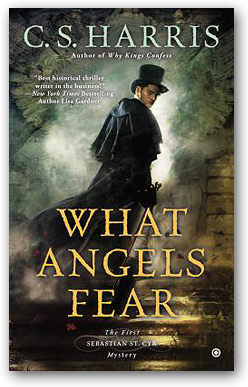
What Angels Fear

This is the first in the "Sebastian St. Cyr" mysteries by C.S. Harris (pseudonym for Candice Proctor); I read the 13th installment, Why Kill the Innocent, sometime back and wanted to start at the beginning. This series is set in Regency-era England; according to Wikipedia (and we know they are 100% reliable), this period lasted "from 1795 to 1837, which includes the latter part of the reign of George III and the reigns of his sons George IV and William IV, ... characterised by distinctive trends in British architecture, literature, fashions, politics, and culture." In this first installment, the "Mad King" George III is imminently (1811) to be replaced by a Regent, Prince George, who will eventually become King George IV in 1820. We also meet our protagonist, the 3rd and only surviving son of the head of the Exchequer, Lord Devlin. We learn he had worked for British Army intelligence (England is still at war with Napoleon) and has seen too many horrors to retain any positive views of humanity. Nevertheless, he has his own code of behavior, and when an actress, Rachel York, is brutally murdered, he undertakes to find the killer, not only because he is falsely charged with the crime, but because no one else seems to care.  Politics and behind-the-scenes struggles for power play a role when the King's right hand man, Lord Jarvis, insists that Sebastian (Viscount Devlin) be apprehended and convicted, even though the arresting magistrate has his doubts about Sebastian's guilt. Using his skills gained as an intelligence agent, his unique inherited abilities resulting from Bithil Syndrome*, the resourcefulness  of a resilient street urchin named Tom, and the insider information provided by former lover and current actress Kat Boleyn, Sebastian eventually figures out who the real killer is. But it may be too late to save himself. You can read an excerpt on Harris's web site. Great read for lovers of historical fiction, mysteries and Anglophiles.

* According to an author's note, Bithil Syndrome is a "little-known but very real genetic mutation found in certain families of Welsh descent [which]...is marked by astonishingly acute eyesight and hearing, and an abnormal sensitivity to light that allows those with this genetic variation to see clearly in the dark. Other characteristics of the syndrome include extraordinarily quick reflexes, a mis-shapen vertebra in the lower back, and yellow eyes..."

Monday, December 17, 2018

Foundryside

Robert Jackson Bennett has created a world, Tevanne, with elements of steampunk, dominated by several large and powerful commercial houses that control everything through mechanized magic. Using a process called "scriving,"  they make objects think they are something other than they are, i.e., it can alter the reality of things. Heavy things think they are light, stationary things think they are falling from great heights. But what if you scrived a human being. Could you make them think they are fearless, invincible, brilliant? Of course such a thing would be strictly forbidden if there were actually any laws, but such efforts have been secretly ongoing for decades in laboratories on remote colonies. Slaves are used up as experimental subjects and so far no one has succeeded. Or have they? Our protagonist, Sancia Grado, is a scrawny, underfed but extraordinarily accomplished young thief living in the slums that surround the great commercial houses. She has been hired by her fence to steal something that will give her enough money to get the metal plate out of her head that causes her searing pain in response to touch, light, sound--in fact, almost any sensation. But it also allows her to hear scrived devices murmuring and to understand everything about them when she touches them. Hence her success as a thief. She can find every nook, cranny, or hole through which to slip, and can hear the presence of anyone coming through touching a floor, a wall...
But things go awry and she accidentally starts a huge fire at the docks in the process of the theft. And when she opens the small box she stole--strictly against orders--she finds it contains an elaborate key that can talk to her. She names him Clef. But Clef was probably made by an ancient race of magicians who had achieved nearly god-like powers, and people are willing to kill to own him. So Sancia is on the run not only from the head of Tevanne's new security force but also from someone who wants to up-end the balance of power in Foundryside. This is an elaborate and well-crafted world with empathy-worthy characters and an elaborate and compelling plot. This is supposedly the opener for a new series. Bennett has also written the "Divine Cities" trilogy and several stand alone novels, I just started the first book in his previous trilogy, City of Stairs.

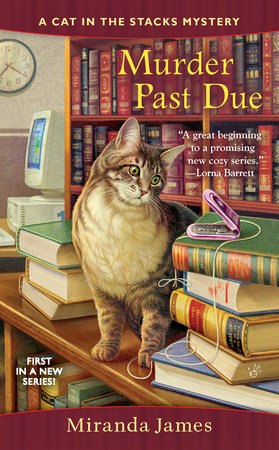
Murder Past Due

Doesn't get any better than this for a light cozy read: a cool Maine Coon cat, libraries, authors! First time I have read any of this "Cat in the Stacks" series by Miranda James (one of Dean James' pseudonyms), but I will definitely read more any time I want a little reprieve from the heavy stuff. This is the first in the series and we meet part-time university archivist, Charlie Harris and his rescued Maine Coon cat, Diesel. Charlie's wife as well as his dearest aunt both died a couple of years ago and so Diesel is his primary companion; he takes him everywhere, including walking him on a leash to work at the small university in Athena, Mississippi. When Aunt Dottie died, Charlie inherited her beautifully maintained old house and her house-keeper, Azalea, whose daughter, Kanesha Berry, is the Sheriff in charge of the investigation when a best-selling author and former classmate of Charlie's, Godfrey Priest, is murdered. Godfrey grew up in Athena and was always a jerk. He's still arrogant and rude but has just found out that he has a son by a woman he had a short affair with 19 years ago. That son, Justin Wardlow, turns out to be boarding with Charlie during his frehsman year at college. Between Justin's mom, Julia, and Azalea, who asks Charlie to help her daughter, Charlie gets involved with the investigation. And as Charlie learns more about Godfrey's life, the pool of suspects continues to grow; it seems that just about everybody in town has a reason to hate Godfrey Priest. Credible plotting, interesting characters, and authentic setting all add up to an enjoyable read.

Thursday, November 15, 2018

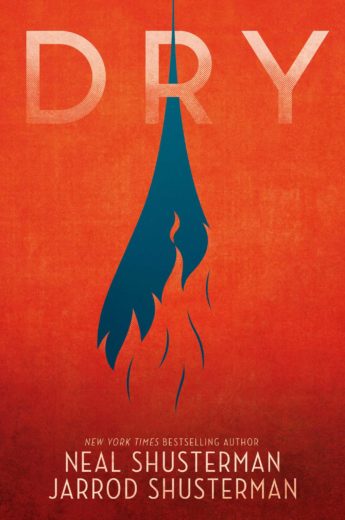
Dry

This collaboration between YA author Neal Shusterman and (son) Jarrod Shusterman has been getting rave reviews (Kirkus, Publishers Weekly). The characters are all indeed young adults, but the theme is very current and of concern to all ages. Especially with California once again consumed by deadly fires, this tale of how quickly humanity descends into dysfunctionality when Arizona and Nevada stop the flow of the Colorado River into southern California was scary reading on a very visceral level. I started the book yesterday and finished early this morning if that gives you any idea of how engrossed I was. It reminded me strongly of The Water Knife (about which I wrote some time back) but told from the perspectives of several different teenagers. Alyssa, 16, is your typical high school student who plays soccer and has an annoying 10-year old brother, Garrett. Kelton's family are survivalists living next door in this suburban neighborhood; Kelton has had a crush on Alyssa forever, but she thinks he's creepy because of his family. Jacqui, 19, has been surviving on her wits for 2 years and only hooks up with the other 3 when they go looking for Alyssa and Garrett's now missing parents who went out to look for water. Henry is an adopted 13 year old left at home by his adoptive parents in a gated community while they are on a cruise. He is a schemer and opportunist and meets the other 4 when they come looking for Alyssa and Garrett's uncle. They all quickly find out that no amount of preparation is foolproof when things start to go sideways. The government is slow to respond; FEMA is focused on a hurricane and doesn't see the emergency from a water shortage. Except that it's not a shortage--that's been going on in California for a while; it's the Great Tap-Out and people die pretty quickly from lack of water. But before they do, they turn on one another, lose hope and give up, or become heroes. The questions about under what circumstances we lose our humanity are compelling.

Wednesday, November 14, 2018

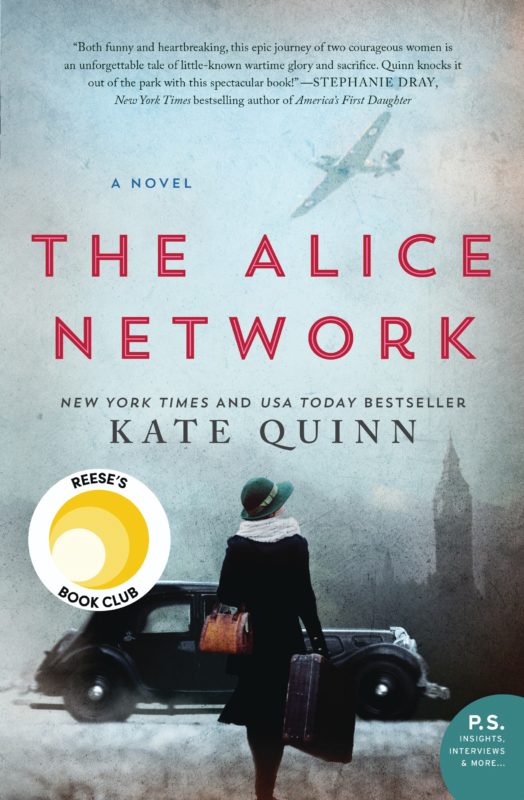
The Alice Network

This historical novel from Kate Quinn, based on actual people and events, is told from two alternating perspectives. WWII has taken a terrible toll on Charlie St. Clair's family. Her brother James came home from the war "shell shocked" and eventually killed himself. Her cousin and dearest friend, Rose, was still in France when the Germans invaded and has not been heard from. Nineteen year old Charlie feels she failed them both and thus fell into her own depression, resulting in desperate and careless sexual encounters and an unwanted pregnancy. Her father is not speaking to her and her mother has brought her to Europe for the Swiss "cure" to her "Little Problem." But Charlie has decided to take this opportunity to slip away from her domineering French mother and find her missing cousin Rose. She has only one lead, the name on a missing persons report. When she shows up on the doorstep of one Eve Gardiner, instead of useful information she gets a gun pointed in her face and a belligerent and drunken threat to go away or get shot. But timid Charlie stays, in part because the hired help, another war shocked ex-soldier and Eve's driver, shows up to feed Eve breakfast. Not surprisingly, Finn becomes the love interest for Charlie. Eve is reluctantly convinced by a tidbit of information Charlie offers about the name of a restaurant where Rose had worked, and especially by the name of the owner, René.
The alternating story is told by Eve, a stuttering file clerk who is recruited to become a spy in WWI France because she speaks both French and German perfectly. She is minimally trained in England and then sent to the village of Lille, which is occupied by the Germans. She is greeted and managed by Lili--her pseudonym in the network--who was renowned in real life for timely and critical intelligence gathering. Eve is placed undercover as a somewhat dim-witted (the assumption people make as a result of her stutter) but competent waitress in a restaurant run by a collaborator, René Bordelon. If he is alive, Eve will hunt him to the ends of the earth for what he did to her. It is a taut tale from both perspectives and the unlikely alliance between the two brings closure--albeit tragic--to both. Great writing and compelling characters and settings.
Descriptive review from NPR