Saturday, September 30, 2017

Killing Custer

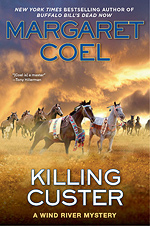
Another in Margaret Coel's "Wind River Mysteries" series (this is #17), set in Wyoming on the Wind River Reservation, shared by Arapahoe and Shoshone tribes. The setting, St. Francis Mission, is based on the actual St. Stephens Mission that has been there since 1884. The mystery here centers around the murder of a George Custer re-enactor during a pre-rodeo season parade. The man has come to Indian Country to flaunt the massacre of Indians by Custer and so the logical assumption is that some of the Indians riding in the parade shot him. In fact, Detective Madden has managed to threaten enough people on the reservation to get a supposed eye witness account to support that version of events. Neither Father John O'Malley nor attorney Vickie Holden believe either of the accused young Arapahoe men are capable of murder, but they are going to have to find convincing proof otherwise if they want to save them from jail. When there is a break-in at the office of a well-known lawyer in Lander and he appears to be missing, Vickie begins to wonder if there is a connection between the two events. The Indian woman who was secretary, and lover, to the missing attorney is brought in for questioning, Vickie initially serves as her attorney, but she is aware the young woman is holding back key information from her and tells her to find an attorney she can trust and confide in. When the young woman is subsequently murdered, Vickie holds herself responsible. Further, Vickie has already been contacted by the widow of the murdered Custer impersonator to find his missing money, so Vickie is unable to represent either of the two Arapahoes accused. She finds herself on the wrong side of a line she struggles to straddle. Her goal is to defend Native Americans and here she is stuck defending a white woman and, due to conflict of interest, unable to defend her fellow Indians. Each pursuing their own leads, Vickie and Father John eventually join forces to track down the missing attorney and maybe tie him to the murders, if they don't get killed first. As always, solid writing with lots of interesting history thrown in for good measure. Well constructed plot and loving portrayal of the setting. See my two earlier blogs on The Girl With Braided Hair, and Eagle Catcher by this same author.

Saturday, September 2, 2017

Y is for Yesterday
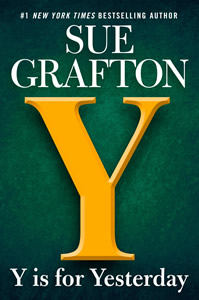
Sue Grafton has taken the somewhat unusual road of setting all of her Kinsey Milhone novels in a short time period in the 1980's, and aging her protagonist only a few years, from 32 in A is for Alibi to 39 in this latest installment (what will happen when she reaches "Z" all her fans are wondering?!--maybe I will go back and start reading from the beginning ;-). The present stories start in the fall of 1989 but one of the threads is tied to events from the spring and summer of 1979, when a teenager, Sloan Stevens, was murdered by a classmate from a fancy private academy. Fritz McCabe, the one who actually pulled the trigger, has now been released from prison since he was convicted as a minor and has to be released on his 25th birthday. His parents have received a $25,000 blackmail demand in relation to a video tape Fritz and his buddies made in high school showing the sexual assault of a very drunk 14 year old classmate by Fritz and another boy, Troy. If the tape were sent to the DA, Fritz would go back to prison for statutory rape, for which there is no statute of limitations. The parents don't want to pay, and are advised not to pay by their attorney, who refers them to Kinsey. Kinsey delves into the past events surrounding the making of the tape, and the cheating scandal at Climping Academy that started the ball rolling and eventually resulted in Sloan's death. Fritz was just a pawn, and the emotional bully who ran the show back then, Austin Brown, disappeared before Fritz confessed and hasn't been seen in 10 years.
Meanwhile, the man who tried to kill Kinsey in the previous book, X, has returned; he is looking for the "souvenirs" he took from the series of young girls he murdered. He thinks either Kinsey or one of his ex-wives might have them, and he will do anything to get them back, including taking a second run at killing Kinsey--for good this time. Meanwhile, the usual cast of characters, Henry, Rosie, Cheney, and Anna are all around and dealing with their own personal dramas. As always, Kinsey's character is feisty and engaging, and the thinly veiled town of Santa Theresa (Montecito) is always fun to visit. The ending was a surprise to me, but then I am obligingly misled.

The Blackhouse
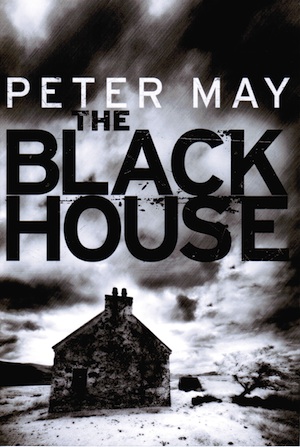
This novel by prolific and award-winning author Peter May is the first of the "Lewis Trilogy," a series of murder mysteries set on the Isle of Lewis in the Outer Hebrides of Scotland. The landscape is harsh and the living is hard on these islands and kids growing up there often cannot wait to get away. This was certainly true for Fin McLeod, who had extra incentive because his parents had died when he was young and he was raised by an aunt who had little time for him and expressed no sympathy or affection for the bereaved child. Still he had his friends, and a girl who liked him from the first grade, so it seemed not all bad. Until the eve of his departure for university, when his friend's father and Fin's tutor for college prep told Fin and Artair (his son and Fin's best friend) that the boys had been chosen to join the guga hunt--a right of passage that involves sailing across 50 miles of empty ocean to an island where seabirds nest and then killing and bringing back hundreds of the young birds as a delicacy for the islanders. It is an event decades old in tradition, held onto all the more firmly in the face of animal rights protesters. For Fin and Artair, it will be a turning point in their relationship and their lives.
Fin does indeed go off to university in Glasgow but can't engage and eventually becomes a detective with the Edinburgh CID. When a grisly murder is committed on the Isle of Lewis, identical in many details to one recently investigated in Edinburgh, Fin is the obvious choice--even though he has recently lost his only child. His return launches a story told alternately in the past and the present, with Fin's history being revealed a piece at a time while he continually confronts painful reunions in the present. This is a dark book and I wonder if living so far north, like the Scandinavians and the Scots do, focuses people on the darker corners of human nature. The ending of this book came as a total surprise to me. Don't read this book if you are looking for a happy ending. Do read it if you like noir detective stories.
Interestingly, this book was bought up by a French publisher after being turned down by numerous British publishers. Subsequently, it was bought by numerous publishers and has been translated into several languages. Glowing reviews from The New York Times, The Scotsman, the NY Journal of Books, and Publishers Weekly. It was also named one of Kirkus' "10 Best Crime Novels" for 2012. More info on Peter May at Wikipedia.

Tuesday, August 15, 2017

The Cafe by the Sea

This novel (also published under the English title, The Summer Seaside Kitchen) will not offer any surprises for those who have read other books by Jenny Colgan (see my post on The Bookshop on the Corner). She continues her love affair with Scotland, this time on a (fictitious) island, Mure, at the northern most point of the country. There will be two men: one who is clearly infatuated with our protagonist, Flora, and one who is cold, aloof, gorgeous, and unattainable--in this case, Joel, Flora's boss at a law firm in London. You will know the predictable outcome by the time you read a couple of chapters, but the journey is still enjoyable.
A few years ago, Flora fled her home island of Mure after her mother's death from cancer...too many memories and too many people who knew her and expected her to step in and fill her mother's shoes looking after her father and her three brothers on the MacKenzie Farm.  Now, through happenstance, a potentially very lucrative client project has come up on the island and Flora is tapped to go back to Mure and suss out the locals' attitudes about moving a proposed wind farm that will spoil the view of the client's posh resort on the north end of the island. Flora goes home to find everyone still mad at her for leaving, her father fading away, her brothers bitter about the slow decline of the farm and the small island population not at all favorably disposed toward the rich American who has bought up "The Rock"for his new resort but not hired any local labor or sourced any of his food locally. He also owns a small building in town that he has left vacant and they are cross about that, as well. As you might guess, Flora is charged with smoothing ruffled community feathers, especially those of the town council, and that includes putting a small cafe into the empty shop in town. Back on the farm, Flora finds that her brother, Fintan, who the rest of the family thinks is a laggard for not helping more with the farm, has secretly been working on making delicious cheese. She also uncovers her mother's old recipe book and quickly re-connects with her love of cooking and with happier memories of her mom. A light and enjoyable read with wonderful, rich descriptions of the island, which Colgan claims is an "amalgam" of several northern Scottish islands. Perfect escape reading!

Monday, August 14, 2017

Midnight at the Bright Ideas Bookstore

This very meaty and somewhat grim crime mystery is the first novel from Matthew Sullivan; his previous work focused on award-winning short stories. He has also worked at the famous Tattered Cover bookstore in Denver, and a differently named Denver bookstore, Bright Ideas, is the central setting of this story. Our protagonist, Lydia Smith, is in her late 20's and loves working at Bright Ideas, and is a friend to all the "Book Frogs"--as the staff call them--lonely souls who while away their days in the various sections of the bookstore or the cafe. When Lydia is closing up one night, she finds one of the younger Book Frogs, Joey, hanging from a rafter. Days later, Joey's landlady tracks her down and gives Lydia the message that Joey has left everything he owns, mostly a box of books, to Lydia. When Lydia examines the strange collection of titles, she discover that tiny holes have been cut in some of the pages. Intent on determining why Joey killed himself, Lydia sets out to decipher the clues Joey has left in the books. As Lydia begins to uncover the sad story of Joey's life in foster care and then in prison, we are also gradually introduced to Lydia's past and the terrible secret that keeps her in semi-hiding. While at a sleep-over, Lydia, who hid under the sink, aurally witnessed the murder of her best friend's family by "The Hammerman," murders that remain unsolved. The event changed the trajectory of her life as her father moved them to an isolated cabin in the mountains and basically abandoned Lydia to her night terrors while he took the only job he could find, working as a prison guard. This is a really twisty plot and the solution to both mysteries--murders and suicide--bring Lydia full circle to her childhood and her long-estranged father. The only aspect of the story that was totally unbelievable was how Joey managed to leave the messages in his mutilated books. But get past that, and you will be engrossed in this chilling tale. Decent review from Kirkus, and a short review from Publishers Weekly.

Monday, July 31, 2017

Red Rising

As with so many other books being published these days, this is the first of an intended trilogy (now completed) by Pierce Brown. Darrow is a young (16) miner under the surface of Mars. He and his equally young wife, Eo, are Reds. That is the human race is now divided into social class by color. The Golds of course are at the top of the pecking order, over and above Grays, Pinks, Greens, etc., each of which has their special function in society. The Reds are miners. They live underground on Mars mining for a mineral that will one day terraform the planet and make it livable for the rest of humanity. They are not well treated by their masters, often going short of food, medicine and other essentials as they are driven to compete for these items by competing with other tribes of Reds to meet mining quotas. Except that this is all a lie. When Eo martyrs herself in order to spur Darrow to take up the rebellion, he instead attempts to follow her to a place beyond death. Instead he is surreptitiously subjected to a fake death and shown the truth, that Mars is already a habitable planet and that Reds are just being kept enslaved to support the other colors. He is transformed through excruciating surgical and psychological procedures into a Gold, with the idea that he will infiltrate, move into the highest ranks, and bring down the Oppressors. It's a compelling tale once you get into it, as he is selected for a rigorous and often brutal selection process where groups of Gold students compete against one another in a simulated world (a la The Hunger Games) to become Primus. Darrow will up-end the whole constructed and corrupt arrangement, making friends with other non-mainstream students and using unconventional tactics to build loyalty among his followers. He has a lot of hard decisions to make if he is to fulfill his mission and the inner conflicts are convincingly portrayed. Reviews from Kirkus, Publishers Weekly, and USA Today. A complete list of characters is provided at Wikipedia.

Dark Matter

Blake Crouch seems particularly adept at writing books that people want to make into movies or TV series: this book has been picked up by Sony Pictures, his Wayward Pines trilogy became a #1 Fox TV series, and his Letty Dobesh books are the basis for the TNT series. He has written lots of other books as well. This newest effort is a mix of quantum physics-focused science fiction and a provocative exploration of what makes life meaningful.
Physicist Jason Dessen lives a less than extraordinary life, teaching physics at the college, husband to would-be artist Daniela and a 15 year old son, Charlie. On one ordinary Chicago evening, he heads out to the local pub to help a former colleague celebrate having won a prestigious science prize. But this Jason never makes it home that night. He is kidnapped, driven to an abandoned factory, and drugged. When he awakens, he is surrounded by people he does not know but who seem to know him and who are desperate to know what he remembers from an apparent months-long absence. Jason escapes and tries to figure out whether or not he is losing his mind. Meanwhile, back at the Dessen home, Jason--or someone who looks and sounds very much like him, we'll call him Jason#2--has come home 3 hours late and resumes the life that Jason #1 has just lost.
It turns out that, if Jason #1 had made different choices, he would have gone on to discover revolutionary possibilities for parallel universes and won the science prize. But he would have lost Daniela and never had Charlie. The man he would have been has now stolen his life. This is a story about the mind-bending aspects of "what if all the 'what-if's' actually existed?" but also about the essential questions of what makes us unique. If we are an accumulation of all the choices we make, how do we define that, hang on to that, recover that when it is lost? Here is an interview with the author on NPR. Worthwhile reviews from Kirkus, NYT, and The Guardian.

Thursday, July 20, 2017

Station Eleven

This book by Emily St. John Mandel was highly recommended by my walking friend, Kathy F. and several other members of the short-lived fantasy/ sci-fi book group, and it won the Arthur C. Clarke Award and numerous other accolades. It is indeed lovely writing. The premise is that a pandemic flu wipes out 99% of the world's population and we hear the stories of several of that small group left alive in North America. It is set primarily from Toronto down to the south end of Lake Michigan, with short jaunts to L.A. and British Columbia to fill in the characters' back stories. Two primary entities form the warp (weft?) of the connecting stories. The first is Arthur Leander, from a tiny island off the west coast of Canada who moves to Montreal, becomes an actor and then becomes a movie star. He marries 3 times, has one son, and dies of a heart attack on-stage while performing King Lear in Toronto, the same night the pandemic reaches N. America. His first two wives, his son, his closest friend Clark, and a child actress in the King Lear production, Kirsten, all have their own stories. The second is The Symphony, a group of traveling musicians and actors who travel in the post-pandemic world to surviving settlements along the shore of Lake Michigan performing classical music and putting on Shakespeare plays. Several characters, including Kirsten, are members of this group. The title comes from a tiny run of graphic novels created by Arthur's first wife, Miranda, about a space station/ planet which starts to break down when it passes through a worm hole, causing systems to malfunction and flood the planet. A group of survivors live in the settlement of Undersea and want to return to Earth and life as they knew it. You can see the connections to the "real" story, of course. It is a hopeful story in the end, although there is no end to the craziness, grief and loss--not just for people who died, but for an entire way of life.
Plenty of reviews available to fill in my short account: The Guardian, The New York Times, Kirkus, the Huffington Post, and The Independent.

Wednesday, July 19, 2017

Hillbilly Elegy: A Memoir of a Family and Culture in Crisis

A memoir by J. D. Vance that does much to explain the mind set of a significant portion of the American population--the Scot-Irish immigrants to the Appalachians, who have become colloquially known as hillbillies. As always, when you look beneath the surface, the picture is infinitely more complicated and Vance spares no sympathy when calling out the dysfunctional and corrosive aspects of this culture. There is also no question that he loves the people he came from at the same time. His maternal grandparents joined a wave of immigration from Kentucky to the Rust Belt just after WWII, Ohio in Vance's case, looking for paying work and better lives. But they moved in such large numbers that their culture remained intact rather than being assimilated. They still often think first of violence as a way to solve problems, and blame others for their problems. Often fiercely loyal to family and country, they can also be abusive and embody the worst of learned helplessness mentality and behavior, including addictions and welfare dependence. Once exclusively Democratic, now they are largely Republican. Vance, a statistical anomaly for having "escaped" and become financially successful provides his personal and political (conservative) views about the problems facing this culture and America at large. Understanding this story offers insight into the current state of American politics. There is an excellent review in The New York Times, more at Kirkus and The Guardian, and this aptly titled article from the National Review, "What Hillbilly Elegy Reveals About Trump and America."

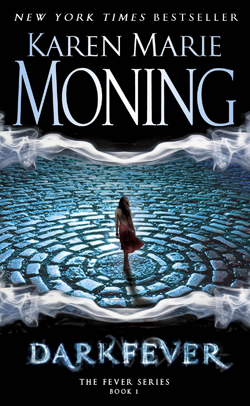
Dark Fever

Well, as an antidote to reading Orphan Master's Son, I dove into this supernatural fantasy thriller. Author Karen Marie Moning has written two series and this book is the first in the "Fever" series (Highlander being the other). The premise is that our protagonist, a carefree, 20-year old named MacKayla (or Mac for short) has her life turned upside down when her older sister, who has been attending university in Dublin, is brutally murdered. But when the Dublin police find no leads into identifying Alina's killer, this sheltered young woman from a small town in Georgia decides to take matters into her own hands. It's only weeks after the murder when Mac is able to retrieve a final disturbing message from Alina left on her cell phone:
“We’ve got to talk, Mac! There’s so much you don’t know. My God, you don’t even know what you are! There are so many things I should have told you, but I thought I could keep you out of it until things were safer for us. I’m going to try to make it home”—she broke off and laughed bitterly, a caustic sound totally unlike Alina—“but I don’t think he’ll let me out of the country. I’ll call you as soon—” More static. A gasp. “Oh, Mac, he’s coming!” Her voice dropped to an urgent whisper. “Listen to me! We’ve got to find the”—her next word sounded garbled or foreign, something like shi-sadu, I thought. “Everything depends on it. We can’t let them have it! We’ve got to get to it first! He’s been lying to me all along. I know what it is now and I know where—”
When Mac arrives in Dublin, she is horrified to realize that she can see creatures that no one else does, effectively looking beneath the glamour of the Fae and viewing the real monsters or beauties that they are. Mac is out of her depth and so grasps at the help offered by ostensible bookstore owner Jericho Barrons. Barrons is out to get the book Alina mentioned, the Sinsar Dubh, for his own purposes and he will use Mac to help him find it; whether or not she survives is secondary to him.
Mac is an interesting character, driven by love of her dead sister but tortured with (appropriately) self-doubt about her ability to deal with this crazy situation. She spends a little too much time worrying about her appearance for my taste, but that won't stop me from seeking out the next book in the series, Bloodfever. Additional reviews from Publishers Weekly, and from Booklist (reprinted below).
MacKayla "Mac" Lane is a small-town southern girl living a life of suntans and shopping. All that changes when her sister dies in Ireland and a cryptic message on Mac's cell phone raises disturbing questions about the nature of her sister's death. Mac follows the lead to Dublin and the strange life her sister led, on to the darkly dangerous book-dealer Jericho Barrons, and a burgeoning war with deadly Fae that humankind doesn't even realize has begun. Time-travel-romance maven Moning reshapes her Celtic lore for a radically different and engaging new dark fantasy series. Mac's first-person narrative is more than point of view; it's a true recounting of how a sheltered young girl grows to accept the role fate has dealt her. And while moments of sexual awareness hint that a relationship between Mac and Jericho could complicate matters in the future, wisely there is no full-blown romance here to distract from the complex introduction to Moning's new world. Nina Davis
Copyright © American Library Association.