Wednesday, December 17, 2014

Moon Called

This is the first book in the Mercy Thompson series by Patricia Briggs. I recently read the latest book (Frost Burned) in this series and liked it so much that I decided to go back and read the series from the beginning. It is always more interesting to me to see how a character develops as well as which characters make return appearances and what significance that has over time. Mercy is a mechanic for German cars, and a shape-shifter (coyote) and walker, descended from the Native American Coyote of lore and legend. She knows very little about the extent of her powers, beyond being able to change form, in this first book. What we do learn is that she was raised by a pack of werewolves in Montana and returned to her mom and step-father (along with a slew of step-siblings) when she fell in love and planned to elope with the son of the pack's alpha. In her mind, they abandoned her and she has never been back. However events conspire to send her speeding (or at least driving as fast as a VW Vanagon can go) back there when a newly converted werewolf comes to her for help and is then murdered and the neighboring werewolf alpha, Adam Hauptman, is also severely injured and left for dead. Maybe worse is the fact that Adam's human daughter, Jesse, has been kidnapped. Mercy know she does not have the skills to cope with Adam's injuries or his recovery and she does not trust his pack, fearing someone may have betrayed him in a bid to take over. While in Montana, she reconnects with the long-ago love of her life, Samuel, who is sent by his father to accompany Mercy and Adam back to the Tri-Cities and see if they can find out who attacked Adam and killed the young werewolf. We also get to see the preliminary stages of Adam's attraction to Mercy.
The plot is pretty twisty but the action never stops and the characters are great. This is a totally absorbing and fun read if you like the supernatural. Along with werewolves, we also get to meet Mercy's friend Stephan, a vampire, as well as the queen of the local vampire Seethe. And a master metal smith and fairy, Zee, helps Mercy out with the loan of a magic dagger. Highly recommended series so far.

Sunday, December 14, 2014

Let Your Life Speak: Listening for the Voice of Vocation

Parker Palmer, known best to me through his book, The Courage to Teach, apparently has written on a number of other subjects. This is a slender volume -- just over 100 page -- and well worth the investment of time, at least to me. He talks I guess most thematically about self-acceptance--recognizing our weak as well as our strong points and embracing them as guideposts to finding what it is we are here on earth to do. And he is very clear that admiring someone for what they do or being told what we should do or aspiring to live up to the values of someone else or some institution outside ourselves is not the best guidance in finding our true calling. He is a Quaker, I think having come to that as an adult, although not entirely sure about that.
Palmer spends one whole chapter talking about what he learned from a couple of significant and lengthy encounters with clinical depression. There were several things that resonated for me, not only my own personal history with depression, but also my concerns about dealing with my sister's ongoing depression.  A few examples: "One begins the slow walk back to health by choosing each day things that enliven one's selfhood and resisting things that do not." "Depression is the ultimate state of disconnection..." He cites Rilke who says, "love...consists in this, that two solitudes protect and border and salute each other." and goes on to say that "Rilke describes a kind of love that neither avoids nor invades the soul's suffering."  He said the therapist who he finally found to be helpful said at one point, " Do you think you could see it [depression]...as the hand of a friend, pressing you down to ground on which it is safe to stand?" And "One of the most painful discoveries I made in the midst of the dark woods of depression was that a part of me wanted to stay depressed. As long as I clung to this living death, lie became easier; little was expected of me, certainly not serving others." Finally, "One of the hardest things we must do sometimes is to be present to another person's pain without trying to "fix" it, to simply stand respectfully at the edge of that person's mystery and misery. Standing there, we feel useless and powerlesss, which is exactly how a depressed person feels...In an effort to avoid those feelings, I give advice, which set me, not you, free."
I lingered over-long perhaps on that chapter, but there is much in the book that I found useful. I plan to buy a copy of this book so I can re-read it at my leisure, and maybe even loan it to a friend if the occasion arises. 

Tuesday, December 2, 2014

The Black Country

This is apparently the 2nd in a series by Alex Grecian written about the "murder squad" of Scotland Yard that was inaugurated in the late 19th century (i.e., Victorian era), after the Jack the Ripper cases failed to be solved. I could not find much about this unit, but in an author Q & A, Grecian claims it was and is a real unit and that his characters are based loosely on actual men in the unit. Given the unit's purview (i.e., the London metropolitan area), it's a little surprising that, in this story, they have been sent to a small village in coal mining country, Blackhampton, to find a missing family--or at least the parents and the youngest child. Inspector Walter Day and his sergeant, Nevil Hammersmith, have come on ahead of the Yard's first forensic pathologist (also based on an actual person), Dr. Bernard Kingsley. The villagers are a closed lot, highly superstitious, and seem to want to thwart efforts to find the missing family by any means, including drugging the two Yard policemen.  To complicate the picture, there is a terribly disfigured American who has come to the village on a quest for vengeance. The village itself is sinking (sometimes slowly and sometime rather abruptly) into the myriad tunnels dug underground in search of coal; it and the unseasonably cold weather both are characters in this mystery as well. It takes a while to sort out who did what. Two of the older children from the missing family are being looked after by a housekeeper and the local school teacher, and it is clear that they know something about their missing younger brother. A couple of "Interludes" set during the Civil War in the U.S. provide the motivation behind the American's quest and fill in some history on one of the people in the village who is particularly keen to find the missing child. Tied into the story is the fact, initially hidden from the police, that over half the villagers have come down with an illness which is killing them off at an alarming rate. Hammersmith may soon be among them. Day's very pregnant wife makes an appearance in the village, on her way to stay with her sister, and adds dimension to the character of Inspector Day.
Altogether this is a very atmospheric setting, with well developed characters and an engrossing plot line. Not too improbable and yet tricky to figure out. If you like historically based mysteries, this would certainly satisfy.

The Speed of Dark

Oh what an incredibly touching an profound book this is by Elizabeth Moon. A long time ago, I read her other non-series book, Remnant Population, and really liked it, but never read any other books by her. Sister-in-law Joan recommended this one and I am so glad to have read it. Set just a few years into the future, childhood autism has become a think of the past due to genetic tinkering in the womb or shortly after birth. However, that leaves the existing adult autists rather out in the cold. Some of them received early training to learn enough compensatory skills to get by in society. One of these is our protagonist and narrator, Lou Arrendale. He lives on his own, drives a car, and has a good job with a pharmaceutical company, where his pattern recognition skills are providing a valuable service. In fact, there is a whole unit of adult autists working for the company in this capacity. The company receives a tax credit, and the autistic employees are given a specially supportive environment to facilitate their high productivity. But along comes a new regional manager who detests them and all they represent and he is determined to get rid of them. He essentially tells them that they can become subjects in an experimental treatment to "cure" adult autism or risk losing their jobs. Their immediate supervisor, who has a more severely impaired autistic brother, seems--initially--unable to protect them, although eventually he succeeds in revealing and stopping this ruthless manager's illegal plans.
A parallel story occurs in Lou's private life wherein he is attracted to a woman, Marjory, in his small fencing class that meets once a week. Lou has become so adept at fencing that his teacher persuades him to participate in a tournament, where Lou does very well. But another member of the group, Don, hates Lou for his success and because Marjory seems to favor Lou over him. Don begins to do malicious deeds like slash Lou's tires and break the windshield on his car. When Don rigs a small explosive device to Lou's car, the police finally begin to take the events seriously and manage to catch the perpetrator when he tries to shoot Lou.
All these events serve to give the reader insight into Lou's ways of viewing human interaction and dealing with the "normal" people around him. The really profound questions have to do with what normal really means, and whether or not Lou would lose his identity if he agreed to the experimental treatment and was no longer autistic. Lou is an absolutely compelling character, given real credibility by the fact that author Moon has a teenaged son with autism. You will empathize with Lou's concerns, fear for his safety and his future self, and cheer when he prevails. Highly recommended!

Frost Burned

Oh Boy! I have discovered a fun new author, AND she has already published a bunch of earlier books, so I will be doing a lot of catching up. Patricia Briggs writes about the supernaturals being a parttially recognized segment of society--at least the werewolves are. The fae are questionable and the vampires are still.....in the closet. The most entertaining part of this whole book took place before I even read it. I opened the cover and there was a map--now I LOVE it when authors include maps of where the action is taking place. But what was too funny was that this was a map of the Tri-Cities in Washington state; that's right, Kennewick, Pasco, and Richland, which I never knew was such a hotbed of supernatural activity. Although I guess after the wildly popular Stephenie Meyer books made a thinly disguised Forks, WA on the Olympic peninsula such a "go-to" place for vampires and werewolves, it was bound to spread.
Mercy (short for Mercedes) Thompson is an auto mechanic, and also a shapeshifter, and a Walker ( I am not entirely clear what this means yet). She is descended from the original Coyote of American Indian lore. In this book she is married to the alpha wolf of the local pack, Adam Hauptman and so has acquired a teen-aged step-daughter in the bargain, Jesse. Jesse and Mercy are out shopping when they collide with a car and find they can't drive home. They are unable to reach Adam or any of the other pack members. Mercy discovers eventually that the entire pack has been kidnapped and she is forced to call upon others--fairies and vampires--to help her find them. But in the meantime, it appears that someone is trying to kill her as well. Mercy can help the pack escape remotely through her mate bond with Adam, and she uses it in heretofore unknown ways to pull the silver used to subdue the wolves from his body and thus restore him to full strength. After the pack has returned home, Mercy is asked for a meeting with the local vampire queen, who, it turns out, needs Mercy's unique skills in communing with the dead to fight off a take-over coup. In fact, the entire pack kidnapping and murder attempts on Mercy have all been part of this usurper's plans to gain control of the local vampire queen's territory and power. Mercy prevails and discovers in the process that she has skills she did not know about.
Great potential series read for lovers of the supernatural, and the locale makes it especially fun for those of us living in the northwest.

Wednesday, November 26, 2014

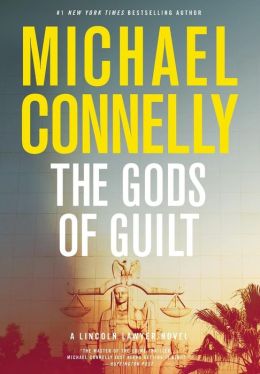
The Gods of Guilt

This is the 6th entry in Michael Connelly's series featuring attorney, Mickey Haller--aka "The Lincoln Lawyer," which became a movie starring Matthew McConaughey. Mickey is still doing business out of his Lincoln Towncar, and being driven around by Earl as an exchange for some legal work Mickey did to help him out. In this story, Mickey is currently estranged from his ex-wife and 16-year old daughter. His daughter holds Mickey responsible for the death of a woman and daughter killed by a drunken driver. Mickey previously got the drunken driver off on a technicality. The widely publicized case also lost Mickey the race for the DA's position. Here, Mickey is contacted by a digital pimp--a man who publishes the web sites for prostitutes and takes a cut of their earnings. He has been charged with murdering one of his clients. The victim, it turns out, was a woman Mickey had been close to; in fact, he thought he had helped her escape "the life" seven years earlier. Still, Mickey thinks this particular client is actually innocent and has been set up by an unscrupulous and ruthless DEA agent. The dead prostitute had helped the DEA agent convict a drug dealer by planting a gun under the mattress before the dealer was busted. The gun allowed the feds to put the dealer in jail for life instead of just a few months or years. The fact that the case is being re-opened means that several people might have had a motive to kill "Glory Days."
This is really well written as are all the Michael Connelly books that I have ever read, and I am actually now interested in going back to read earlier installments in this particular series, as most of what I have read are the Harry Bosch novels. There are a couple of videos about this book on Connelly's web site.

Sunday, November 23, 2014

The Chase

This is a series by Janet Evanovich working with Lee Goldberg. Kate O'Hare is an FBI agent who has an obsession with master thief Nicolas Fox.  Apparently she finally caught him and he is now working with the FBI to catch bad guys. So imagine Sandra Bullock in Miss Congeniality meets Neal Caffrey in White Collar and you have the characters pretty close to the ones in this book. As in her Stephanie Plum books, you need to throw in unconventional relatives--in this case it's Jake, Kate's father, who was a special ops guy back in the day, and who now provides support for those operations requiring a little more force than finesse.  The initial play is to retrieve a valuable Chinese artifact that has been stolen from the Smithsonian before the Smithsonian is supposed to return it to the Chinese. This involves not just stealing it from the current illegitimate owner, Carter Grove, who happens to be a former White House Chief of Staff and now runs a hugely successful security (i.e., mercenaries) firm, but also a mid-air switch so the Chinese do not discover the original theft. All this goes according to plan, with a few hurdles successfully overcome. When Grove comes after Kate's extended family, however, the goal switches to taking him down, which can only be done only by luring him into making another stolen art purchase. As with other of Evanovich's books, things blow up, there is unconsummated sexual tension between protagonists, and the good guys and gals prevail. These are light reads that are always entertaining and well written with interesting, if somewhat improbable, characters.

Tuesday, November 18, 2014

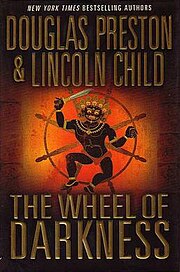
The Wheel of Darkness

This series, featuring FBI special agent Aloysius Pendergast, and his ward, Constance Greene, are somewhat different from the usual procedurals or thrillers in that Pendergast, and now Constance, are studying Buddhism. They have come to a remote Tibetan monastery to seek respite from the world and to study. So remote is the monastery, in fact, that the Chinese do not even know of its existence. While there, an impossible theft takes place. An ancient artifact that has the power to cleanse the earth of humanity has been stolen from the most secret and well-guarded part of the monastery. Pendergast and Constance are tasked with its return. They are hot on the trail of the thief, only to find him brutally murdered. They determine that the murderer must be one of the passengers scheduled on the inaugural sailing of the largest British ocean liner, the Brittainia. Disappearances and murders begin to accumulate on the voyage to New York city, but the captain of the ship refuses to turn back or alter course. When the officers declare him unfit for command and take over the ship, matters seem to be improving. But  the world is quickly turned upside down as the new commander sets the ship on a suicidal collision course for dangerous rocks off the coast of Canada. Anti-terrorism measures mean that once she has locked herself in the bridge, no one can gain access or change course. To top it off, Pendergast has changed personality and now plans to abandon ship rather than trying to save the ship and passengers. Can Constance bring Pendergast back to himself in time, and what is the strange force that has infected the minds of the commander and Pendergast? Those are the questions that will drive you along to the end. I would not turn down reading another book by this duo, but I also would not go out of my way to find more.

Monday, November 17, 2014

A Wrinkle in Time

Can you imagine me, voracious reader since I was 6 years old, never having read this book? And a librarian as one of my careers, to boot! For shame. But retirement is an opportunity to right the wrongs and gaping holes of my childhood, so at the suggestion of my sister-in-law, I read this Newbery-winning classic by Madeleine L'Engle. This re-issue, published in 2007 (originally published in 1962) has a lovely introduction, "An Appreciation," by Anna Quindlen that says in part, " On its surface this is a book about three children who fight an evil force threatening their planet. But it is really about a more primal battle all human beings face, to respect, defend, and love themselves" (p. 4). Since I have also been reading Florida Scott-Maxwell's book, The Measure of My Days, which  talks quite a lot about the tremendous effort required to be true to ourselves, this really smacked me in the face. Wow, this is a lot to pack into a book for youngsters! But L'Engle did not underestimate her young readers in any way--neither in what they must experience growing up, nor in their ability to think seriously about the related issues.  Meg Murry learns that what sets her apart from her fellow students, and even to some extent her own siblings, can be her strengths, even if the world at large does not necessarily endorse being different. In the battle for the mind and heart of her younger brother, Meg finds that her love and loyalty can beat back the darkest evil.  Definitely worth a read or a re-read. And since this was the first of the "Time Quintet" there is more to come when you're done.

Monday, November 3, 2014

Sepulchre

I know I read an earlier work by Kate Mosse, Labyrinth, some time ago but I don't seem to have posted a review. There is also a sequel in this "Languedoc Trilogy," Citadel, which I have not yet read. If you like the supernatural, this will certainly appeal as it has elements of Tarot card reading, evil spirits, and languishing ghosts. The time frame moves back and forth between the autumns of  1891 and 2007. Each heroine, Leonie in 1891 and Meredith in 2007, start out in Paris and end up in Rennes-les-Bains, or more specifically, Domain de la Cade, in the mountainous region bordering the Pyrenees. Leonie's story focuses on the vendetta of an evil man, Constant, growing ever more diabolical as he is consumed by syphilis. He feels jilted by Isolde, who is Leonie's widowed aunt-by-marriage to her mother's older half-brother. Leonie's brother, Anatole, has rescued Isolde from the disastrous affair with Constant, only to be hounded by him and slandered through a rumor campaign in the Paris press. Finally, Anatole and Isolde--who have become lovers--concoct a plan to fake her death and funeral, but Constant eventually sees through the ruse and takes up the pursuit once again, eventually resulting in both their deaths. Leonie has her revenge on Constant in the end, summoning dangerous spirits to kill him.
Present tense, Meredith is writing a biography of Debussy and also looking for the ancestors of her mother. Meredith was adopted by an aunt because her mother was mentally unbalanced and eventually took her own life. She has only a photograph of a young solder, taken--she thinks--in southern France, and a piece of music titled "Sepulchre" as legacies from her mother. She starts in Paris and then heads to Rennes-les-Bains, ostensibly to look for archival traces of Debussy's wife, Lily, but also because she believes she will find her own family's history there. The Domaine de la Cade has been turned into a high end hotel and Meredith finds more evidence of her ties to the ancestral owners.
If I have done the complex plot a disservice, I apologize. There is rich description and decent character development. I was actually a bit put off by the supernatural elements, which is not usually true for me. I love historical mysteries generally, but found myself a bit impatient with this one. I also just don't like books--or real life for that matter--where it appears that one really bad person can wreak so much havoc and get away with it. Constant essentially destroys the Vernier family, although Anatole and Isolde's son does survive and turns out to be Meredith's ancestor. Constant murders Leonie and Anatole's mother, drives Isolde slowly insane, and spreads rumors about evil spirits being housed at Domaine de la Cade, causing a mob to burn the place down. Yes the devil gets him in the end, but there is just too much death and destruction before that happens--for my taste.  For a more informed review, here is one from The Guardian.