Friday, August 8, 2008

Bangkok 8 -- Take a walk on the wild side


This book first wandered across my field of vision at a recent library instruction conference when we created a small virtual library for an interactive experience with books. I assumed someone chose to include the book because it was obviously about the sex trade and--well--the conference was in Las Vegas. But THEN, Nancy Pearl reviewed it and that really got my attention, so I decided to see for myself (she is one of my library heroines but we don't always see eye to eye on books, see for example the blog on Dingley Falls). It's really an engrossing read, not least of all because you get the nitty gritty on how a M2F sex change operation is performed. It is, at heart, a murder mystery--but one infused with, I trust, the culture of Thailand, or, more specifically, Bangkok. What we farang westerners would call magical thinking abounds as the protagonist is able to see people's past lives as explanations for their current behaviors and relationships. Sonchai Jitpleecheep is the son of a former prostitute and an unknown American soldier, conceived during our involvement in VietNam. He lives in a self-described hovel less than 10 feet square with a hole in the floor for a toilet. He is also a detective with the Royal Thai Police Force, but has made the mistake of becoming known as an arhat, an honest cop. This is an incredibly twisty plot that starts with the gruesome and imaginative murder (by snake bites) of a Marine who was way more than he seemed. There are unfortunate consequences of the murder that make Sonchai take a very personal interest in finding the killer. Icing on the cake-- Sonchai's frequent musings on his Buddhist beliefs and his explanations of Thai cultural essence, often told with biting humor. A couple of my favorite examples: when he is trying to explain the significance of his mother cursing the man who stabbed him, Sonchai concludes, "You will not make a good death is a power curse; it makes Fuck you sound like a benediction." At another point he relays a news report on the radio that says ghouls, the spirits of the dead, are causing traffic accidents at a busy intersection. Sonchai wryly notes that his people, in death as in life, "love to party."

Monday, August 4, 2008

Mostly fluffy stuff


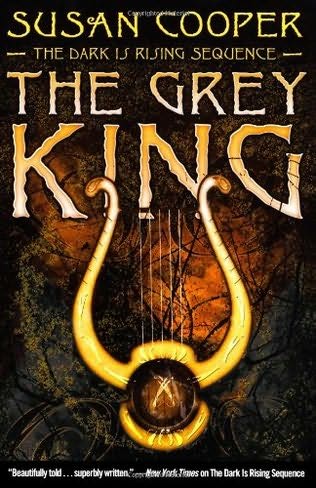
Maybe because the books I've been reading to review are SO heavy--lots of non-fiction, self-help, etc.-- I'm doing a bit more escapist reading these days. I listened to another YA fantasy book, a classic set in Wales with ties to Arthurian legend called The Grey King by Susan Cooper. A 10-year old English boy is actually the last of the "Old Ones" who has been called on for a quest to stop the dark machinations of the Grey King. The reader, Richard Mitchley, did an excellent job with the snippets of Welsh dialog and place names.
I also persisted to the end with Coyote Blue by Christopher Moore -- it was a slow starter and I didn't really like it to begin with, but I've enjoyed a couple of his other vampire books (see earlier reviews in this blog), so I kept at it and in the end it was a nice love story with the usual Moore insanity of characters, plot and the supernatural driving it all. This time the supernatural characters center around Native American lore and the tale of the Coyote trickster.
Last but not least this week was the 14th installment of the Stephanie Plum series by Janet Evanovich, Fearless Fourteen, which was a birthday gift from my friend and colleague, Dale. As always, there were laugh out-loud moments and Grandma Mazur is up to her usual tricks--this time getting immersed in online gaming, complete with black leather outfits. I don't think any cars got blown up this time around though and the interactions with Ranger were decidedly less heated, although still filled with innuendo. Not her best effort but still a fun read.
I'm on to more substantial fare, Bangkok 8, thanks to a recent set of reviews by my reading guru, Nancy Pearl.

Wednesday, July 30, 2008

More good vampire reads


You simply cannot be involved with anything involving young adult (YA) literature and NOT have heard all the kerfuffle about Stephenie Meyer's vampire series. So I took the plunge and listened to the first of the 4 books in the series to be told from Bella Swan's point of view. Twilight-- as well as its two sequels (New Moon and Eclipse)-- have all been on the young adult section of the NYT bestseller list. The fourth book, Breaking Dawn, is due for release in the U.S. on August 2. There's a movie version of Twilight forthcoming. So now you know at least as much as I did when I decided to check this out. Bella Swan is 17 and has just moved to Forks, WA to live with her dad, Charlie, who just happens to be the police chief in town. She has resided up to this point with her mother in Phoenix and isn't at all happy about moving to the gray, soggy, cold Olympic peninsula, but she's trying to give her mom and new step-dad some room to get their life together. Bella is a klutz. She falls down walking on a flat surface, which makes sports, dancing, etc. totally out of the question. She's never had a boyfriend. Now, however, every boy in the high school seems to want her for a girlfriend and she's not really interested. Instead she is fascinated by Edward Cullen who sits in the cafeteria with his three siblings--all adopted children of the local surgeon Carlisle Cullen. The Cullens don't mix with anyone. They are beautiful, graceful, and apparently rich--everything Bella considers herself not to be. Edward seems initially to have taken an intense and puzzling dislike to Bella and disappears from school for several days after an abortive attempt to transfer out of biology class where he is her lab partner. Predictably they fall in love with each other, which is a real problem because Edward is--of course--a vampire. Meyer does insert some interesting twists in the body of myth about vampires. For example, they can't go out in the sun because they....glitter?! Also, all vampires are not created equal, nor do they evolve similarly. The Cullens strive to be 'good' vampires, but you can be sure that some bad ones show up. In short, it was a treat. I got so engrossed that I stayed up til the wee hours on a Friday night so I could listen to the rest of the book once I got about halfway into it. You can be sure that as soon as the pile of review books is cleared from my desk, I'll be back for the rest. Oh, and I'm ahead of you in the Netflix queue to get the movie :-)

Thursday, July 24, 2008

Fluffy Romances


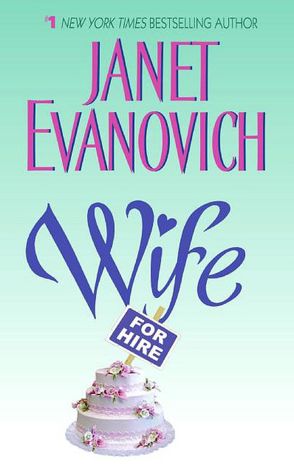
Stop now if you only read serious literature. But then if that were the case, you probably wouldn't be reading this blog at all, right? While I do draw the line at reading books where the covers depict a partially clothed women in the passionate embrace of some ridiculously pretty man, I still go for the occasional comic romance. Admittedly these don't have any particularly enduring literary value, nor do they stretch one's brain while trying to figure out a complicated plot, and they probably won't totally absorb you in the elegant use of prose, yet they are often good fun and offer some non-demanding downtime. Janet Evanovich's pre-Stephanie Plum novels are fairly entertaining examples of this genre, especially because her female protagonists tend to be mouthy and opinionated --yeah I know it's hard to imagine why THAT would appeal to me. The latest bit of confection I consumed was Wife for Hire which involves 27-year old school teacher, Maggie Toone, who wants to take a break from her job long enough to write a book based on the diaries of her Aunt Kitty, who was a madam. The part-time job she takes is to be a fake wife for an apple farmer in Vermont, Hank Mallone, who is trying to create a responsible enough image to get a bank loan for a new cider press. Complications abound. For example, the bank president happens to be Hank's father. Both Maggie and Hank have interfering family members who still think they are the headstrong and troublesome youngsters of years past. Hank's dog chases Maggie's cat. Hank's best friend stops by for breakfast way too often. Then there are all Hank's old girlfriends who think nothing of dropping in for dinner at the farmhouse. Finally, there is a totally unprecedented rash of attempted break-ins at the farm after Maggie comes to stay--could they possibly be after Aunt Kitty's diaries? Of course Maggie and Hank fall for each other; with Hank being quicker to acknowledge this while Maggie is absolutely determined NOT to give in to her historically unreliable passions. The wacky characters and plots twists presage the more well-developed family nutcases and predictably insane personal catastrophes in the Stephanie Plum numbered series that still make me laugh out loud.

Tuesday, July 22, 2008

Psychological Mysteries


The best mysteries, for my taste, involve not just a well-conceived and conveyed plot, but an examination of the psyche of the characters involved. Sometimes the focus is more in the mind of the killer, sometimes more in the tortured soul (don't forget soul and mind have common etymological roots) of the investigator. Blood Memory by Greg Iles is definitely in the latter category as the protagonist's own history becomes credibly interwoven with solving a series of bizarre murders in New Orleans. Forensic investigators of all sorts are popular main characters (e.g., Patricia Cornwell's medical examiner, Iris Johansen's forensic sculptor) and Iles' forensic odontologist, Catherine Ferry, is a well-developed and complex woman who finds out that the sexual abuse angle of the murders has some very personal meaning for her. Sexual abuse of children is a much more common crime than most people realize--or want to realize--and its conflicting emotions and outcomes are well drawn here. To his additional credit, Iles follows the text with a plea to hear out and support victims of sexual abuse.

Wednesday, July 16, 2008

The Lion and the Mouse


If you are at all interested in children's literature, read this article in the New Yorker, "The Lion and the Mouse," brought to my attention by my dear friend Sara. It tells the story of Carroll Anne Moore who made it her goal to create libraries for children and established the Central Children’s Room at the New York Public Library. It effectively set the standard for what a children's library should be. She also promoted borrowing privileges for children, inaugurated the first Children's Book Week, and offered inclusive literature and reading experiences for children of immigrant families. Moore also effectively became the first to legitimize children's literature by writing regular critical reviews in a number of well known publications (e.g., the NY Herald Tribune and The Horn Book) She harassed E.B.White to write his first children's book, Stuart Little, and then panned it. Fascinating story!

Italian mysteries


I discovered a new mystery series by Italian author Andrea Camilleri recently when I read The Patience of the Spider. I love to read mysteries where I also get to learn something about another country, culture or time period. Inspector Montalbano is apparently an aging and rather eccentric but clever member of the constabulary in Sicily who is recovering from recently being shot. In fact he was traumatized psychologically as well as physically and now wakes up in the dark hours of the morning at precisely the same time that he was shot. But occasionally he does his best thinking then. He's trying to solve a puzzling kidnapping...the perpetrators have taken a young woman whose immediate family is virtually penniless. Then it turns out that her uncle is rich and he is the real target of the ransom demands and of a campaign to destroy his reputation and his potential candidacy for political office. The side stories about Inspector Montalbano's tempestuous love life, his love of good food, and the Sicilian countryside all make this an enjoyable if somewhat lightweight read. I love Italian food, too.

I've read some other good mysteries set in Italy that I would recommend. The early works by Iain Pears (e.g., The Raphael Affair, The Titian Committee), before he got into writing more substantial historical mysteries (An Instance of the Fingerpost, The Dream of Scipio), center around a couple of art theft investigators (Flavia di Stefano of the Italian National Art Theft Squad, and consulting British art historian Jonathan Argyll) operating out of Rome. Because Pears is in fact trained as an art historian, these are also chock full of factual information as well as local color.

Vampires with an historical twist


By now, probably everyone but me has already read and reviewed The Historian by Elizabeth Kostova. I like some vampire books and I usually like historical novels, so when my sister gave this to me, it moved to the top of the reading pile (well, except for the books I was supposed to review for the children's literature database:-) Although set in the 20th century, this novel is all about delving into the history of eastern Europe and Turkey in the 15th century. The plot is driven by the appearance of apparently very old books with no text, but only a compelling woodcut image of a dragon with the word Drakulya underneath. Are the books delivered as an invitation or a warning or perhaps both? Is the image really a map that indicates where the real Dracula is/was buried? The mysterious volumes invite investigation into the life of Vlad Tepes (aka Dracula) who supposedly ruled an area of eastern Europe around current day Romania in the 1400's. He was at war with the Turks but was expansive in his legendary cruelty and both his own subjects and the enemy were recipients of grisly tortures. It's a fascinating insight into how historical scholarship might be pursued--through interviews, primary source documents, local folklore and songs, connections with other scholars. The problem is that those pursuing the inquiries, or more often those close to them, seem to keep dying or disappearing or worse. And just when you think things have finally been resolved (and it is a long book), Kostova twists your tail/tale and you have to start looking over your shoulder all over again.
p.s. While hunting down an image for this post, I ran a whole website devoted to books on vampires, so if this just whets your appetite for more, check it out.

Thursday, July 10, 2008

In the Wind


It's just not fair to run across someone so talented in multiple arenas. The author of this book, Barbara Fister, just happens to be a librarian I admire greatly for her passionate participation in discussions about libraries, about fostering collaboration between librarians and other disciplinary faculty, about how to best teach college students and much more. And now I discover she writes really good stories as well. I'm sure the comparisons between her work and that of Sara Paretsky abound: they both have a former cop, now private investigator as the protagonist, both are set in Chicago and convey realistically the good and the bad of that city, both tackle thorny social issues. In the Wind is sort of a cold case mystery, since the woman that Anni Koskinen is trying to help is accused of murdering an FBI agent 30 years ago. There's a lot going on in this story--white supremacists, former members of the American Indian Movement, the socially disenfranchised under our very noses. But at its core, this is about the current incursions on our civil liberties that are reminiscent of earlier and equally bad episodes in our history when Americans were spied upon and persecuted, largely because their beliefs and behaviors weren't convenient for the Executive powers.

Monday, May 19, 2008

Was Kant a serial killer?


Or maybe he wasn't the actual killer, but had just created one? Somehow this premise of Critique of Criminal Reason by Michael Gregorio just stretched me the wrong way, so even though I had read several positive reviews (Booklist, Washington Post, & Publishers Weekly) the book has not inspired me to read additional works. According to Amazon.com, Michael Gregorio is the pen name for two academics, Michael G. Jacob and Daniela De Gregorio. She teaches philosophy, he teaches English (www.michaelgregorio.it or www.michaelgregorio.info). It is certainly a dark and brooding consideration of the limits of rationality in dealing with out-of-limits human behavior. Set in early 19th c Konigsberg on the eve of Napolean's threatened invasion, paranoia about spies is intense, the weather is brutally cold, and someone is killing ordinary citizens without appearing to leave a trace of how it was done--leading some to suspect supernatural forces. Immanuel Kant recruits a young protege to investigate the murders and passes along the strategies which would later inform forensic investigations.

On the bright side, I read a young adult book by Neal Shusterman called Unwind, which I can recommend. This is set in a future century, following the Second Civil War, when a compromise has been reached by the pro-life and pro-choice factions. From "The Bill of Life":
  • ...human life may not be touched from the moment of conception until a child reaches the age of thirteen.
  • However, between the ages of thirteen and eighteen, a parent may choose to retroactively "abort" a child...
  • ...on the condition that the child's life doesn't "technically" end.
  • The process by which a child is both terminated and yet kept alive is called "unwinding."
Unwinding is a euphemism for disseminating all their body parts to those needing replacements, somewhat reminiscent of Nancy Farmer's story House of the Scorpion. The protagonists of this tale don't agree with the parents and state home authorities that they should be unwound and so escape, at least temporarily, via a system somewhat like the earlier underground railroad, to a safe haven in the Arizona desert. It's an interesting speculation on how far people can go to rationalize irrational behavior. The main characters, two boys and a girl, are well-developed, flawed as you would expect of children in such a situation, and yet remarkably resilient. I defnitely will find more of Shusterman's books to read.