Showing posts with label Nazis. Show all posts

Monday, July 14, 2025

The Huntress


Another historical novel from Kate Quinn. Although the woman in question is the titular killer during WWII, she is not the narrator of any of the three braided stories. We have Jordan, a teen and aspiring photographer who lives with her widowed father. She has suspicions about her father's new love interest Anneliese but she falls in love with the woman's 4-year-old daughter Ruth and her father is so happy again that she keeps her worries to herself. The we have Englishman Ian Graham, a former war correspondent who has seen the worst that humans can do. He now spends his time hunting down Nazi war criminals even though the public taste for punishment has waned. He has a special focus on the Huntress because she killed his younger brother. Finally we have Nina, raised in the wilds of northeastern Russia by a father who drank himself unconscious on a regular basis and, at one point, tried to drown Nina in Lake Baikal. Nina leaves at the earliest possible moment, learns to fly and becomes a member of the Russian women's bomber squadron known at the Night Witches. She was witness to Ian's brother's murder and is the only one who can identify the Huntress. She is technically married to Ian in order to have British citizenship.  Booklist says that the secondary characters: "... from Nina's anti-Stalinist father to Jordan's pilot boyfriend, feel three-dimensional, and the coldhearted Huntress is a complex villain."

Publishers Weekly describes this as an "exciting" and "suspenseful' thriller, although I agree with them that the book was "longer than it needs to be." I would much rather the author had chosen to focus on a single strand or maybe two, and the shifting perspectives--although clearly labeled in the chapter headings--were disruptive. Still, as Library Journal concludes, "A great choice for historical fiction fans, particularly of World War II-set novels, mystery readers, or anyone seeking well-crafted stories in which good triumphs over evil." Kirkus notes "That Jordan’s suspicions are so easily allayed strains credulity, especially since the reader is almost immediately aware that Anneliese is the Huntress in disguise. The suspense lies in how long it’s going to take Ian and company to track her down and what the impact will be on Jordan and Ruth when they do. Well-researched and vivid segments are interspersed detailing Nina’s backstory as one of Russia’s sizable force of female combat pilots ..., establishing her as a fierce yet vulnerable antecedent to Lisbeth Salander. Quinn’s language is evocative of the period, and her characters are good literary company.

Tuesday, May 17, 2022

Caste: The Origins of Our Discontent


I have been intending to read this book by Isabel Wilkerson for months now. It seems that every time there is a bookcase in view during the interviews on the PBS NewsHour, I see this book on the shelf. It felt like a "must read" and, when my book group agreed to read it, I was sufficiently motivated to plow through this very disheartening exploration of how badly humans are capable of treating one another. I will say that, being a highly educated and reasonably well-read person, I felt I knew a lot about discrimination, slavery, the rise of Nazism, caste in India. BUT there was so much here that I did not know. For example how "race" (skin color) became the basis of justifying dehumanization of enslaved Africans after they began to adopt Christianity and were, therefore, no longer "heathens." How the Nazis looked to American laws to build their own "legal" structures justifying the extermination of Jews and other non-Aryans. That a black man was lynched every 3-4 days between 1900 - 1940 ("Jim Crow" era). I could go on and on. I am including a picture of the library book I read, filled with so many post-it notes that I clearly should have bought the book so I could just underline all the things that stood out to me. 

Trump's election, which puzzled me and a lot of other people who felt that many working class white people were voting against their own interests, was actually an attempt to maintain superiority in the caste system of the U.S. Superiority based on anything as ephemeral as race is, of course, a fragile thing and requires the existence and enforcement of an underclass. She clarifies the distinction between racism, class and caste as she draws comparisons between slavery in the U.S., the caste system in India and the rise of Nazism in Germany. The book is extensively researched and filled with personal stories as well as history, and factual information. It is a tough go but I would have every American read this book to better understand what people of color have endured (and continue to endure) in this country.

Sunday, March 13, 2022

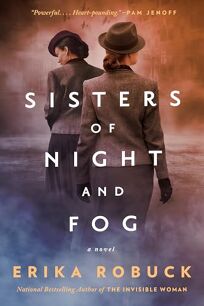
Sisters of Night and Fog


A fictionalized account of two women in the French resistance during WWII, one American and one British, written by Erika Robuck.  The author offers a note at the end telling how she came to write about Violette Bushel Szabo and Virginia d'Albert-Lake, and also details where her storytelling deviated from the actual people and events. There is also a biography which includes books written by Violette's daughter, Tania, and an edited version of Virginia's diary and memoir. It felt like a slow read at times, but was still compelling. So much of what the Nazis did during WWII are being seen again in the Russian attack on Ukraine. It's sickening at times, but one also has to admire the incredible courage of these women, both of whom ended up in Ravensbruck right after the Allies landed at Normandy. Only one of them made it out alive--barely. The Nazis were anxious to erase as much evidence as possible of what they had been doing at the concentration camps and many prisoners were summarily executed and cremated in the last days before the camp was liberated. Both men had married French men, Virginia several years prior and Violette during the war. At 19, Violette escaped France as the Nazis bombed and then invaded France, while Virginia never left. Virginia and her husband Philippe at first escaped to a small farm they owned in the country but knew they could not continue to hide; they began sheltering and escorting downed Allied pilots to various points along an escape route that would eventually get the pilots to Spain. Violette was anxious to do something useful for the war effort in spite of her father's, and later her husband's, objections and eventually was recruited to the SOE. I am reminded of other fictionalized accounts of these heroic women such as The Alice Network (Kate Quinn), The Paris Library (Janet Skeslien Charles),  and Kristin Hannah's The Nightingale. A hard but worthwhile read.

Publishers Weekly says "Fans of WWII dramas are in for a treat." BookPage praises "Violette and Virginia are two women whose stories needed to be told, particularly now that most of the people who fought in WWII are gone. Robuck has done their memory great honor."

Tuesday, December 28, 2021

The Paris Library


The author, Janet Skeslien Charles,  uses the American Library in Paris (ALP) as the centerpiece of this historical novel, where Charles actually worked as a programs manager for a time. Based largely on actual people and events, the book introduces us to the dedicated staff and loyal subscribers (patrons) of the ALP during the Nazi occupation of Paris. Told mainly from the POV of Odile, a young woman who has to fight her father to take a job at the ALP in 1939, and of Lily, a teenager in rural Froid, Montana in the 1980's. The book is about friendship, human failings, and the role that libraries and books played in sustaining the morale of war prisoners and hospital patients as well as those living under German occupation. When Odile gets the job at the ALP, it is a dream come true for her. Her aunt had been bringing her to the library since she was a child and that was where she learned to speak English. Her twin, Remy, is a law student who falls in love with one of Odile's colleagues, the children's libarian, Bitsi. When the Germans draw closer to Paris, Remy enlists, with Bitsi's support, which, for a time, strains the relationship between Odile and Bitsi. Eventually they come to be like sisters, bonded by their mutual love for Remy, who is wounded and imprisoned by the Germans. Odile also befriends the American wife of a British diplomat, who feels lost in a country where she has no friends and does not speak the language. Margaret becomes an indispensable volunteer at the ALP.  Odile is in love with, and eventually engaged to, a police officer, Paul;  one of the main secrets that is not revealed until the very end is why Odile is now living in Montana, the widow of American husband. Odile has kept to herself since her husband's death, but befriends Lily, whose mother has died, and tries to help Lily not make some of the same mistakes that Odile feels she has made. "The answers unspool in this well-plotted and richly populated novel" according to the New York Journal of Books.

Kirkus calls the book "an intelligent and sensuously rich novel of a young woman's coming-of-age." Publishers Weekly says it's "a delightful chronicle of a woman’s life in WWII-era Paris and rural 1980s Montana."

An absolutely must-read is the Author's Note which details what happened to several of the main characters after the war. The author's website also provides some wonderful archival materials to learn more about the actual people who staffed and supported the ALP.

Monday, August 2, 2021

The Forest of Vanishing Stars


This fictionalized account of actual events by Kristin Harmel is beautifully written but disturbing on a content level. There are extensive author notes about groups of Jews who escaped the German ghettos in Poland and hid in the Polish forests for the duration of the war. They were constantly hunted and, therefore, constantly moving. "More than 3.3 million Jews lived in Poland on the eve of WW II--more than any other country in Europe....they made up 10 percent of Poland's population, the highest percentage of Jews anywhere in Europe...between 2.8 million and 3 million Polish Jews were murdered during the war. That's somewhere between 84 percent and 91 percent of the entire Jewish population of the country....Jewish casualties in Poland far outweighed those in any other country during the war..." ( p. 361). Those who survived were the inspiration for this story.

When she was only 2 years old, Inge JΓΌttner was kidnapped from her parents' home in Berlin and taken to live with a woman in the Nalibocka Forest. They lived off what they could hunt and gather and moved on a regular basis. Inge became Yona--a reference to the dove shaped birthmark on her wrist--and was educated through stolen books and survival experiences. She knew lots of information and she knew how to keep herself alive, even if it meant killing someone else, but she knew little of how humans interact. When her kidnapper/mentor died, Yona was in her 20's and had never been around others until she encountered a small family of escaped Jews in the forest. She saved their lives, but the wife's distrust of Yona was so great that they separated and were captured and killed. When Yona net the next and larger group of escapees, she was determined to keep them alive. And she did. She also learned about heartbreak when the head of the group partnered with her and then got involved with another woman. Yona left and went to a village where she encountered a group of nuns who were trying to prevent a massacre of the town's citizens by offering themselves as sacrifices. Yona also encounters her father, who is now a high ranking officer in the German army. When she realizes she cannot change him, she returns to her adopted family in the forest.

This was a book that taught me about a part of Jewish experience during the war with which I was totally unfamiliar. Author Harmel also researched what would be required to survive hidden in the forest, especially during the bitter winters, so this was also educational. I never cease to be amazed at man's inhumanity to their fellow humans and I strongly felt that we are headed that way again--vilifying anyone we can label as other, not just in this country, but globally. I despair that humankind will ever truly evolve on this emotional level before we wipe each other out.

Positive reviews from Publishers' Weekly.

Sunday, May 16, 2021

Basil's War


Author Stephen Hunter is new to me but one I will now keep an eye on. Hunter was formerly the chief film critic for The Washington Post and even won a Pulitzer for his collections of film criticism. He is also a prolific author, having written 20 novels and several works of non-fiction. There are 12 novels in his "Bob Lee Swagger" series plus two related spin-off series. This newest work (2021) is a stand-alone. The protagonist of this WWII era (1943) mystery is British Army Capt. Basil St. Florian. He has been a failure at everything his father has set him to do up to this point, but it turns out that he makes a really good spy--when he's not seducing Hollywood actresses! He parachutes into France, steals identity papers, and heads for Paris, where he is ordered to locate and photograph pages from a rare 17th century religious tract. Apparently the text serves as the basis for a "book code"--i.e., both sender and receiver rely on the same book to send and decipher encrypted messages. He can't steal the book because then the Nazis would know their codes have been compromised. The higher ups in the SOE (Basil's bosses) believe this pamphlet is the book code "key." They are also sure there is a Russian spy working at Bletchley Park and they are trying to use him/her in a clandestine manner to manipulate the Russians into a certain military strategy which they hope will end the war sooner. Having the key will allow them to identify this spy. The German policeman in Paris who is tracking Basil is very sharp, not a fan of the Nazis SS, but committed to finding Basil and it is the cat and mouse game between the two of them that comprises the bulk of the storyline. Publishers Weekly lauds Hunter's writing style as "a breezy, boys’ adventure book style that complements Basil’s derring-do exploits." A quick and engaging read.

Saturday, May 15, 2021

Prussian Blue


This 12th installment in the "Bernie Gunther" series from Philip Kerr starts out in 1956, on the French Riviera--what one website calls the "framing scenes"--but the main story line revolves around an earlier investigation Bernie was involved in during Hitler's rise to power in the week before Hitler's 50th birthday in 1939. This was my first exposure to the series and Bernie is described on the author's website as follows: "He’s sardonic, tough-talking, and cynical, but he does have a rough sense of humor and a rougher sense of right and wrong. Partly that’s because he is a true Berliner. Partly it’s the result of life experiences. He was a sergeant in the Great War (like Hitler, winning a Second-Class Iron Cross, but, as he says, “most of the first-class medals were awarded to men in cemeteries”). His wife died in the Spanish influenza pandemic of 1918 and he’s had a roving eye for women ever since, but not much luck in long-term relationships – it’s hard to have long-term relationships in Nazi Germany when people keep disappearing. Yet that’s good for business, because he’s a private investigator, and a lot of his cases have involved tracing missing persons. And by extension, murder.

He served eleven years as a homicide detective in Kripo (Berlin’s criminal police) and saw just about every form of deviance, corruption, and gratuitous violence before he jumped ship in ’33, when the National Socialists took over and began purging the force of all non-party members. He was a Kriminalinspektor with a serious reputation before he quit, and he never lost the contacts he made. They have been useful in his new, private role....He drinks too much, smokes excessively, and is somewhat overweight (but a Russian prisoner of war camp will take care of those bad habits). He’s a hero for our time just as he was in these thrillers. Beginning in Germany in the thirties, the ...Gunther novels have reached beyond the horrors of the Nazi regime, when the lunatics were running the asylum, through the viciousness of the Eastern Front, to the postwar world of starvation and exploitation, and on to the Cold War’s double dealing and ruthless disregard for morality or human life. Bernie is an equal-opportunity hater: the Ivans, the Frogs, the Brits, the Amis, and certainly the Krauts-because he’s seen them all in action and knows the blackness of their souls. He’s also a brave man, because when there is nothing left to lose, honor rules."

 The books are apparently not written in chronological order, so I'm not sure how critical it is to have read the earlier books to appreciate this one; I didn't find my lack of previous acquaintance with Bernie to be a detriment to my appreciation of this book. 

Bernie is initially confronted by an old enemy, Erick Mielke, acting through Bernie's former colleague in Kripo, Friedrich Korsch, who is now a Stasi enforcer. Mielke has tracked Bernie down and demands a task from him that Bernie is unwilling to take on. But failure to complete the assignment will result in dire consequences not only for Bernie, but for his estranged second wife. Bernie is to take a train to London and poison a double agent with thallium (the antidote to which is a painting pigment called Prussian blue), and although Bernie hates the target for her treachery towards him in the past, he will not sink to murder. He goes on the run, chased by Korsch, and it is his recollection of an earlier case with Korsch that is the main story. 

The New Yorker has a thoughtful and detailed review of the book as well as a thought piece on why readers find this character so compelling;  I highly recommend it. The Historical Novel Society calls it "a wonderfully well written and absorbing novel, full of fascinating historical detail." I would certainly read any other book in the series.

Tuesday, April 6, 2021

Murder in the Marais


This book by Cara Black is the first (1999) in her AimΓ©e Leduc series; there are now 19 books featuring AimΓ©e.  It was recommended by one of the members in my mystery book group (thanks Joy Morris) and I thoroughly enjoyed the main characters as well as the setting in Paris. Here is the summary from the author's website: "AimΓ©e Leduc has always sworn she would stick to tech investigation—no criminal cases for her. Especially since her father, the late police detective, was killed in the line of duty. But when an old Jewish man approaches AimΓ©e with a top-secret decoding job on behalf of a woman in his synagogue, AimΓ©e unwittingly takes on more than she was expecting. When she goes to drop off her findings at her client’s house in the Marais, Paris’s historic Jewish quarter, she finds the old woman strangled, a swastika carved on her forehead. With the help of her partner, RenΓ©, AimΓ©e sets out to solve this horrendous crime, but finds herself in an increasingly dangerous web of ancient secrets and buried war crimes." 

"Although set in Paris in the early 1990s, Black's new series start harks back to World War II crimes. ...AimΓ©e's subsequent investigation exposes the connection between a war-time romance gone wrong and the modern-day murder. Literate prose, intricate plotting, and multifaceted and unusual characters mark this excellent first mystery." (Library Journal)

Publishers Weekly says of this "standout" novel, "a thrilling, quick-paced chase involving neo-Nazis, corrupt government officials and fierce anti-Semitism. With the help of her partner, RenΓ©, a computer hacking expert, Aim e uncovers tantalizing clues relating to German war veteran Hartmuth Griffe, the Jewish girl he saved from Auschwitz, a French trade minister and other enigmatic figures. But the data AimΓ©e and RenΓ© come up with only takes them so far. In order to understand the true motive behind the killing, AimΓ©e must delve into history, confronting older residents of the quarter--who'd prefer she leave the past alone--and doing some undercover work. The suspense is high as she fraternizes dangerously with the enemy, even becoming briefly involved with an Aryan supremacist. Black knows Paris well, and in her first-rate debut she deftly combines fascinating anecdotes from the city's war years with classic images of the City of Lights."

Read the back story for this plot in an intervivew with NPR. Black likes to explore and use the particular neighborhoods of Paris for her stories. "She says her goal is to capture the living, vibrant city that meshes with its history and the ghosts of its past." Next in the series, Murder in Belleville.


Monday, November 2, 2020

The Guernsey Literary and Potato Peel Pie Society


I really loved both the book by Mary Ann Shaffer (published posthumously by her niece Annie Barrows) and the movie based upon the book, and only realized when writing a previous post (The Jane Austen Society) that I had somehow failed to write a blog post for this treasure. It is 1946, the aftermath of WWII in London when so much is still rubble, including the flat of writer and newspaper columnist Juliet Ashton. It is while she is sorting through both the physical and psychological rubble of her life that two significant events happen. She becomes engaged to a wealthy American publisher and she receives a letter from a man on the island of Guernsey, pig farmer Dawsey Adams, who found her name on the flyleaf of a book of essays by Charles Lamb. He is inquiring if she knows of other books by that author. Guernsey was occupied by the Nazis during the war and through her correspondence with Dawsey, Juliet learns of a group of friends who regularly gathered in secret to read literature to one another. She is compelled by their story and is sure this would make a wonderful next novel to write. Only the residents of Guernsey are not so sure they want the world to be privy to their private lives. This is an homage to letter writing and those who love books. There is an elegant description of the book's storyline and a glowing review in The Guardian. Strong reviews from Kirkus, Publishers Weekly, The Christian Science Monitor, among others.

Thursday, November 10, 2016

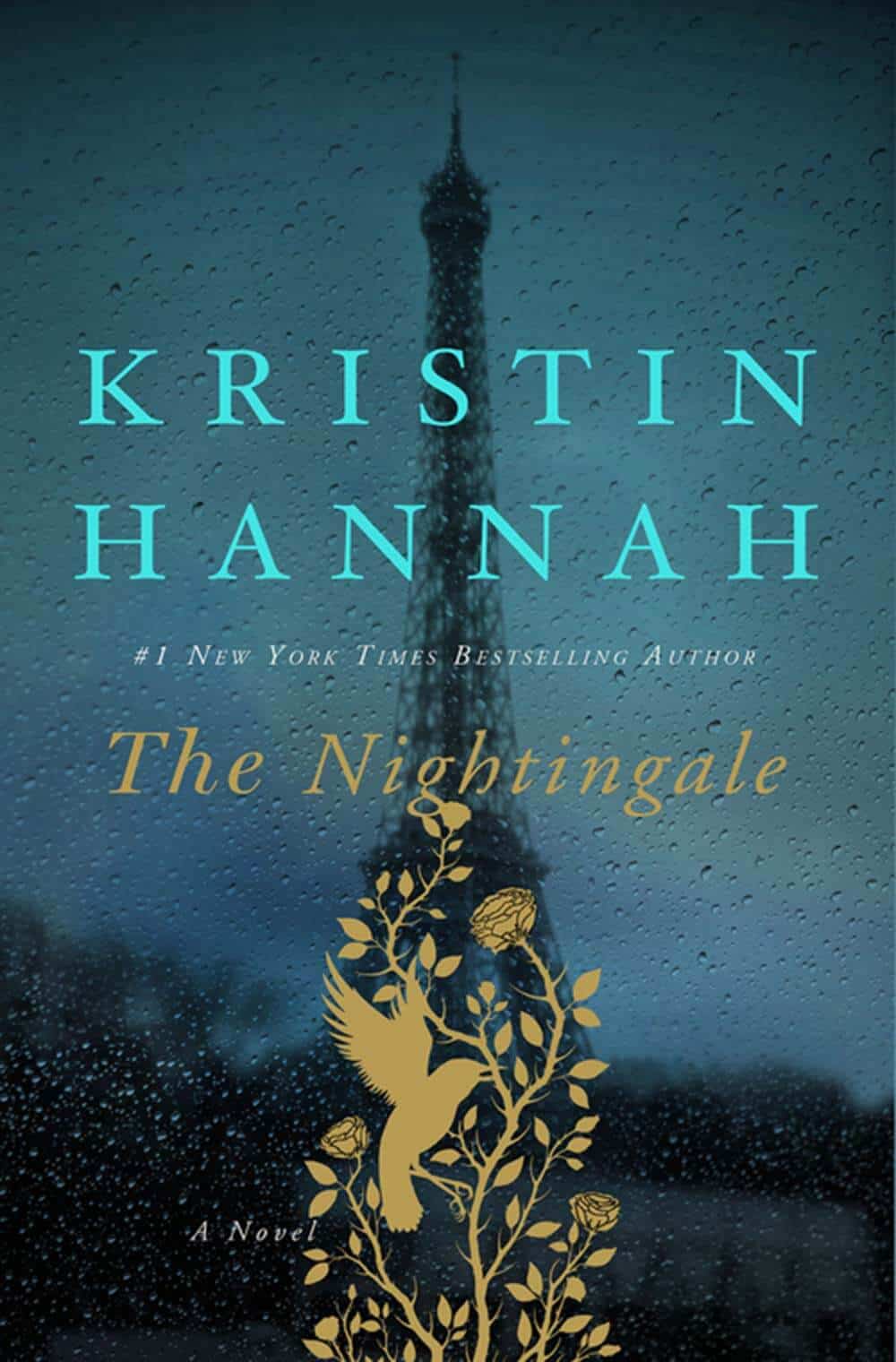
The Nightingale

This highly acclaimed book by Kristin Hannah was personally recommended to me by friend Betsy Friedman. It is beautifully written and compelling story with well developed characters, and yet it was sometimes uncomfortable to read due to the subject matter. Set during WWII when the Nazis have occupied France, two sisters who are as unlike as can be imagined end up taking very similar paths, each to resist the obscenities of the war in her own way.
Viann and Isabelle's mother dies when they are quite young and their father retreats into alcohol and absence. Viann gets pregnant by a childhood sweetheart at 16 and moves to the country to live happily with husband and child. Younger sister, Isabelle, is an emotionally wounded isolate, getting kicked out of one boarding school after another. But she is also adventurous and when she returns to Paris, having decided to live with her father, she gets involved in the French Resistance, eventually coming to be a primary resource for getting downed American and British pilots out of the country. She leads them over the harrowing Pyrenees mountains on dozens of occasions, gaining notoriety as The Nightingale. Viann's husband is sent off to fight the invading Germans but is captured. The village where Viann lives with her daughter is occupied and a series of German officers is billeted at her house, one kind, one cruel. When her neighbor and best friend is sent to a concentration camp, Viann bravely declares the child is her own and hides his Jewish identity. Eventually she is responsible for hiding away 19 Jewish children in a convent in the nearby countryside. The arbitrary terror and cruelty of the Nazis is painfully described, but so is the incredible bravery and love of the two women. A very informative tale about the little known women who resisted war in France. About writing this book, Hannah said,
"For me, The Nightingale started like any other novel. With research. I came across the historical stories of the women of the French Resistance and there was no going back. Their stories were mesmerizing, heartbreaking, intimate and universal. I was appalled that their stories were not better known.
All of my research led me to a central question: When would I, as a wife and mother, risk my life and my son’s life to save a stranger? Once that was in my head, I knew I had a story worth telling." Agreed!

Monday, August 1, 2016

City of Thieves

This novel by David Benioff (co-creator of HBO's Game of Thrones series) commences with a conversation between author and grandfather as Benioff beseeches his grandfather for recollections of living through the Nazi siege of Leningrad. There seems to be some debate about whether his grandfather was actually there (see review from NYT). Following that prologue, however, we jump into the life of 17 year-old Lev Beniov, who is yet too young to join the army but helps man a fire brigade from the roof of his old apartment building. One night, he and his pals see a parachute coming down and when it lands in the street, they find a dead German pilot, whose corpse they promptly strip for weapons and clothes. Keep in mind that, at this point, they are lucky to get one piece of paper-filled bread or an eighth of an onion to eat on any given day. But when the cops show up, Lev nobly helps a fallen friend, a girl he secretly longs for, to escape and is caught in the process. Awaiting execution overnight, he is joined in his cell by his exact opposite. Whereas Lev is dark and slight and inexperienced with women, Kolya is a descendant of Cossacks with blonde-haired, blue-eyed good looks and charm that women of all ages find irresistible. Kolya swears he did not desert his unit but just missed his ride; nevertheless, they will both be hanged or shot. But fate intervenes and they are taken before a secret police general who wants them to find a dozen eggs for his daughter's upcoming wedding cake. If they succeed--against all odds--they get their lives back. They start by following every rumor and searching all the black market sources in the city and nearly get killed by cannibals. Eventually they go behind enemy lines into the countryside seeking chickens. What they find instead are girls held hostage for pleasuring Nazi officers and a band of partisan fighters. They are captured, but then Kolya hatches a plan to get the eggs from their captors by wagering Lev's chess playing skills against those of the 
SturmbannfΓΌhrer. Benioff provides well-researched and compelling descriptions of the hardships and violence faced by the Russian common folk during the siege. An additional review from Kirkus.

Wednesday, July 6, 2016

Hell's Gate

A first novel by Bill Schutt, a research zoologist, whose non-fiction account of blood-feeding animals, Dark Banquet, was highly acclaimed. He is writing with J.R. Finch, perhaps a ghost writer? At any rate we can take it that Schutt knows his stuff about bats, and they play a big part in this WWII era thriller about a secret Axis submarine that has traveled to inland Brazil with an unknown agenda.  Turns out that it's a Japanese sub of enormous proportions carrying German rocket scientists, but we don't know that until a bit later in the book. Capt. R. J. MacCready, a military scientist cum adventurer, is ordered into the interior to find out what they are up to. Along the way, however, he encounters another mystery. Shadowy creatures are hunting him using some kind of mind control. OK, the creatures are giant vampire bats, once thought extinct, but which have apparently lived in a hidden pocket of Brazil until disturbed by the incursion of submarines and soldiers, so now they are out hunting humans. And they have indeed evolved to use their sonar capabilities to selectively target areas of the brain and lull their human prey into not fleeing. To top it off, they are the host to a bacteria that causes the bite victim to rapidly bleed out--handy for the vampires and fatal to the humans. The nasty German and Japanese scientists, once they discover the bats, want to capture them and isolate the bacteria for germ warfare. There is a bit of fact and a lot of fiction in this read, which is reasonably well-written in spite of the far-fetched plot. Pure cotton candy. I would not go out of my way to read the planned sequel but wouldn't turn it down in a pinch either.  Kirkus--one of my "go to" sources for book reviews, liked the book, as did The Washington Post.