Showing posts with label French Resistance. Show all posts

Sunday, March 13, 2022

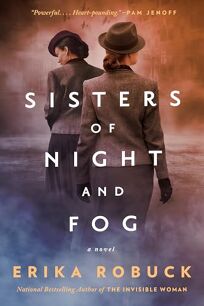
Sisters of Night and Fog


A fictionalized account of two women in the French resistance during WWII, one American and one British, written by Erika Robuck.  The author offers a note at the end telling how she came to write about Violette Bushel Szabo and Virginia d'Albert-Lake, and also details where her storytelling deviated from the actual people and events. There is also a biography which includes books written by Violette's daughter, Tania, and an edited version of Virginia's diary and memoir. It felt like a slow read at times, but was still compelling. So much of what the Nazis did during WWII are being seen again in the Russian attack on Ukraine. It's sickening at times, but one also has to admire the incredible courage of these women, both of whom ended up in Ravensbruck right after the Allies landed at Normandy. Only one of them made it out alive--barely. The Nazis were anxious to erase as much evidence as possible of what they had been doing at the concentration camps and many prisoners were summarily executed and cremated in the last days before the camp was liberated. Both men had married French men, Virginia several years prior and Violette during the war. At 19, Violette escaped France as the Nazis bombed and then invaded France, while Virginia never left. Virginia and her husband Philippe at first escaped to a small farm they owned in the country but knew they could not continue to hide; they began sheltering and escorting downed Allied pilots to various points along an escape route that would eventually get the pilots to Spain. Violette was anxious to do something useful for the war effort in spite of her father's, and later her husband's, objections and eventually was recruited to the SOE. I am reminded of other fictionalized accounts of these heroic women such as The Alice Network (Kate Quinn), The Paris Library (Janet Skeslien Charles),  and Kristin Hannah's The Nightingale. A hard but worthwhile read.

Publishers Weekly says "Fans of WWII dramas are in for a treat." BookPage praises "Violette and Virginia are two women whose stories needed to be told, particularly now that most of the people who fought in WWII are gone. Robuck has done their memory great honor."

Thursday, December 27, 2018

Bruno, Chief of Police

I actually read this book by Martin Walker, the first of the Bruno series, some time back, but, having recently read another book in the series, I thought I should go back and fill in. Bruno Courrèges is the Chief of Police in the small town of St. Denis, in the Perigord region of France, known for foie gras and truffles. Bruno loves to cook and feed his friends. He raises animals on his little acreage and grows his own vegetables. He also plays on the local sports teams and coaches the youth soccer team. Most of the time, life is quiet in St. Denis and that's how he likes it, but he can call on a network of contacts when real trouble arises. An elderly ex-soldier who lived in the village has been found brutally tortured and murdered with a swastika carved into his chest. Because this is deemed a hate crime, competing police forces intercede and want to shut Bruno out of the investigation. Bruno however is good at skirting the national authorities and begins to think this crime has its roots in WWII and especially in a group called the Milice. According to Wikipedia, the Milice:
"was a political paramilitary organization created on 30 January 1943 by the Vichy regime (with German aid) to help fight against the French Resistance during World War II. The Milice's formal head was Prime Minister Pierre Laval, although its Chief of operations and de facto leader was Secretary General Joseph Darnand. It participated in summary executions and assassinations, helping to round up Jews and résistants in France for deportation....The Milice was the Vichy regime's most extreme manifestation of fascism....The Milice frequently used torture to extract information or confessions from those whom they interrogated. The French Resistance considered the Milice more dangerous than the Gestapo and SS because they were native Frenchmen who understood local dialects fluently, had extensive knowledge of the towns and countryside, and knew local people and informants."
Bruno also uses his local knowledge to flush out possible motives for murder. As The New York Times says in its review of Walker's 2nd installment in the series, The Dark Vineyard, Bruno works with "great discretion, circulating so quietly and tactfully among his neighbors that his interviews are more like friendly visits. It’s a wonderful detection method and an even cannier literary strategy, allowing Walker to pursue the plot of his mystery while beguiling the reader with extended scenes of village market days, old-fashioned wine harvests and some exceptionally congenial dinner parties." Of course, uncovering this information exposes some dark aspect of France's history, a marked contrast to the seemingly idyllic presentation of St. Denis. Nevertheless, you'll find yourself wanting to go there or at least enjoy some French cuisine.  Read this article in the NYT for some insights on the village and cuisine which so richly embellish these books.

Thursday, November 10, 2016

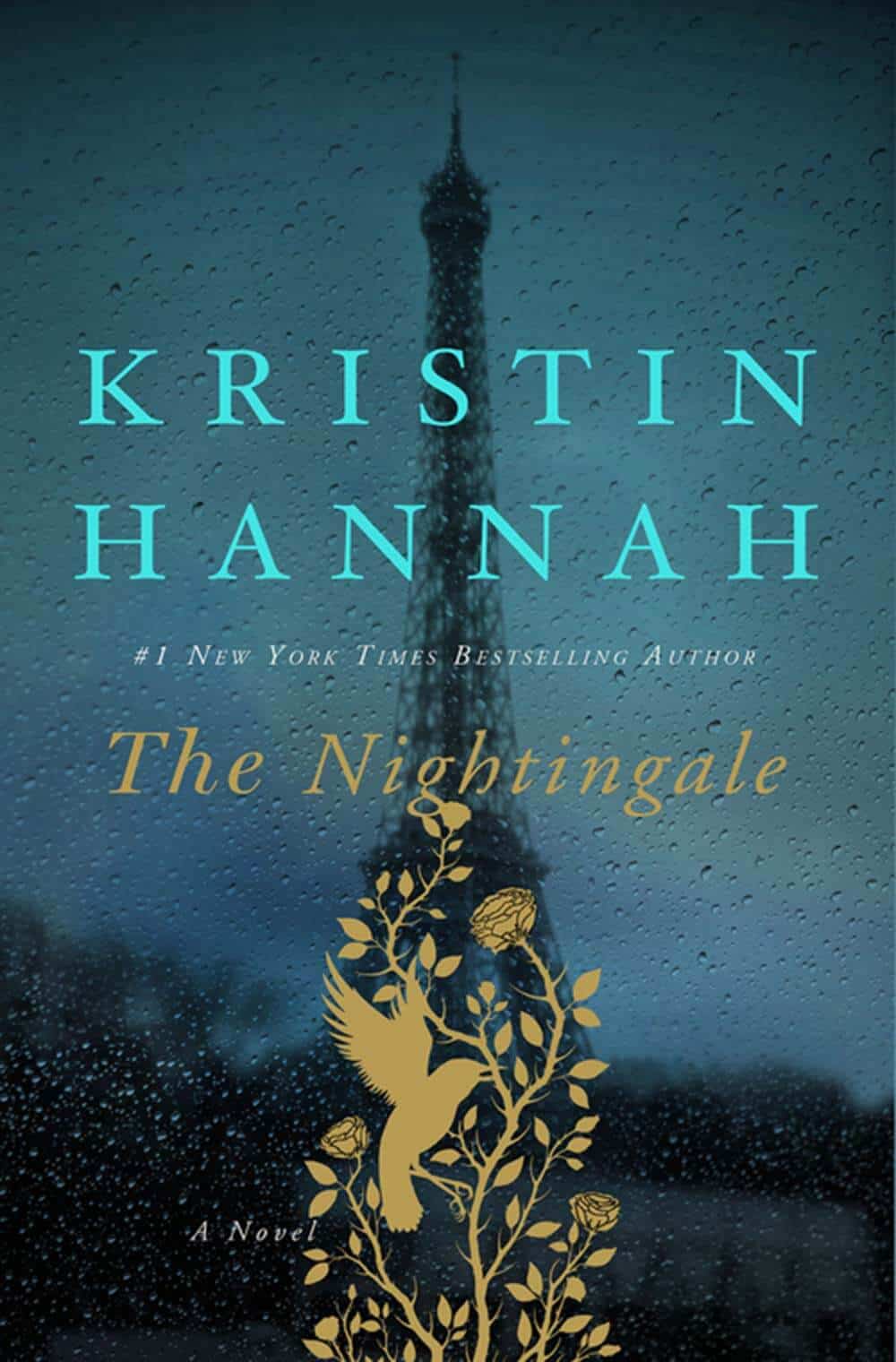
The Nightingale

This highly acclaimed book by Kristin Hannah was personally recommended to me by friend Betsy Friedman. It is beautifully written and compelling story with well developed characters, and yet it was sometimes uncomfortable to read due to the subject matter. Set during WWII when the Nazis have occupied France, two sisters who are as unlike as can be imagined end up taking very similar paths, each to resist the obscenities of the war in her own way.
Viann and Isabelle's mother dies when they are quite young and their father retreats into alcohol and absence. Viann gets pregnant by a childhood sweetheart at 16 and moves to the country to live happily with husband and child. Younger sister, Isabelle, is an emotionally wounded isolate, getting kicked out of one boarding school after another. But she is also adventurous and when she returns to Paris, having decided to live with her father, she gets involved in the French Resistance, eventually coming to be a primary resource for getting downed American and British pilots out of the country. She leads them over the harrowing Pyrenees mountains on dozens of occasions, gaining notoriety as The Nightingale. Viann's husband is sent off to fight the invading Germans but is captured. The village where Viann lives with her daughter is occupied and a series of German officers is billeted at her house, one kind, one cruel. When her neighbor and best friend is sent to a concentration camp, Viann bravely declares the child is her own and hides his Jewish identity. Eventually she is responsible for hiding away 19 Jewish children in a convent in the nearby countryside. The arbitrary terror and cruelty of the Nazis is painfully described, but so is the incredible bravery and love of the two women. A very informative tale about the little known women who resisted war in France. About writing this book, Hannah said,
"For me, The Nightingale started like any other novel. With research. I came across the historical stories of the women of the French Resistance and there was no going back. Their stories were mesmerizing, heartbreaking, intimate and universal. I was appalled that their stories were not better known.
All of my research led me to a central question: When would I, as a wife and mother, risk my life and my son’s life to save a stranger? Once that was in my head, I knew I had a story worth telling." Agreed!

Friday, July 11, 2014

All the Light We Cannot See

This brand new novel by Anthony Doerr is set in the run-up to and through WWII, and told through the viewpoints of two main characters. Marie Laure went fully blind at age 6 and lives with her father, who is the key master at the Museum of Natural History in Paris. As the Germans approach Paris, Marie-Laure's father is entrusted by the museum with a rare diamond to keep it hidden; Marie-Laure and her father head east and eventually arrive to stay with her great uncle, Etienne, on the isle of Saint-Malo. Her father is not only a skilled locksmith, but also a maker of exquisite small models. He built one for Marie-Laure of their entire Paris neighborhood so she could learn her way around. He is building her one for the town of Saint-Malo when he is betrayed by a collaborator for "taking measurements" of buildings.  Interned in a German prison camp, he is never seen again. Etienne has suffered what was then called "shell shock" from his experience in the Great War, and has not left his house (and often his room) for several decades. He is cared for by a housekeeper, who gets fed up and joins the resistance. She persuades Etienne to use a hidden radio transmitter in the attic of their house to transmit logistical coordinates. When the old woman dies of pneumonia, Marie-Laure and Etienne take over the task of picking up the information in a loaf of bread and transmitting the valuable data.
Our other main story teller is Werner Pfennig, who, with his younger sister Jutta, is raised by an French nun in an orphanage in a mining town in Germany. Their father was killed in the mines and Werner expects the same fate to befall him unless he can escape. He finds old radio parts in the trash and is able to receive transmissions of science talks for kids before they are cut off by the war. It turns out that the broadcasts were recordings made by Etienne's brother. Werner becomes the local radio repair wizard and at age 12 is sent to a school for German boys to be trained as an electronics engineer. He eventually helps develop equipment that can be used to locate the transmissions of resistance groups and is sent out with a small group of German soldiers to locate these radios and kill the people operating them. Near the end of the war, he gets sent to Saint-Malo and his path crosses that of Marie-Laure, but he cannot bring himself to betray her.
This is a story rich in character, setting, and emotion. It is often bleak, although not hopeless. Excellent historical fiction and a thoroughly engrossing read. Rave reviews and more detailed summaries from the NYT, The Guardian, and The Washington Post.

Tuesday, March 11, 2014

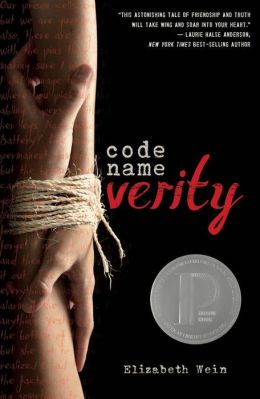
Code Name Verity

       Elizabeth Wein is the author of this "companion novel" to Rose Under Fire, but I urge reading this one first to enhance understanding. These two books were both driven by the author's fascination with the Air Transport Authority--British women pilots in WWII.  The story is divided into two parts, the first told by captured British spy, Julia Beaufort-Stuart, who is being held and tortured in the Gestapo headquarters of a French town. Per her account, which is conveyed via the notes she is supplying to the Germans in exchange for her life--temporarily--she is a traitor of the worst sort, supplying radio codes, names of airfields and types of aircraft. It is a somewhat rambling account that documents the development of her friendship with ATA pilot, Maddie Brodatt. Maddie, we learn from Julia, has been mechanically inclined all her life, able to take apart and repair all kinds of engines, and she is also passionate about flying. Julia is shown photos of the plane in which Maddie flew her to France that crash landed after Julia parachuted. The photos supposedly document the complete incineration of the plane, with Maddie onboard. The accounts of torture, for both Julia and the resistance fighters also being held in the same prison, are horrific, if somewhat obliquely described.
This award winning book by
     The second part of the book is Maddie's tale, told through notes she kept while hiding with the Resistance fighters in France. We learn that, due to an emergency, she decides to fly Julia to France, even though technically she is not authorized to fly into a war zone. ATA pilots were only supposed to ferry planes within Britain. They come under fire, damaging the tail of the plane and forcing Maddie to crash land after dropping off Julia. The plane was supposed to return British pilots, being helped and hidden by the Resistance, back to England. Now she becomes one of those in hiding and puts her skills to use learning to make explosives. Indirectly, through her section leader, she learns that Julia has been captured and is very likely being held and tortured in the nearby town. One night, her group of saboteurs get information about a prisoner transport and determines to blow up a bridge and free the prisoners. Things go terribly wrong and Maddie kills Julia--at Julia's request--to avoid her being taken to the concentration camps for medical experiments. A woman who had been present at Julia's interrogations secretly brings Julia's notes to Maddie and she learns that, in spite of Julia's reputation within the prison as a collaborator, she has revealed not a single piece of useful information to the Germans.
There is a several page "Author's Debriefing," after the story itself, that describes some of the source material for the novel and it is well worth reading. Although ostensibly written for young adults, these are really remarkable stories, with compelling characters, clever plotting, and a sometimes painfully clear description of what happened to people in WWII. Highly recommended for adults and recommended with caution for YA's. This review in the NYT also gives a wonderful flavor for the book.