Showing posts with label Norway. Show all posts

Wednesday, April 21, 2021

The Mt. Bachelor Murders

Local author, Ted Haynes, has written two previous books in his "Northwest Murder Mystery" series. How could I live in Bend and not read this, right? So I will start with my conclusion: the writing is less than elegant--even felt very pedestrian at times--but most interesting plot! Not strong on character development but adequate....maybe reading the two previous books would help since several of the same characters are involved. Local setting makes it interesting though wouldn't compel me if I didn't live here.
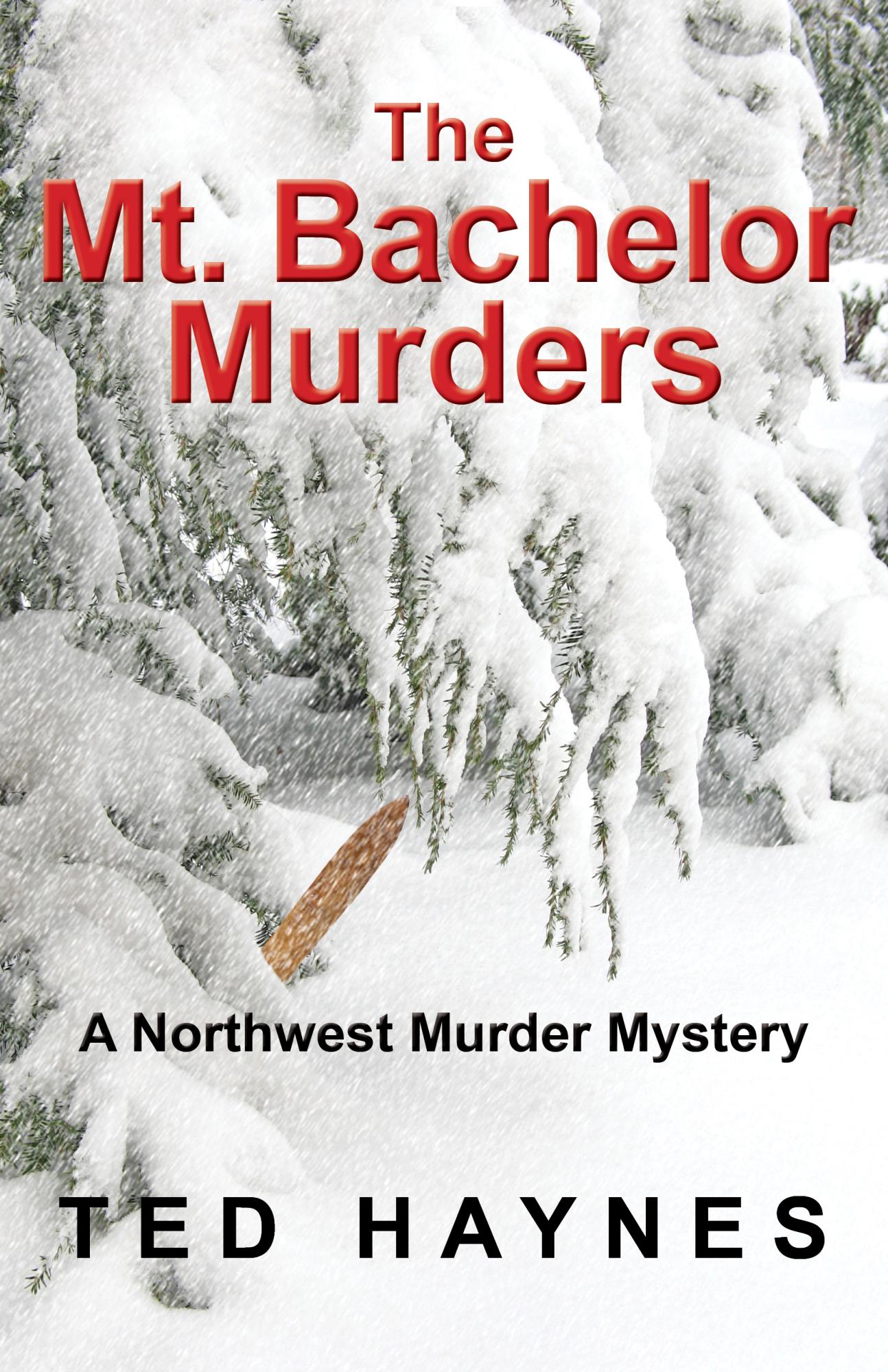

A highly skilled skier, Erik Peterson, takes his daughter (Lisbeth) and her friend ( Sally Paulsen) to Mt. Bachelor for Lisbeth's 16th birthday. The girls ski together while Erik goes off to ski alone. When the weather deteriorates, the girls wait and wait for Erik but he never turns up. A search finds him buried in a tree well--a situation that Erik would never have let himself get into. The investigating sheriff's detective, after consulting with local ski experts, concludes it was murder and not an accident. The girls had seen Erik getting on the lift with another man and that was the last time anyone saw him. Efforts to locate the other skier fail and the murder goes cold for 50 years. But detective Forest Connor does collect enough clues about the man to get a good forensic artist's sketch and some telling physical anomalies that would identify the man if he was ever found. There is only one other clue found at the scene--ski wax with a warning carved into it.

In 2018, a chance encounter leads Leon Martinez, who is married to Lisbeth Peterson, to believe the man has come back to Oregon. He contacts Sally (now Sarah) who is an attorney and the hunt is on. The entire back story about Peterson's personal history and how he crossed paths with his murderer is not revealed until fairly late in the book, but it changes your perception of Peterson and an intriguing bit of history about the Norwegian resistance movement during WWII.

I only found one review and that was in the local Bend Magazine.


Saturday, March 20, 2021

The Fifth Element


Another Scandi noir --seems I've been on a roll with these lately. Unfamiliar with author Jorgen Brekke, but it got a good review from Kirkus, so I thought I would give it a try. Maybe I am just getting mentally slow, but I found this book hard to follow. Normally, shifts in time and place don't bother me, but this one felt very disjointed.  This is the 3rd installment in his Detective Inspector Odd Singsaker series. Set in and around Trondheim (northern Norway), the book is divided into 4 parts, each focusing on a different character and each named  for one of the Aristotelian elements—phlegm, black bile, blood, and yellow bile. The fifth element refers to all the things in the spaces between the facts of an investigation that connects events, people, motivations, etc. 

In this book, Odd and his wife, Felicia, have had an argument and she has taken off to Oslo for some time to think about their relationship. She sent Odd a message that she was on her way home, but she never arrived. Another relationship has gone way off the rails; this one involves another runaway wife, with small child, and a police officer husband. He is planning to find his wife, kidnap his daughter, and disappear. We don't find out why until the end. There's a storyline about a couple of college students who steal some coke from a dealer and are now being hunted by a fairly ruthless enforcer. The stories are told in parallel  until they collide with explosive results. It's not clear really if the good guys win this time and the ending leaves the reader expecting future contact between at least two of the main characters. 

Publishers Weekly calls the book "stellar," while Booklist says it's "gripping." They go on to note, "The plot's leapfrogging flashbacks are challenging to follow, but Felicia's fight for survival, the suspense building to the final catastrophe, and the starkly rendered Scandinavian atmosphere offer strong appeal for Nordic-crime fans."  Kirkus concludes: "The intricately linked plotlines will appeal to puzzle fans. But it’s Brekke’s prodigious powers of invention, his ability to keep coming up with unforgettable characters and indelible episodes, that lift this above his own earlier work and most of the heavy Nordic competition."

Monday, June 18, 2018

Norwegian by Night

This book by Derek B. Miller precedes the one I previously read, American by Day, which I so enjoyed that I sought out this one. There is more info about the author in the previous post.
Rhea has recently married her Norwegian husband Lars, and invited her 82- year old widowed grandfather, Sheldon Horowitz, to come live with them in Oslo.  Rhea was raised by Sheldon and his wife and does not want Sheldon to live alone in Manhattan and she also fears he is getting senile. Sheldon always maintained to his family that he was a clerk in the Marines, but was in fact a decorated sniper in the Korean War. One day while Rhea and Lars are out, Sheldon can't help but hear a violent fight upstairs and when the Serbian immigrant woman and her young son come running down the stairs to escape her abuser, Sheldon opens the door and lets them come in. The child's father, Enver, we eventually learn, was a Kosavar war criminal who had raped her during the war and has now come looking for his child in Oslo. Enver quickly figures out where the pair are hiding, breaks down the door of Lars' and Rhea's apartment and strangles the woman. Sheldon and the boy manage to hide until Enver hears police sirens approaching. Sheldon fears Enver will come back for the boy and so they escape out a basement door and go on the run.
Chief Inspector Sigrid Ødegård of the Oslo police and her second in commend, Petter, are put in charge of the murder and of finding Sheldon and the young boy before Enver does. Sigrid is at first frustrated that an old man and a boy can disappear so effectively, but eventually she comes to have real admiration for Sheldon's abilities because, although Sheldon is old, he has a lot of skills learned as a Marine, and the two manage to elude both police and the killers for several days. Sheldon is haunted not just by memories of his time in the Marines, but also by the belief that it is his fault that his son signed up for a 2nd tour in Vietnam, where he was killed. He is determined to save this boy at any cost.
Once again I was intrigued by the author's observations on the cultures of both Norway and America. As Kirkus notes in their review, this book is " an unusual hybrid: part memory novel, part police procedural, part sociopolitical tract and part existential meditation." There is a thoughtful review of the book by the Washington Independent, and a brief one in The New York Times.

Tuesday, May 15, 2018

American by Day

Can't remember where I heard about this book but I am glad I read it. This is a sequel to Derek B. Miller's Norwegian by Night, a Dagger Award winner eventually published in a dozen languages, featuring the same protagonist, Chief Inspector Sigrid Ødegård of the Oslo police. Miller is American, but married to a Norwegian woman and they live in Oslo. He has a rather impressive academic and real world resume including a PhD in international relations from the University of Geneva.
Sigrid has recently been involved in shooting a man to death and, although the shooting was ruled as justified, it has left her questioning herself. She takes leave to visit her father and finds out from him that her brother, Marcus, who has lived in the United States for 20 years, has gone missing. Moreover, Sigrid's father, has already bought her a plane ticket to go to the U. S. to find him.  So she does. But in some ways that is the least of the story, for this is a look at America from a European point of view, in particular our culture around guns and individualism and race. The characters are fascinating,  provocative, and occasionally laugh-out-loud funny. It seems like an odd combination of philosophy, humor, mystery, and literary fiction...but it works.
It's 2008 in the run-up to the Obama-McCain presidential election. Set in sultry late summer upstate New York, which as Sigrid dryly observes is still south of Venice, Sigrid has her suitcase stolen within minutes of arriving at her brother's empty house, which is now occupied by a prostitute who claims Marcus gave her the keys when he left. Sigrid teams up with local sheriff Irv Wylie, and his deputies, especially Melinda, who comes to look at Sigrid as a sort of mentor. Wylie has a master's degree in divinity so takes a somewhat different perspective on law enforcement and the world than your run-of-the-mill small-town sheriff. Marcus' disappearance coincides with the death of the woman he was dating, Lydia, an African American professor at the same small university where Marcus was working as an adjunct. Marcus made the 9-1-1 call and was there when Lydia fell to her death from the 6th floor of an office building still under construction, so he is suspect #1.  Wylie is having to tread very carefully because the Black community is up in arms about the police shooting of a 12-year-old Black boy--Lydia's nephew-- and the powers that be want this case solved quickly and seem less concerned about whether they get the right culprit. Needless to say, Sigrid feels she needs to reach Marcus before the police do if he is to have any chance of staying alive.
Not only was I impressed with the craft, the perspective, and the characters, but I also admire how Miller seemed able to cross the gender gap and authentically present a woman's point of view. I will definitely go back and read Norwegian by Night and maybe The Girl in Green as well. Reviews for this book from The Guardian, the New York Journal of Books, Kirkus, and Publishers Weekly.

Wednesday, August 5, 2015

1222

This is the 2nd book I have read by Norwegian author Anne Holt; see my post for What Never Happens, also. Apparently she has written 7 previous novels in this, the Hanne Wilhelmsen series (see Wikipedia , etc. for lists of her other novels). Given that in this book Hanne is in a wheelchair from a bullet that severed her spine several years earlier, I feel compelled to do some back tracking in my reading. Apparently Holt has worked as a police officer and a lawyer so she has a good grasp of the procedural details that come to bear in this case.
A freak blizzard has derailed the train to Oslo with 269 people on board. The conductor is killed, but the rest are rescued through the valiant efforts of a handful of staff from a nearby mountain resort hotel and brought to stay there until help can come from the outside. The blizzard continues with screaming winds and feet of snow, promising some significant delay before that happens. People start to die--a baby who was injured in the wreck, an elderly man from a heart attack, death from a gun shot wound and stabbling with an icycle take out two more-- and Hanne can't help but take charge, in a roundabout way, to try and determine who the killer is. She is reluctant at first, having secluded herself from virtually all friends, family, former colleagues, and society in general for the intervening years since she was shot and paralyzed from the waist down. But two of the hotel staff and an interesting dwarf doctor named Magnus Streng bring her onboard and assist with her inquiries. There are so many complex interpersonal dynamics going on in this book that I could not begin to do them justice.
For example, there was an extra train car added just before departure that has been kept totally separate from the others and the passengers have also been sequestered in a separate wing of the hotel with guards posted to keep people out. Hanne tries to befriend what is apparently a runaway boy in his late teens, but his response is mixed--first adversarial, then more accepting, and then once more cutting her off. The young Goth-character woman he takes up with will play a significant role in the story. Berit, the hotel manager, emerges from her somewhat mild-mannered initial presentation to become a force to be reckoned with. We hear indirectly about Hanne's partner, their daughter, and her housekeeper. The storm itself is a character here and we feel its threat and challenge to life. This is largely a story of Hanne starting to re-engage, in a very limited way, with the world and particularly with the job that was both highly stressful and intensely satisfying.
So far, I have found Holt's work to be very well-written with complex, well-developed characters. Hanne will not strike you as particularly likable, but certainly compelling. If you are at all a fan of Scandinavian mysteries, check out Holt. ( and if anyone can find a home page for this author, send me the link!)

Sunday, February 3, 2008

Who Done It?


This slang reference for mysteries will take on added significance if you read this twisty tale, What Never Happens, from Scandinavian Anne Holt, set in Oslo, Norway. This is another totally new author for me--but I just got back from ALA with a box and a bag full of advanced reading copies (ARCs) and I was in the mood for a mystery, so I grabbed this one. Apparently Ms. Holt has published an earlier work (variously known as Punishment or What is Mine) starring this pair of detectives, Johanne Vik and Adam Stubo, but now they are married with a brand new baby, significantly impinging on Johanne's ability to work on the case. Johanne has been trained as a profiler by the FBI, although she seems determined to keep that chapter of her life buried; with famous people dying in bizarre and symbolic ways, however, her skills are sorely needed. Holt has come up with an unusual and yet totally logical character for her killer and the ending will just leave you creeped out. This author is compared to Henning Mankell, a Swedish author of detective procedurals, but he is also someone unfamiliar to me. Maybe I need to pursue some of these Scandinavian authors a bit more, although the ones I have read (Giants in the Earth by O.E. Rolvaag, Smilla's Sense of Snow by Peter Hoeg, some of the books by Maj Sjowall and Per Wahloo.) are very dark. Must be the climate and the long winters....maybe not the best reading for an Oregon winter, or maybe just perfect!